Think of performance management. What comes to mind? For many, it’s the dreaded annual appraisal – that once-a-year, high-stakes meeting that often feels more like a judgement day than a productive conversation. It’s a model that’s frankly broken.
A modern performance management process isn't an event; it's a continuous, strategic cycle. It’s about creating an ongoing dialogue between managers and their teams to align goals with what the business is trying to achieve, champion development, and celebrate wins along the way.
Reimagining Performance Management for UK Businesses
Let's be honest, the traditional annual review is a relic. It was a cornerstone of corporate life for decades, but it’s now widely seen as an outdated, stressful process that rarely delivers the results it promises. The shift we're seeing isn't just about tweaking a form; it's about replacing a rigid, backward-glancing ritual with a dynamic, forward-looking conversation.
This isn’t just a passing trend; it's a critical evolution backed by some eye-watering figures. Poor performance management is a direct cause of low employee engagement, a problem costing UK businesses a staggering £257 billion annually. That's roughly 11% of the UK's entire GDP. Research shows that only about 10% of UK workers feel truly engaged, landing us a dismal 33rd out of 38 European countries.
The flip side? Companies that get this right see 23% higher profitability and much lower staff turnover. The evidence is clear: engagement isn't a fluffy metric; it's a hard-nosed business imperative. You can learn more about the impact of engagement on UK businesses here.
The Four Pillars of a Modern Process
So, what does a better approach look like? Instead of that single, high-pressure meeting, a modern process is built on a continuous cycle that makes growth and clarity the norm. This cycle has four interconnected stages that transform performance management from a chore into a powerful motivator.
-
Planning: This is where it all starts. Managers and employees sit down together to set clear, measurable goals that actually link up with the company's bigger picture. It’s all about answering the question, "What do we need to achieve, and why does it matter?"
-
Monitoring: Throughout the year, progress is tracked through regular, informal check-ins. This is where managers shift from being judges to being coaches, offering real-time guidance and helping to clear roadblocks before they become serious issues.
-
Reviewing: Formal reviews still have their place, but their purpose changes completely. They become productive conversations to summarise progress, celebrate what’s been achieved, and adjust goals for the future. The focus is on development, not just evaluation.
-
Rewarding: The final piece is linking performance to meaningful recognition. Yes, this includes fair pay and bonuses, but it's also about promotions, new development opportunities, and simply acknowledging great work.
An effective performance management process isn't just about scoring past performance; it's about actively shaping future success. By creating a culture of continuous dialogue and development, you empower your people to do their best work.
To show how this shift looks in practice, let’s compare the old way with the new.
Traditional vs. Modern Performance Management
| Aspect | Traditional Approach (Annual Review) | Modern Approach (Continuous Cycle) |
|---|---|---|
| Frequency | Once a year. | Ongoing, with regular check-ins (e.g., quarterly, monthly). |
| Focus | Backward-looking; focused on past mistakes and ratings. | Forward-looking; focused on development, coaching, and future goals. |
| Goal Setting | Top-down; goals are often set once and rarely revisited. | Collaborative; goals are agile, transparent, and adjusted as needed. |
| Feedback | Formal, one-way feedback from manager to employee. | Real-time, multi-directional feedback from peers, managers, and reports. |
| Manager's Role | Judge or evaluator. | Coach and facilitator. |
| Outcome | A rating or score, often leading to anxiety and disengagement. | A development plan, stronger relationships, and improved engagement. |
The difference is night and day. One is a static, often negative event, while the other is a dynamic, supportive process that builds momentum throughout the year.
At DynamicsHub.co.uk, we provide Transformative HR solutions customised to the unique way you work. Human Resource HR Management for Microsoft Dynamics 365 by Hubdrive is the leading hire-to-retire solution for the Microsoft Platform. It automates goal setting, makes continuous feedback easy right within Microsoft Teams, and gives managers the insights they need to become great coaches. It’s an integrated way to build a more engaged, productive, and ultimately more profitable workforce.
To see how we could tailor this for your business, Phone 01522 508096 today, or send us a message to start the conversation.
The Four Stages of a Continuous Performance Cycle
Let's break down the performance management process. The best way to think about it is not as a dreaded annual event, but as a powerful, continuous growth engine for your business. When you move away from a single, high-stakes meeting, you create an ongoing dialogue focused on development, alignment, and real achievement. Each phase flows logically into the next, building momentum all year round.
This cycle is a modern way of looking at performance, breaking it down into four distinct but connected stages.
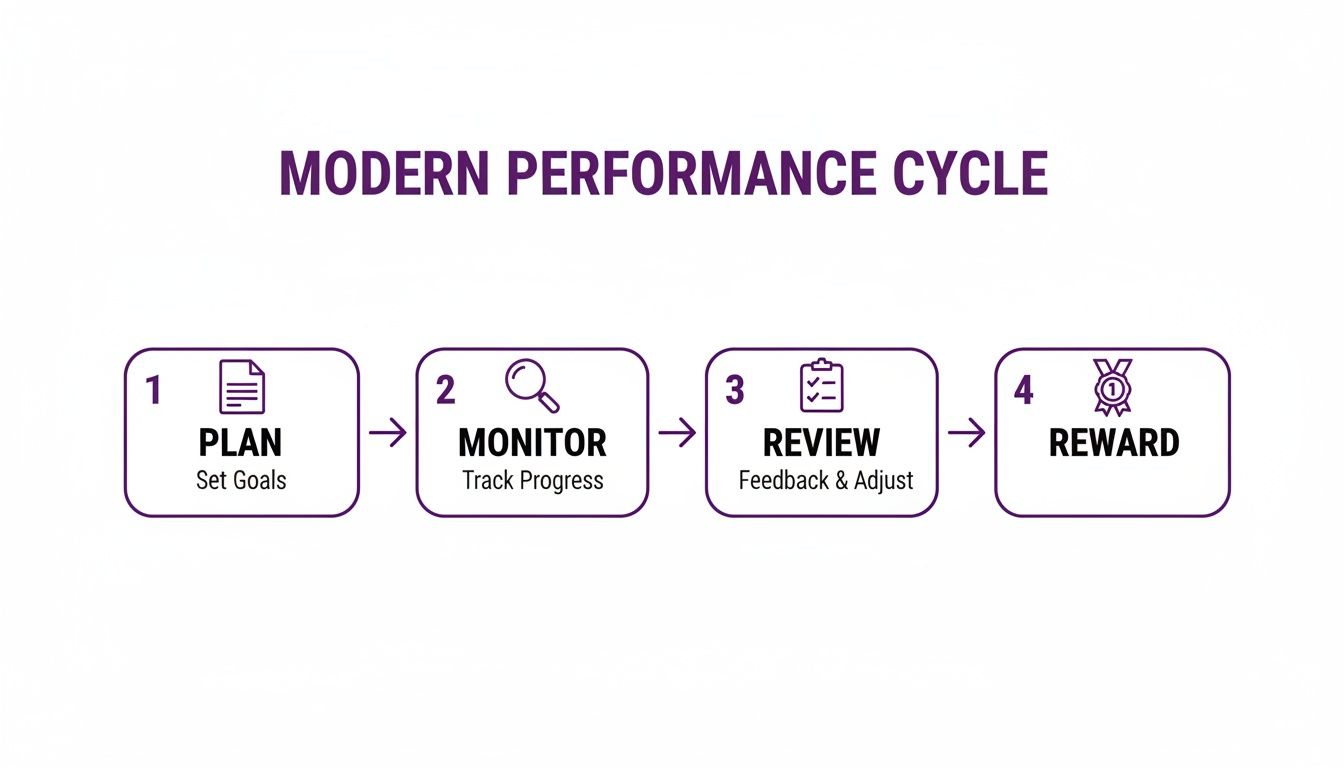
It’s a simple but effective flow that shows performance isn’t a one-off assessment. Instead, it's a continuous journey of planning, monitoring, reviewing, and rewarding. Let’s explore what each of these stages actually looks like in practice for a UK business.
Stage 1: Planning and Goal Setting
Everything kicks off with collaborative planning. This isn't about managers just handing down a list of commands. It's a joint effort where managers and employees sit down together to define clear, challenging, yet realistic objectives that directly link back to the company's bigger goals.
Clarity is everything here. A sales executive in Manchester shouldn't just have a vague target like "increase sales." A properly defined objective sounds more like this: "Achieve a 15% increase in new business revenue from the North West territory by the end of Q3 by securing at least five new clients with an average contract value of £10,000." Now that’s a goal you can actually track.
Using a tool like the Human Resource HR Management solution for Microsoft Dynamics 365 from Hubdrive means you can document these goals right inside the system. This keeps everything transparent and gives everyone a central reference point for the entire cycle.
Stage 2: Monitoring and Coaching
With goals in place, the focus shifts to ongoing monitoring. This isn't about micromanagement; it's about turning managers into great coaches. Throughout the year, they should be having regular, informal check-ins to talk about progress, offer guidance, and help clear any roadblocks.
These frequent conversations are the absolute heart of a modern performance process. They get rid of nasty surprises at the year-end review and build a real foundation of trust.
Think about a software developer at a London tech firm with a quarterly goal to deploy a new feature. Regular weekly check-ins mean their manager can spot potential delays early on, provide technical support, or shift resources around to keep the project on track.
A recent study found that when employees have feedback conversations with their manager at least twice a month, they are nearly three times more likely to be engaged at work. This ongoing dialogue is what drives high performance.
Stage 3: Reviewing and Feedback
The review stage is where we completely redefine the traditional appraisal. It’s no longer a backward-looking judgement session. Instead, it becomes a forward-looking conversation that summarises all the progress made during the monitoring phase. It's dedicated time to reflect on what went well, discuss challenges, and recalibrate for the future.
This formal review, whether you do it quarterly or twice a year, has to be a two-way street. It should combine self-evaluations, manager feedback, and sometimes even insights from colleagues to get a well-rounded picture. We cover different ways to build a great appraisal for staff in our detailed guide.
The conversation is all about development. For a marketing assistant in Birmingham, the review would celebrate a successful campaign's results while also spotting opportunities to build skills in data analytics for the next quarter. The outcome isn't just a rating; it's a clear development plan.
Stage 4: Rewarding and Recognising
The final stage, rewarding, closes the loop. This is where you connect great performance to meaningful recognition, and it’s crucial for building a culture where people feel their effort and results are genuinely valued. When employees see a clear link between their contributions and their rewards, it reinforces good habits and motivates everyone for the next cycle.
Rewards aren't just about money; they should be tailored to what really motivates your team.
- Monetary Rewards: These are the tangible acknowledgements, like performance-based bonuses, salary increases, or profit-sharing schemes.
- Non-Monetary Recognition: This could be a promotion, the chance to lead a new project, an extra training budget, public praise, or even extra time off.
By connecting rewards directly back to the goals set in Stage 1, you create a system that feels fair, transparent, and effective. This four-stage approach takes performance management from a source of anxiety and turns it into a key driver of employee engagement and business success.
How to Implement a Modern Performance Process
Moving away from the rigid, once-a-year appraisal to a more fluid, continuous performance management process takes more than good intentions. It demands a clear, practical roadmap. For businesses here in the UK, making this change stick means getting to grips with some very real challenges, from winning over the leadership team to turning managers into genuine coaches. It’s a big job, but the payoff is even bigger.
The data really throws a spotlight on the opportunity. A WTW study found that nearly half of UK organisations reckon they could boost productivity by at least 10% just by getting their performance processes right. Yet, only 39% of them actually think their current system is effective. That gap between potential and reality is exactly why a structured plan isn't just nice to have—it's essential.
Securing Leadership Buy-In
Before you change a single form or schedule a single meeting, you need the leadership team fully behind you. This isn't just about getting a quick signature on a proposal; it's about making sure they truly understand and champion the 'why' behind the shift. You've got to build a solid business case that connects a modern performance process directly to the outcomes they care about.
Frame the discussion around the metrics that keep them up at night. Talk about how ongoing coaching and clear goals can directly increase productivity, cut down on costly staff turnover, and ultimately, improve the bottom line. Use the data you have. If the current system is letting people down, show them the evidence and position the new process as the clear solution.
Designing a Fair and Transparent System
For any modern process to work, it has to be built on a foundation of fairness and transparency. Your team needs to trust that the system is there to help them grow, not just to pass judgement. That means setting up clear, consistent standards that apply to everyone, from the ground up.
Start by defining what ‘great’ actually looks like in different roles across the business. From there, create simple guidelines for everything from setting goals to giving feedback and conducting check-ins. It's vital that everyone knows the rules of the game and understands exactly how their contribution will be recognised. A great way to put this into practice is by using actionable work improvement plan templates, which give a clear structure for development.
The goal is to demystify performance. When the process is clear and the expectations are understood by all, you remove the anxiety and replace it with a sense of purpose and direction.
Training Managers to Be Coaches
Here’s the thing: the single most critical factor in all of this is the manager. Their role has to change completely—from an annual evaluator to an everyday coach and mentor. That’s a massive mindset shift, and it won’t happen without dedicated training and support.
Your managers need to be armed with the right skills to have genuinely effective performance conversations. This includes:
- Setting collaborative goals: Working with their people to define objectives that actually mean something.
- Giving constructive feedback: Delivering guidance that is specific, timely, and always focused on development. You can find excellent 360-degree feedback examples in our guide to help shape these conversations.
- Active listening: Properly hearing out an employee's point of view and their challenges.
- Focusing on strengths: Helping people play to their strengths to get the job done.
Piloting and Communicating the Change
Instead of a "big bang" launch that could cause chaos, think about piloting the new process with a single department or team. This creates a safe space to gather honest feedback, iron out any unexpected kinks, and fine-tune the system before it goes live. A successful pilot also creates a group of internal champions who can help sell the new approach to the rest of the company.
Communication is the final, crucial piece of the puzzle. You need to build a bit of a buzz and create trust by clearly explaining the changes and, most importantly, what’s in it for the employees. Focus on the benefits: more frequent feedback, clearer paths for career growth, and a fairer way of recognising great work. A well-thought-out comms plan makes sure everyone feels informed and positive about the journey ahead.
Putting Your Process into Practice with Dynamics 365 HR
A great performance management process is more than just a good idea—it needs the right technology to truly come alive. You can have the best strategy in the world, but if it’s running on creaky spreadsheets and a patchwork of calendar reminders, it’s destined to fall flat. This is where we bridge the gap between your people strategy and a powerful, integrated solution that makes continuous performance a reality.
At DynamicsHub.co.uk, we see first-hand how the Human Resource HR Management for Microsoft Dynamics 365 can automate and elevate every stage of your performance cycle. Built by Hubdrive as the leading hire-to-retire solution for the Microsoft Platform, it turns abstract goals into tangible, trackable actions within the systems your team already uses every day.
Streamlining Goal Setting and Progress Tracking
The whole process kicks off with clear, aligned objectives. Instead of goals getting buried in forgotten Word documents, the system creates a central hub. Here, managers and employees can set, review, and update objectives together, giving everyone a single source of truth for what success looks like.
Progress tracking stops being a frantic, once-a-year scramble for evidence and becomes a real-time activity. The solution sends out automated nudges for check-ins and performance chats, which keeps the conversation flowing all year round. This simple, proactive approach does away with nasty surprises and nurtures a genuine coaching culture.
By automating the administrative slog of performance tracking, you free up managers to focus on what actually matters: high-quality conversations, meaningful coaching, and developing their people. Technology should enable better management, not replace it.
Think about it: a sales manager can instantly see their team's progress against quarterly targets, or a project leader can track milestone completion without ever leaving their workflow. This is what it means to make performance monitoring an integrated part of daily operations.
Weaving Feedback into Daily Work
One of the biggest blockers to continuous feedback is making it easy. People are busy. Having to switch between different apps just to log a quick comment is a surefire way to make sure it never happens. This is where the integration with Microsoft Teams becomes a game-changer.
The Human Resource HR Management solution lets people give and request feedback directly within Teams chats and channels. A manager can praise a team member for a great presentation or offer constructive input on a report right there in the moment. It makes feedback timely, contextual, and far more likely to happen.
This seamless connection shifts feedback from a formal, scheduled event into a natural part of the daily conversation, helping build stronger and more supportive teams.
Empowering Decisions with Data and Insights
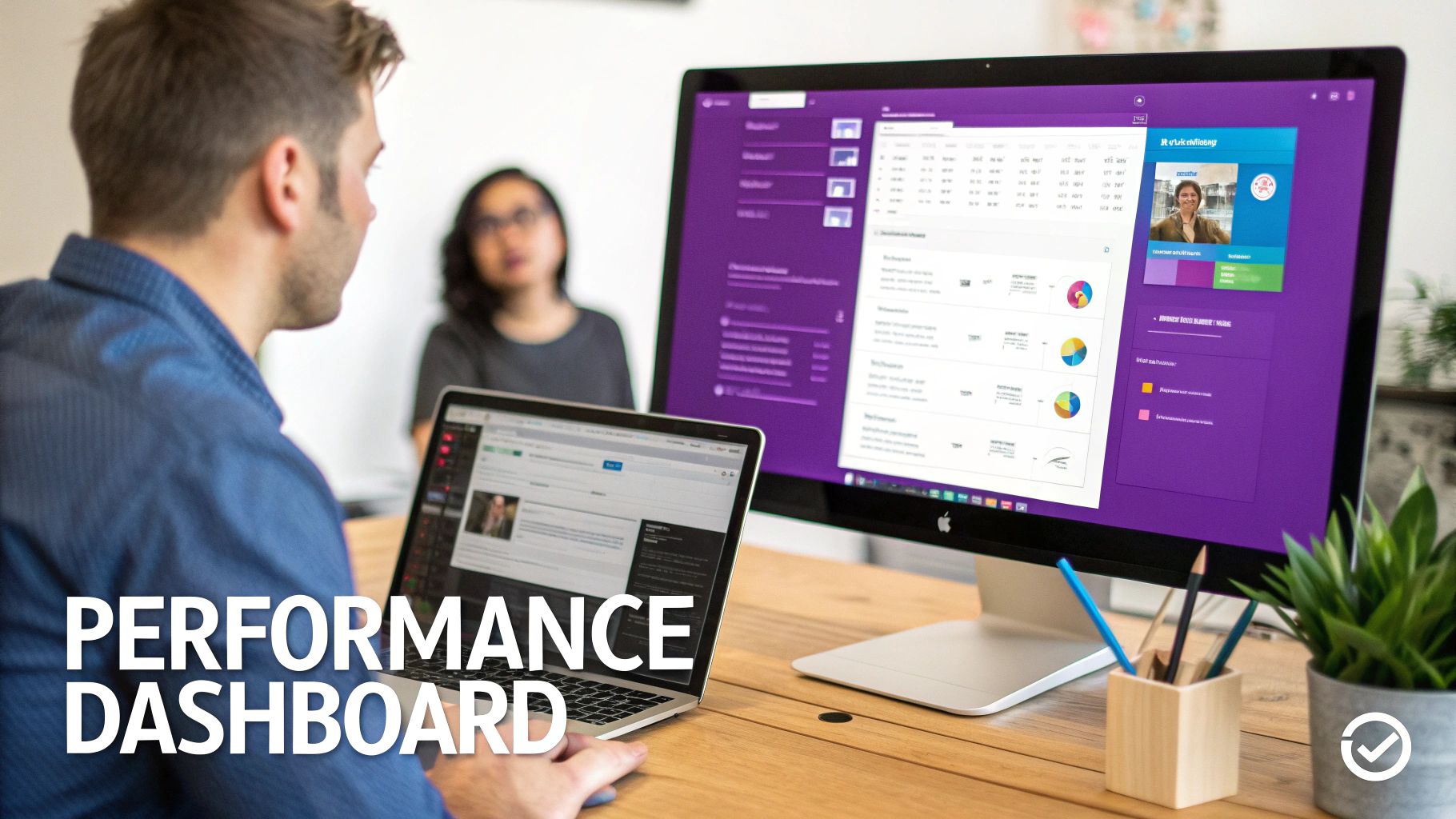
Effective performance management has to be built on data, not just gut feelings. The solution gives managers and HR leaders powerful analytics and reporting tools through Power BI. The dashboards provide clear, insightful views of performance trends right across the organisation.
- Performance Dashboards: Visualise individual and team performance against goals, helping you spot top performers and identify who might need a bit more support.
- Skills Matrices: Map the skills and competencies across your workforce. This highlights existing strengths and flags any critical skills gaps you need to address.
- Employee Self-Service Portals: Give employees ownership of their own performance by letting them track their goals, ask for feedback, and manage their development plans.
The table below summarises some of the core features that help UK businesses automate and improve their performance management cycle.
Key Performance Management Features in Dynamics 365 HR
| Feature | Description | Benefit for UK Businesses |
|---|---|---|
| Centralised Goal Setting | A unified platform for managers and employees to collaboratively create, track, and update performance objectives. | Ensures clear alignment between individual contributions and company strategy, improving focus and accountability. |
| Automated Check-ins | Scheduled reminders and templates for regular performance conversations, prompted through Teams and Outlook. | Frees up manager time from admin and fosters a consistent culture of continuous feedback, not just annual reviews. |
| Microsoft Teams Integration | Give, receive, and request feedback directly within Teams chats, making it a natural part of daily collaboration. | Increases the frequency and quality of feedback, making it more timely and impactful for employee development. |
| Power BI Dashboards | Real-time analytics on performance trends, skills gaps, and goal attainment across individuals, teams, and departments. | Provides data-driven insights for fair and objective decisions on promotions, succession planning, and training budgets. |
| Employee Self-Service | A portal for employees to view their goals, access feedback history, and manage their personal development plans. | Empowers employees to take ownership of their career growth and reduces the administrative burden on HR. |
Ultimately, these tools provide UK businesses with the hard data needed for more strategic and fair decision-making around promotions, succession planning, and training investment. Managers are no longer navigating these crucial conversations from memory; they have concrete facts to support their discussions.
To get a deeper understanding of how the platform works, explore our comprehensive overview of Dynamics 365 for HR.
We are DynamicsHub.co.uk. We provide Transformative HR solutions customised to the unique way you work. Human Resource HR Management for Microsoft Dynamics 365 by Hubdrive is the leading hire-to-retire solution for the Microsoft Platform.
To discover how we can tailor this powerful solution for your organisation, Phone 01522 508096 today, or send us a message.
Staying on the Right Side of UK Law and GDPR
In the UK, a fair performance management process isn't just about best practice—it's a legal requirement. If you get it wrong, you’re not just risking poor morale; you're opening the door to serious legal trouble, like claims of discrimination or unfair dismissal. This is why every single decision, from how you set goals to the way you handle underperformance, has to be objective, consistent, and meticulously documented. It needs to hold up if ever challenged.
This legal framework is there for a good reason: to protect employees and make sure everyone is treated fairly. As you build or refine your performance management process, it's absolutely crucial to ground it in the wider legal and compliance guidelines that shape UK employee relations. In simple terms, this means applying your process the same way for all employees in similar jobs to shut down any suggestion of bias.
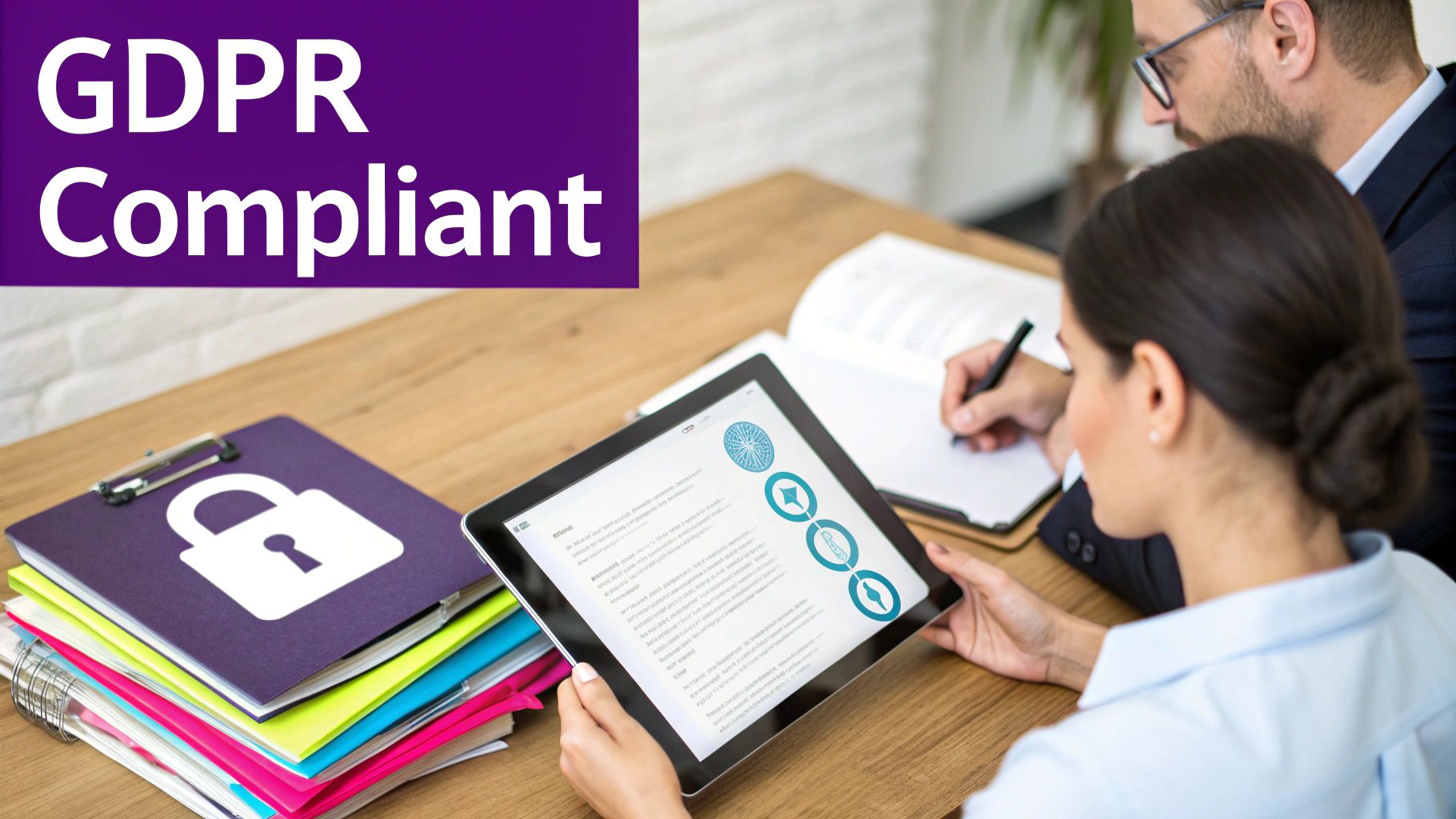
Beyond employment law, there’s another giant to consider: the General Data Protection Regulation (GDPR). Think about it—performance management is all about collecting and processing employee data. We're talking performance ratings, manager feedback, development plans, and more. This isn't just data; it's personal, often sensitive information that needs to be handled with extreme care.
How to Weave GDPR into Your Performance Management
Getting GDPR right is simply not optional. It dictates exactly how you should collect, store, process, and eventually get rid of employee performance data. A misstep here can lead to eye-watering fines and can seriously tarnish your company’s reputation.
To stay compliant, these principles need to be baked into your process:
- Data Minimisation: Only collect what you actually need. Resist the urge to gather extra, "nice-to-have" information about your employees that isn't directly relevant to their performance.
- Purpose Limitation: Be crystal clear about why you need the data. It should be strictly for performance management activities, not repurposed for other things down the line.
- Accuracy: Do everything you can to make sure the information you hold is correct and current. A decision based on out-of-date or inaccurate records is fundamentally unfair.
- Storage Limitation: Performance records shouldn't hang around forever. You need a clear data retention policy that states precisely how long this information is kept before it’s securely deleted.
A key thing to remember is that under GDPR, your employees have the right to see the personal data you hold on them. This includes their performance reviews and feedback. Having a transparent process, backed by a secure system like Human Resource HR Management for Microsoft Dynamics 365, means you can handle these requests quickly and confidently.
Securing Data and Documenting Everything with Confidence
Solid documentation is your single best defence if a legal challenge ever comes your way. Every important conversation about performance, every goal-setting meeting, and every formal review must be put on record. These notes need to be factual, objective, and completely free of subjective or potentially discriminatory language.
Of course, storing this sensitive information securely is just as important. Using a central, access-controlled system is no longer a luxury—it’s a necessity. A solution like Hubdrive's HR Management, built on the secure Microsoft platform, ensures that personal data is shielded from prying eyes. It also helps you automate tricky GDPR requirements like managing data access requests and retention policies. It's a robust approach that protects both your people and your organisation.
We are DynamicsHub.co.uk. We provide Transformative HR solutions customised to the unique way you work. Human Resource HR Management for Microsoft Dynamics 365 by Hubdrive is the leading hire-to-retire solution for the Microsoft Platform.
To discuss how we can help you build a compliant and effective performance management process, phone 01522 508096 today or send us a message at https://www.dynamicshub.co.uk/contact/.
It’s Time to Transform Your Business with a Better Process
Let’s be honest, the traditional annual review is on life support. For decades, it’s been a fixed point in the corporate calendar, but the truth is, it’s a broken system. Most of us have sat through them—stilted, backward-looking conversations that feel more like an administrative chore than a genuine opportunity for growth.
Moving to a modern, continuous performance management process isn't just a minor HR tweak; it's a fundamental business upgrade. When you step away from the rigid, once-a-year model, you can create a system that actually develops, motivates, and inspires your people every single day. It’s about building a culture of ongoing dialogue, not a culture of once-a-year dread.
The Numbers Don't Lie
If you need proof that the old way isn't working, just look at the data coming out of UK workplaces. A huge 74% of employees think annual appraisals are utterly useless. They see them as a box-ticking exercise, not a valuable chat about their career. When three-quarters of your people feel a core process is pointless, you have a serious problem.
This isn't just about hurt feelings, either. It has a real impact on motivation. Right now, only 60% of UK employees feel driven to go the extra mile. But here’s the good news: changing the process works. Companies with continuous performance systems are 50% more likely to hit their business goals and 42% better at creating a culture of accountability. They also find it much easier to attract and keep the best people. You can dig into more performance management statistics to see the full picture.
What’s In It for Your Business?
When you get performance management right, the positive effects ripple through the entire organisation. It's not just an HR win; it's a commercial one. A genuinely engaged workforce, supported by a structure that helps them grow, is what powers a successful business.
Here’s what you stand to gain:
- Higher Productivity: It’s simple, really. When people have clear goals and get regular, constructive feedback, they know exactly what they need to do. All that wasted time and energy disappears, and output naturally goes up.
- Increased Profitability: Engaged teams care more about the quality of their work and the happiness of your customers. That dedication leads to better service, more repeat business, and a much healthier bottom line.
- Better Talent Retention: People want to work for companies where they feel valued and can see a clear path forward. A modern performance process shows them you're invested in their career, making your organisation a place where top talent chooses to stay and grow.
At DynamicsHub.co.uk, we provide Transformative HR solutions customised to the unique way you work. The Human Resource HR Management for Microsoft Dynamics 365 by Hubdrive is the leading hire-to-retire solution fully integrated into the Microsoft Platform, designed to make this all a practical reality.
Let's work together to leave the broken cycle behind. To find out how we can build a solution for your organisation, Phone 01522 508096 today, or drop us a message through our contact page.
Frequently Asked Questions
Switching up your performance management process is a big step, and it's natural to have questions. Let's tackle some of the most common ones that come up when organisations are making this change.
How Often Should Performance Reviews Happen?
This is a classic question. While the big, formal reviews might still happen quarterly or twice a year, the real magic is in the frequent, informal check-ins. Think weekly or, at a minimum, every fortnight.
Having these regular chats keeps goals fresh, makes sure feedback is delivered when it’s actually useful, and helps you clear away obstacles before they become major problems. It completely changes the dynamic, turning the dreaded annual review into a simple, productive summary of conversations you’ve been having all along.
Can a Better Process Really Reduce Staff Turnover?
Without a doubt. People don't usually leave jobs they love; they leave when they feel stuck, unappreciated, or can't see a future for themselves. A solid performance management process tackles these root causes head-on.
It creates clear paths for development, gives people consistent coaching from their managers, and ensures good work gets recognised fairly. When your team feels like you're genuinely invested in their careers, they're far more likely to stick around. In fact, companies with highly engaged teams can see staff turnover drop by as much as 43%.
In a modern performance process, the manager’s role changes from being a judge to being a coach. The focus moves away from rating people once a year and towards actively partnering with them to set goals, give regular feedback, and support their development.
What is the Manager's Role Now?
The manager's job has evolved way beyond being an evaluator. In a modern system, they are first and foremost a coach and a mentor, whose main purpose is to help their team thrive.
This means their core responsibilities are now to:
- Work with their team members to set clear, meaningful goals.
- Offer regular, constructive feedback that guides progress.
- Be proactive in removing any roadblocks that are getting in the way.
- Champion their team’s growth, both professionally and personally.
This shift helps build a foundation of trust and support, which is exactly what you need to create a high-performing team.
At DynamicsHub.co.uk, we provide Transformative HR solutions customised to the unique way you work. Human Resource HR Management for Microsoft Dynamics 365 by Hubdrive is the leading hire-to-retire solution for the Microsoft Platform.
Phone 01522 508096 today, or send us a message to find out more.