If you're finding it a struggle to keep track of your contractors, you're in good company. A contractor management system is essentially a central hub – a specialised piece of software that takes you from chaotic spreadsheets and endless email chains to a single, organised view of your entire external workforce. It handles everything from initial onboarding and compliance checks right through to project tracking and final payment.
Why Managing Contractors Has Become So Complex in the UK

Let's be honest: looking after a contingent workforce in the UK isn't the simple administrative job it once was. It's now a major strategic headache. The days of a basic spreadsheet and a handshake are well and truly over. Today, businesses are navigating a maze of regulations, juggling fluctuating project demands, and feeling the constant pressure to control costs while still bringing in top-tier talent.
This shift has been driven by a few key things. First, you have the tricky IR35 regulations, which demand careful assessment and rock-solid documentation to sidestep huge tax liabilities. Then there's the legal necessity of verifying every single contractor's right to work, where mistakes can lead to heavy penalties. As your pool of external talent grows, these administrative burdens don't just add up—they multiply.
The Pain Points of Manual Management
Without a proper system in place, most businesses find themselves wrestling with the same predictable, yet damaging, problems. Sticking with manual methods creates a slow drain on time and resources, which inevitably hits your project timelines and your bottom line.
Does any of this sound familiar?
- Scattered Information: Contractor details are everywhere. Contracts are in one person's email, certifications are on a shared drive, and timesheets are in yet another folder. Nothing is connected.
- Compliance Risks: Trying to manually track when a certification or a right-to-work document expires is a recipe for human error. It's a huge legal and financial gamble.
- Lack of Visibility: Getting a clear, up-to-the-minute picture of project costs, who’s working on what, or your overall workforce capacity feels practically impossible.
Think of a contractor management system as the central command centre for your entire external workforce. It brings order to the chaos, creating a single source of truth for every stage of the contractor journey.
At DynamicsHub.co.uk, we provide Transformative HR solutions customised to the unique way you work. Human Resource HR Management for Microsoft Dynamics 365 by Hubdrive is the leading hire-to-retire solution for the Microsoft Platform. It turns these challenges into genuine opportunities for efficiency and growth, all within the familiar Microsoft ecosystem your team already uses every day.
Ready to regain control? Give us a call on 01522 508096 today, or send us a message to learn how we can help.
What Is a Contractor Management System Really?
Let's cut through the jargon. What is a contractor management system when it comes down to it?
Think of it like this: managing contractors without a dedicated system is like trying to conduct an orchestra where every musician is reading from a different score. It’s chaotic, disjointed, and you’re never quite sure if everyone is on the same page. A proper system is the conductor’s baton, bringing every moving part—from onboarding to final payment—into perfect harmony.
At its heart, a contractor management system is a single, central hub for everything related to your external workforce. It’s designed to manage the entire lifecycle of a contractor, from the moment you decide to bring them on board until their project is complete and they’re offboarded. Forget about juggling endless spreadsheets, overflowing email chains, and scattered documents; this system becomes your one source of truth.
It’s not just a digital filing cabinet. It’s an active, intelligent platform that automates and organises the repetitive, high-risk tasks that take up so much of your team's time.
Core Functions That Bring Order to Chaos
A good system starts by centralising all contractor data. This means contact details, contracts, certifications, project details, and payment information all live in one secure, easily accessible place. But that’s just the starting point.
The real power comes from automation. The platform automatically flags expiring certifications or a contractor’s Right to Work status, so you never have to worry about a compliance breach sneaking up on you. It also takes the headache out of timesheets and expenses, often linking directly to project budgets so you can see where your money is going in real-time. This creates a clear, auditable trail for every single action, a key element explored in the benefits of contract security.
Manual Methods vs An Automated System
The difference between wrestling with manual processes and using a modern, automated system is night and day. One path is riddled with risk, inefficiency, and human error, while the other builds a robust foundation for controlled, scalable growth.
Looking at them side-by-side really brings the contrast into focus. If you're also curious about how this fits into the broader world of HR tech, our guide explaining what an HRMS system is provides excellent context.
Manual Methods vs An Automated Contractor Management System
| Aspect | Manual Management (Spreadsheets, Email) | Automated System (e.g., Human Resource HR Management for Microsoft Dynamics 365 by Hubdrive) |
|---|---|---|
| Data Centralisation | Information is scattered across multiple files, folders, and inboxes, leading to version control issues and data silos. | Provides a single, secure database for all contractor information, accessible in real-time by authorised personnel. |
| Compliance & Risk | Relies on manual tracking and calendar reminders, making it easy to miss crucial expiry dates and fall out of compliance. | Automates alerts for expiring certifications and Right to Work documents, creating a robust, auditable compliance trail. |
| Time & Expenses | Manual timesheet submission and approval processes are slow, prone to errors, and disconnected from project budgets. | Streamlines time and expense tracking with digital workflows, ensuring accuracy and providing instant visibility into project costs. |
| Onboarding Process | Inconsistent and time-consuming, often involving repetitive paperwork and a disjointed experience for the new contractor. | Automates the entire onboarding workflow, from contract signing to document collection, ensuring a consistent and efficient start. |
Ultimately, a contractor management system flips the script. It turns a reactive, administrative nightmare into a proactive, strategic advantage. It gives you the control and clarity you need to manage your external workforce effectively, slash risks, and make smarter decisions based on information you can actually trust.
How to Protect Profits Amid Rising UK Economic Pressures
Let's be honest, the current UK economic climate is tough. With material costs soaring and a persistent skills shortage, every project is under immense financial pressure right from the start. This is where a modern contractor management system stops being a 'nice-to-have' and becomes your financial command centre, giving you the control needed to protect your bottom line.
This isn't just about being organised; it’s a strategic defence against some serious market headwinds. When you’re paying top-tier rates for specialist contractors, the last thing you can afford is to have your most skilled—and most expensive—people on the wrong tasks. A solid system gives you a live, bird's-eye view of your entire workforce, making sure the right experts are driving the critical milestones that move your project forward.
This diagram shows how it all fits together. A contractor management system builds a pyramid of controls to protect your profit, with precise workforce allocation at its base, supported by diligent time tracking and rock-solid compliance.
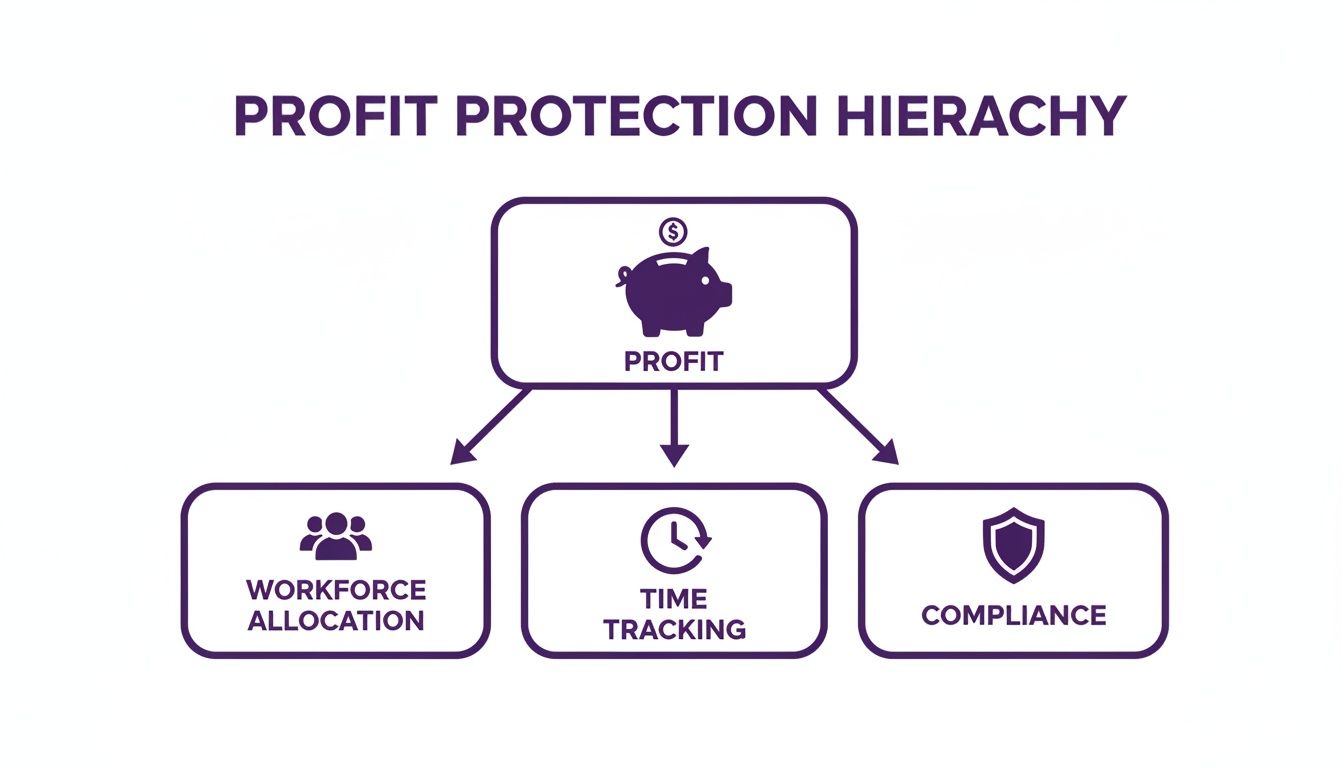
The real takeaway here is that protecting profit isn't a single action. It’s the result of several connected controls, all managed from one central, unified platform.
Battling Budget Creep with Precision
We’ve all seen it happen. One of the fastest ways a project budget unravels is through sloppy or poorly managed time tracking. Paper timesheets are a nightmare—they're riddled with errors, always late, and lack the detail needed to see where the hours and money are actually going until it’s far too late.
Automated time and attendance tracking completely flips the script. By hooking directly into your project management and finance software, a contractor management system delivers real-time data on your labour costs. This allows project managers to spot potential overruns as they happen, not weeks later, and make adjustments before small issues snowball into major financial headaches.
A contractor management system turns time tracking from a backward-looking admin chore into a forward-looking cost-control tool, giving you the power to manage budgets in real-time.
Shielding Your Margins from Compliance Penalties
Compliance is another minefield where costs can suddenly explode. In the UK, getting on the wrong side of regulations like the Building Safety Act or IR35 can lead to eye-watering penalties that carve a chunk directly out of your profits. Trying to manually track every certificate, insurance policy, and right-to-work status for a large, fluid contractor workforce is a high-stakes gamble.
A dedicated system automates this whole process. It acts as your digital compliance watchdog, flagging expired documents and ensuring every single person on site is fully certified and legally good to go. This automated safety net does more than just shield you from fines; it protects your business’s reputation, and you can’t put a price on that.
The financial pressures are very real. Across the UK construction sector, skills shortages have driven significant wage inflation, with some forecasts predicting a 20% rise in tender prices over the next five years. This is made worse by a 22% wage increase for workers with 'green skills' in London. A sophisticated contractor management system is no longer optional for firms wanting to navigate these pressures, optimise their workforce, and keep a tight grip on compliance. You can read more analysis on these UK construction trends on munichre.com.
By connecting the dots between workforce allocation, time tracking, and compliance, the system provides a complete defence for your profitability. It makes sure every pound spent on your contract workforce is efficient, compliant, and contributes directly to a successful project.
At DynamicsHub.co.uk, we provide Transformative HR solutions customised to the unique way you work. Human Resource HR Management for Microsoft Dynamics 365 by Hubdrive is the leading hire-to-retire solution for the Microsoft Platform.
Ready to protect your profits? Phone 01522 508096 today, or send us a message to see how we can help.
Must-Have Features for a UK-Focused System

Choosing a contractor management system isn’t a one-size-fits-all affair, particularly for businesses navigating the UK's specific rules and regulations. A generic platform just won't cut it. It’s a bit like trying to use a European plug in a UK socket—it might look similar, but it simply won’t work properly.
To get real value, you need a system built from the ground up with UK business needs in mind.
Let's cut through the marketing noise and get straight to what matters. There are four absolute pillars that any robust, UK-focused system must be built on. These aren't just nice-to-have features; they are your essential toolkit for staying compliant, keeping costs in check, and ensuring your projects succeed.
Onboarding and Right to Work Checks
First impressions count, and a contractor's first few days can set the tone for the entire engagement. A slow, paper-heavy onboarding process isn't just frustrating; it's a massive compliance risk waiting to happen. Your system needs to make this initial phase smooth and automated, giving every contractor a professional welcome from day one.
A non-negotiable part of this is baked-in Right to Work checks. Manually checking, copying, and filing these documents is a minefield. One simple mistake can lead to hefty fines from the Home Office.
A system that’s truly got your back should:
- Securely collect and store all the necessary ID documents digitally.
- Automatically flag upcoming visa or permit expiries, so you’re never caught out.
- Maintain a clear, auditable trail that proves you’ve done your due diligence on every single contractor.
Time and Attendance Tracking
If you can’t accurately track where your contractors’ time is going, you can’t control your project budget. It’s that simple. Without it, you're flying blind, only discovering a budget blowout when the final invoice lands. A modern system goes far beyond a simple digital clocking-in machine; it connects every hour worked directly to project progress and profitability.
The key is finding a solution that links time and attendance data directly into your project and finance systems. This creates a live view, allowing your project managers to see the budget burn rate in real-time. Our article on mobile workforce management solutions goes into more detail on how this technology supports teams out in the field.
By linking hours worked to specific tasks and project codes, you stop treating time data as just a payroll number. It becomes a powerful strategic tool for controlling costs and planning resources.
Compliance and Certification Management
For industries like construction, engineering, and IT, a contractor's qualifications aren't just a suggestion—they're a legal necessity. Trying to manually keep track of dozens of different certifications, from CSCS cards to professional accreditations, across a constantly changing workforce is a recipe for disaster.
Your contractor management system needs to be your compliance safety net. It should act as a single, central library for every qualification, automatically monitoring expiry dates. It should then send alerts to both the contractor and your team well before a certificate lapses, ensuring no one ever steps onto a site or logs into a system without the right credentials.
Native Microsoft Integration
Finally, think about how this new system will slot into the software your team already uses. A standalone platform that can't talk to your other business tools just creates more work. It leads to data silos and forces your people to waste time switching between different applications.
This is where a system built natively within the Microsoft ecosystem has a huge advantage.
A solution like Human Resource HR Management for Microsoft Dynamics 365 by Hubdrive, which DynamicsHub implements, is built directly on the Power Platform. That means it communicates effortlessly with the tools your team lives in every day:
- Dynamics 365: Contractor information flows straight into your finance and project management modules.
- Microsoft Teams: Approvals and notifications can be handled right inside a team chat.
- Outlook: Key dates and reminders pop up automatically in everyone’s calendars.
This pulls everything into a single, familiar workspace. It makes managing your contractors feel like a natural part of the daily routine, not another complicated task to juggle.
At DynamicsHub.co.uk, we provide Transformative HR solutions customised to the unique way you work. Human Resource HR Management for Microsoft Dynamics 365 by Hubdrive is the leading hire-to-retire solution for the Microsoft Platform.
Ready to see these features in action? Phone 01522 508096 today or send us a message.
Staying Compliant in a Demanding UK Labour Market
Let's be blunt: meeting the UK's strict and constantly shifting compliance demands isn't just a box-ticking exercise anymore. It’s a matter of survival. In a market where regulations are tightening and skilled labour is incredibly scarce, sticking with manual processes is a high-risk gamble. Technology has moved from a "nice-to-have" tool to the only realistic way to manage this operational headache and shield your organisation from serious legal and financial trouble.
The stakes are particularly high when it comes to keeping proper records. For example, new compliance pressures like the Building Safety Act are completely changing the game for how UK businesses manage contractors, demanding meticulous, tamper-proof documentation. This is where a modern contractor management system steps in, creating the secure, digital audit trails you need to prove you’ve done your due diligence. With skills gaps contributing to a 20% rise in tender prices, any inefficiency can cripple a project before it even starts.
The Critical Need for Digital Audit Trails
Imagine a regulator asks you to prove a specific contractor held a valid certification on a particular date three years ago. If you're relying on a manual system, that question triggers a frantic scramble through dusty filing cabinets, old email archives, and scattered spreadsheets. It's slow, unreliable, and leaves your business wide open to risk.
A proper management system removes this nightmare scenario. It automatically creates a tamper-proof, time-stamped digital record of everything. From the moment a contractor’s Right to Work is verified to their final timesheet submission, it's all logged.
This digital audit trail is your best defence. It offers clear, indisputable proof that you've met every legal obligation, giving you a level of security that paper-based systems simply can't provide.
Winning the War for Talent with Efficiency
Compliance isn't the only battleground. With persistent labour shortages, the speed and professionalism of your onboarding process can give you a serious competitive edge. Top-tier contractors have their pick of projects; they aren’t going to hang around for a company bogged down by clunky, paper-heavy administration.
A slow, disorganised onboarding experience sends a clear message to top talent: this company is difficult to work with. A streamlined, digital process shows you value their time and expertise from day one.
When you can bring a specialist on board quickly, verify their credentials efficiently, and get them working on-site in hours instead of days, you instantly become a more attractive partner. This agility is vital as demand for experts in sectors like green energy, defence, and AI continues to grow. A modern system ensures you can attract and manage this essential talent without getting buried in paperwork. This efficiency also feeds directly into accurate time logging, a topic we cover in our guide to choosing a staff clocking-in system.
At DynamicsHub.co.uk, we provide Transformative HR solutions customised to the unique way you work. Human Resource HR Management for Microsoft Dynamics 365 by Hubdrive is the leading hire-to-retire solution for the Microsoft Platform.
To see how a robust system can protect your business and help you attract the best talent, give us a call on 01522 508096 today or send us a message.
Choosing the Right System and Proving Its Worth
Deciding to bring in a contractor management system is a big move. Now for the real work: picking the right platform for your business here in the UK and, just as crucially, proving it’s worth the investment. It’s a process that has to go beyond slick sales pitches and feature lists to find genuine value and a partner you can rely on.
The right system shouldn't feel like a foreign piece of tech you've bolted on; it should feel like a natural part of how you already operate. For UK mid-market organisations, this means looking for specific capabilities that tackle our unique challenges and opportunities head-on.
What to Look for in a System
When you’re weighing up your options, you need to be sure the system is genuinely built for the UK's operational and legal environment. This is about making sure it's not just functional, but truly fit for purpose.
Here are the non-negotiables:
- Scalability and Flexibility: Can the system keep up as you grow? Whether you’re doubling your contractor numbers or branching out into new projects, the platform has to scale with you without needing a complete and costly overhaul.
- GDPR and Data Security: You’re holding sensitive contractor data, and getting security wrong isn't an option. A top-tier system, especially one like Human Resource HR Management for Microsoft Dynamics 365 by Hubdrive which is built on the Microsoft Dataverse, keeps all that information inside your own secure Microsoft 365 setup, which is exactly what you need to meet strict GDPR rules.
- Real UK Support: When you hit a snag, you need help from someone who gets it. Working with a UK-based partner like DynamicsHub means you get support from people who are not only software experts but also know UK business culture and compliance inside out.
From Vague Promises to Hard Numbers
To get this investment signed off, you have to translate benefits into pounds and pence. For any UK business considering a new system, it's absolutely vital to focus on understanding potential ROI. That means picking out specific Key Performance Indicators (KPIs) and tracking them to show a clear financial return.
An effective ROI calculation isn't about guesswork. It's about measuring the 'before' and 'after' across key operational metrics to demonstrate undeniable financial and efficiency gains.
Forget generic claims like "improved efficiency." Let’s talk about hard numbers. For instance, if a system costs you £15,000 a year but saves £25,000 in admin costs and fines you’ve avoided, the value is crystal clear.
Start tracking these kinds of concrete metrics:
- Faster Contractor Onboarding: How long does it currently take from the moment a contractor accepts an offer to them being fully compliant and ready to start? Cutting that down from five days to just one is a massive productivity win.
- Fewer Admin Hours: Tally up the hours your HR and project teams spend every week on manual grunt work—chasing timesheets, checking certifications, pulling reports. A good system can easily slash this time by 50% or more.
- Audit Readiness: Think about the time and stress involved in preparing for an audit. A system with a built-in digital audit trail can shrink that prep time from weeks of chaos to just a few hours, freeing up your team for more important work.
By zeroing in on these practical criteria and measurable KPIs, you can confidently choose a solution like Human Resource HR Management for Microsoft Dynamics 365 by Hubdrive. More importantly, you'll have the cold, hard data to prove what a powerful impact it's having on your bottom line.
At DynamicsHub.co.uk, we provide Transformative HR solutions customised to the unique way you work. Human Resource HR Management for Microsoft Dynamics 365 by Hubdrive is the leading hire-to-retire solution for the Microsoft Platform.
Ready to see a real return on your HR investment? Phone 01522 508096 today or send us a message to get started.