Think of a probation period as an extended, real-world interview. It’s that crucial trial phase right after someone new joins your team, giving both you and them a chance to see if the job, the company culture, and the person are a genuine long-term match. This isn't just a box-ticking exercise; it's a strategic part of building a solid team.
Understanding the Purpose of a Probation Period

A probation period for employment provides a clear, structured window to see a new hire in action. Someone might have aced the interview, but this is your chance to find out if the person you hired on paper can deliver in the day-to-day reality of the role.
For any manager or business owner, this is an invaluable opportunity. You get to observe their practical skills, their work ethic, and just as importantly, how they fit in with the rest of the team. It allows you to confirm your hiring decision with real-world evidence.
It’s a Two-Way Street
But let’s be clear: this isn't a one-sided affair. The new starter is also sizing you up. They’re using this time to figure out if your company is the right place for them. Do they click with the team? Is the leadership style a good fit? Does the job match the description? This mutual evaluation is the foundation of any healthy, long-lasting working relationship.
When handled correctly, a probation period offers far more than a simple "pass/fail" outcome. It’s a dedicated time for:
- Setting and Measuring Goals: You can assess the new person's performance against clear, agreed-upon objectives and KPIs. No guesswork involved.
- Checking the Cultural Fit: It’s the best way to see if an individual truly gets on board with your company’s values and way of doing things.
- Catching Issues Early: If there are wobbles in performance or attitude, this is the time to spot them and offer support, extra training, or direct feedback.
- Managing Risk: If it becomes painfully obvious that it’s not working out, the probation period usually comes with a shorter notice period, making it easier to part ways.
Key Elements of a UK Probation Period at a Glance
To put it all into perspective, here’s a quick summary of what a typical probation period looks like in the UK.
| Component | Description | Common UK Practice |
|---|---|---|
| Purpose | A trial period for a new employee to assess suitability for the role and for the employee to assess the company. | Used to evaluate performance, skills, and cultural fit before confirming permanent employment. |
| Legal Status | Not a statutory requirement, but a contractual one. Must be explicitly included in the employment contract. | Widespread practice. The employee still has statutory rights (e.g., to National Minimum Wage), but unfair dismissal rights typically require 2 years of service. |
| Duration | Varies by role and industry, but there is a standard range. | Typically lasts between 3 to 6 months. Senior or highly technical roles may have longer periods. |
| Notice Period | Usually shorter during probation than for a permanent employee. | Often 1 week for both employer and employee, as specified in the contract. |
| Performance Reviews | Regular check-ins to provide feedback and track progress against set objectives. | Best practice includes a formal review at the start, midpoint, and end of the probation period. |
| Outcome | Can be successful completion, extension of the probation, or termination of employment. | The decision should be communicated clearly and formally before the period ends. |
This table highlights that while probation periods are flexible, they must be managed with a clear structure and contractual basis to be effective.
Setting the Foundation for Success
Ultimately, the goal here isn’t to catch people out; it’s to set them up for a successful career with your company. By providing clear goals and regular feedback from day one, you give every new starter the best possible chance to find their feet and shine. This early investment in guidance pays for itself many times over in better engagement, stronger performance, and higher retention rates.
A successful probation isn’t just about avoiding a bad hire; it’s about confirming a great one. It establishes a precedent of open communication and continuous feedback that becomes the bedrock of the employee’s entire journey with your company.
When you treat the probation period as a foundational part of the employee lifecycle, it stops being a mere formality. It becomes a powerful tool for shaping your team and ensuring that when you and your employee commit to each other, you both do so with total confidence.
Navigating the Legal Landscape of UK Probation
When you’re bringing a new person into your team, it’s easy to think of their probation period as a kind of legal “trial mode.” But here’s something every UK employer needs to get right from the start: there’s no special legal category for a ‘probationary employee’. From day one, they are a full employee with a core set of rights.
The real teeth of your probation period come from the employment contract. It’s in that document where you lay out the ground rules – the length of the probation, how you’ll handle reviews, and, most importantly, a shorter notice period. Without these terms clearly spelled out in writing, your probation period is on very shaky ground legally.
Employee Rights From Day One
It’s a common myth that new starters only get their full rights after they’ve passed probation. That’s simply not true. In the UK, every employee is protected by fundamental statutory rights from the moment they walk through the door.
Here are the key ones that apply immediately:
- The National Minimum Wage: You must pay at least the legal minimum hourly rate. No exceptions.
- Holiday Pay: Paid annual leave starts building up from their very first day.
- Protection from Discrimination: It’s illegal to discriminate based on protected characteristics like age, gender, race, or disability. This protection is absolute.
- Statutory Sick Pay (SSP): If they’re eligible, they’re entitled to sick pay just like any other member of staff.
Getting any of this wrong can land you in serious legal hot water, no matter how long the employee has been with your company.
The Two-Year Unfair Dismissal Rule
So, what’s the big difference for employees on probation? It really comes down to unfair dismissal. For the most part, an employee needs two years of continuous service before they can bring a claim for unfair dismissal.
This is precisely why the probation period is such a powerful tool. During those initial months, you have more leeway to part ways if things aren’t working out, as long as you follow a fair process and your reasons aren’t discriminatory. Be warned, though: a dismissal is automatically unfair if it’s for certain reasons—like pregnancy, whistleblowing, or for an employee trying to assert a legal right. These protections apply from day one.
Meticulous record-keeping during probation is your best defence. Documenting performance reviews, setting clear objectives, and recording any concerns provides a solid, evidence-based foundation for any decision you make, protecting your business from potential claims.
The Changing Probation Landscape
Just as we’ve got used to the rules, things might be about to change. UK employers should keep a close eye on potential legislative shifts, like those being discussed around the Employment Rights Act 2025. An analysis by the law firm Foot Anstey warns that this could tighten the reins on employers, possibly cutting typical probation periods to three months with only a single one-month extension.
This is happening even as recent data shows 60% of organisations currently favour a six-month period, although 43.1% admit they doubt probation is a foolproof way to avoid a bad hire. The potential changes make it more important than ever to have your house in order.
Ensuring your policies are watertight is a must, and you can get a head start by checking out our guide on creating an employment handbook template.
This is where a modern HR platform becomes essential. For example, the HR solution from Hubdrive helps you stay compliant by securely tracking performance data, managing review schedules, and creating a clear audit trail. In today’s evolving legal environment, that’s not just good practice—it’s a necessity.
How to Structure an Effective Probation Period
Getting a probation period right is so much more than just ticking a box on an HR form. It’s about building a solid foundation from the very first day—a framework that’s clear, supportive, and leaves no room for guesswork. When you structure it properly, new starters know exactly what’s expected of them, and managers have a fair and consistent way to gauge performance.
The first step is to think beyond the standard three or six-month window. The length of a probation period for employment should genuinely match the job’s complexity. An entry-level role might only need three months for someone to find their feet, but a senior developer or a strategic manager will likely need six months to get stuck into major projects and really show what they can do.
Determining the Right Duration
Recent data from the UK confirms a move towards longer probation periods. In a 2025 Brightmine survey covering 349 organisations and over a million employees, it was found that roughly 60% now favour a six-month duration. This really highlights a shift where most businesses are choosing between three and six months, depending on what the role truly demands.
Your decision should be a considered one. Ask yourself:
- Role Complexity: Realistically, how long will it take for someone to learn the ropes and start making a meaningful contribution?
- Training Cycle: If there’s a heavy initial training phase, the probation needs to last long enough for them to apply those new skills.
- Project Timelines: For roles tied to specific projects, it makes perfect sense to align the probation with the first major deliverable.
This timeline gives a great overview of the key stages in a UK employee’s journey, from day one right through to gaining unfair dismissal rights and looking ahead to future legislative changes.
Setting Clear Goals and KPIs
Let’s be honest: a probation period without clear goals is just a waiting game. Your new team member needs to know exactly what they’re being measured against from the get-go.
The most effective probation periods are built on a foundation of crystal-clear, measurable goals. This transforms the process from a subjective assessment into an objective, evidence-based evaluation of performance and potential.
The best way to do this is by setting a few SMART (Specific, Measurable, Achievable, Relevant, and Time-bound) Key Performance Indicators (KPIs). These could be anything from sales targets and project deadlines to customer satisfaction scores or getting up to speed with essential software. As part of this, don’t forget to evaluate how they’re fitting in with the team. Using a structured Cultural Fit Assessment can give you a more objective view of how well they align with your company’s values and ways of working.
The 30-60-90 Day Review Plan
Regular, structured reviews are the absolute heart of a successful probation. The 30-60-90 day plan is a popular and effective model because it creates a predictable rhythm for feedback, which gives you plenty of opportunities to make adjustments along the way.
1. 30-Day Check-in: The first month is all about settling in. Is the new starter comfortable? Do they have all the tools, logins, and support they need? This is your chance to solve any teething problems before they grow.
2. 60-Day Review: Now the conversation shifts more towards performance. How are they tracking against those initial goals? Are there any areas where they might need a bit more training or guidance?
3. 90-Day (or Final) Review: This is the big one. It’s a full review of their performance against every KPI, their fit within the team, and their overall progress. The meeting should end with a clear outcome: they’ve passed, you’re extending the probation, or it’s not working out. To dive deeper into structuring these conversations, have a look at our comprehensive guide on the performance management process.
For managers, having a clear plan for these crucial meetings is key. A simple checklist can ensure all bases are covered, making the review fair, thorough, and productive.
Probation Period Review Meeting Checklist
| Review Stage | Key Discussion Points | Action Items |
|---|---|---|
| 30-Day Check-in | Onboarding experience, access to tools, initial questions, team integration. | Resolve any immediate roadblocks, clarify role expectations. |
| 60-Day Review | Progress against initial KPIs, areas of strength, areas needing support. | Identify training needs, adjust goals if necessary, provide constructive feedback. |
| 90-Day (Final) Review | Overall performance against all objectives, cultural fit, long-term potential. | Make a final decision (pass/extend/terminate), set goals for the next quarter if passed. |
Using a checklist like this helps standardise the process across the business, ensuring every new starter gets the same high-quality, supportive experience during their crucial first few months.
Making Fair Decisions on Extensions and Terminations
So, the probation period is drawing to a close. Now comes the moment of truth: was the new hire a good fit? Or are there still some question marks hanging over their performance? This is a critical crossroads, and having a clear, fair, and legally sound framework isn't just a nice-to-have – it's essential for protecting your business and treating people right.
When an employee hasn't quite hit the mark, you're generally looking at two paths: extending their probation or, in more clear-cut cases, ending their employment. Neither of these should be a snap judgement. Both decisions need to be backed up by solid evidence you've gathered throughout the trial period, which is why meticulous notes from performance reviews, feedback sessions, and any support you've offered are your best friends here.
When to Extend a Probation Period
Extending probation isn't about putting off a difficult conversation. It’s a constructive tool for specific situations. It makes sense when someone has shown real promise and a genuine willingness to learn, but just needs a little more runway to get fully up to speed.
You might want to consider an extension if:
- Life got in the way: Perhaps they had a period of sickness, or a sudden change in their team or manager meant they couldn't fairly show what they can do.
- There's a specific skill gap: They could be a fantastic cultural fit but are still getting to grips with a key piece of software. An extension gives you a dedicated window to focus on that specific training.
- They're on the right track, but not there yet: If you've given feedback and seen a clear upward trend in their performance, an extra month or two could be all it takes to get them over the line.
If you do decide to extend, you have to put it in writing. The letter needs to clearly lay out why you're extending, the new end date, and the specific, measurable goals they now need to hit. One crucial point: your employment contract must have a clause giving you the right to extend their probation in the first place.
Navigating Termination During Probation
Sometimes, it just doesn't work out. Despite your best efforts and support, it becomes clear that the person isn't the right fit for the role or the company culture. In these cases, termination is the necessary and responsible decision for the business, even if it's the toughest part of managing a probation period for employment.
Generally, grounds for termination fall into two main buckets:
- Poor Performance: The employee has consistently failed to meet the clear performance standards you set out, even after you've provided feedback and support.
- Misconduct: This could be anything from persistent lateness and poor attendance to more serious breaches of company policy.
The secret to a fair and legally defensible termination is a well-documented paper trail. You need to be able to show that you followed a fair process, gave the employee a chance to improve, and made your decision based on objective evidence, not personal feelings. This is where an integrated HR system is worth its weight in gold. Solutions like Hubdrive’s HR Management for Microsoft Dynamics 365, which we implement at DynamicsHub, create a rock-solid audit trail of every review, goal, and conversation, giving you the confidence to act decisively.
A fair termination process during probation is built on clarity and evidence. Documented performance issues and records of support aren't just box-ticking; they are your primary defence against potential legal challenges.
The Importance of a Fair Process
Recent research really shines a light on how UK businesses view probation. A survey from Brightmine found that while 77.6% of organisations feel probation is effective for checking if they've hired the right person, they tend to be cautious in practice. A huge 78.4% only extend probations now and then, and just over 30% rarely let someone go during this phase. You can dig into more of the findings in the 2025 probationary period research. What this tells us is that while probation is seen as a key way to reduce hiring risks, employers are rightly careful when it comes to extensions and terminations.
Whether you're extending or terminating, you should always hold a final meeting. Sit down with them and explain the decision face-to-face, referring back to the specific examples from their reviews. Immediately after, follow up with a formal letter confirming the outcome and setting out the next steps, like their final pay and notice arrangements. This professional, transparent approach ensures the whole process is fair, reduces legal risk, and protects your reputation as a good employer.
Streamline Probation with HR Management Technology
Let’s be honest, trying to manage a probation period for employment with a jumble of spreadsheets and calendar alerts is a headache waiting to happen. It's a classic case of administrative quicksand—details slip through the cracks, follow-ups get missed, and what should be a strategic process becomes a frantic, last-minute scramble. It’s time to ditch the manual tracking and embrace intelligent automation. This isn't just about efficiency; it's about turning a critical phase from a chore into a genuine tool for setting new hires up for success.
Modern HR tech completely changes the game. Instead of chasing paperwork and reminding managers about deadlines, you can focus on what really matters: quality coaching and support. A dedicated system brings order to the chaos, creating a clear, consistent, and data-driven process that actually works.
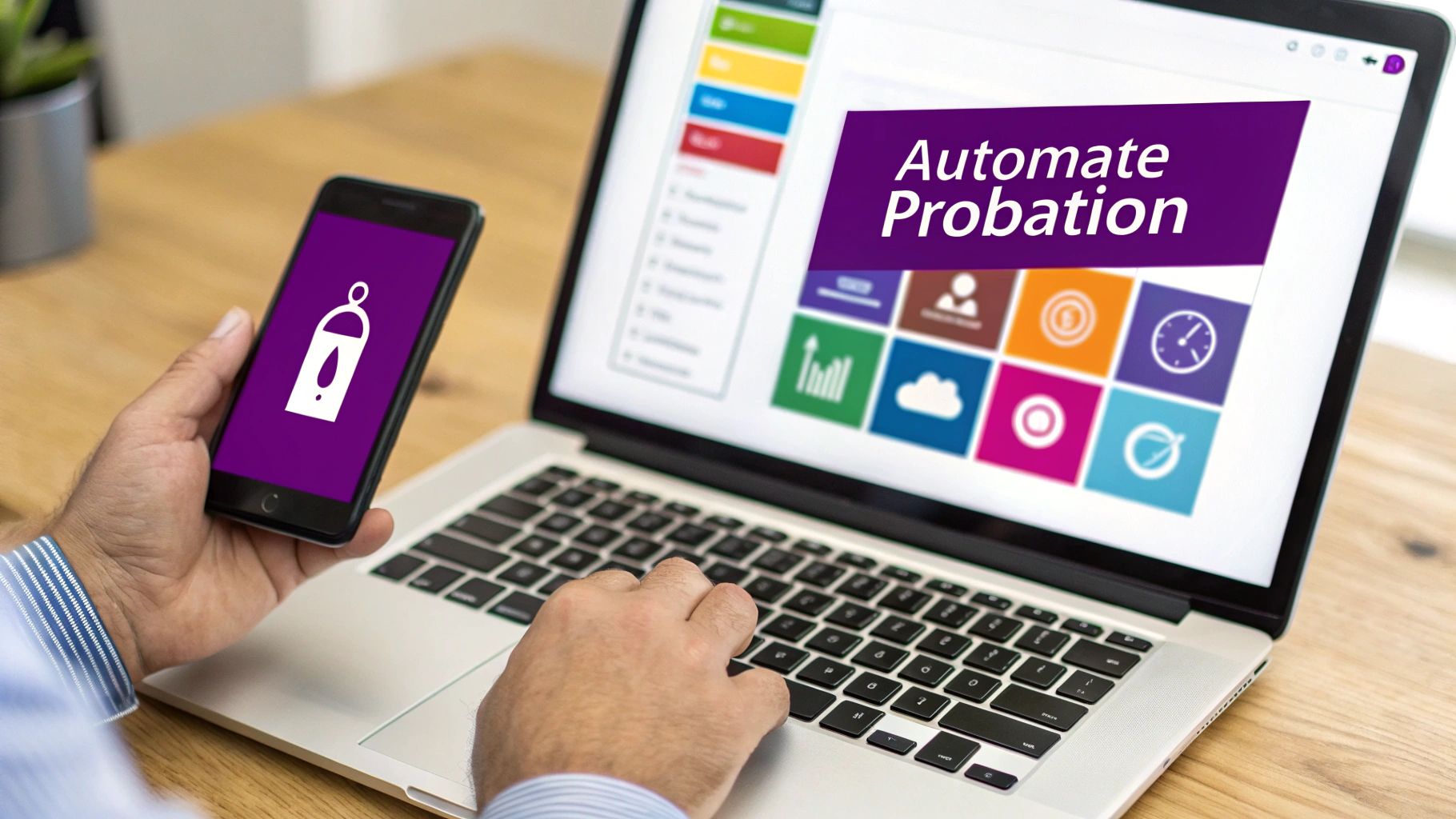
This is what a modern approach looks like: a single, central hub for managing every part of the probation period. From automated reminders pinging your phone to performance dashboards on your laptop, the right technology pulls all those fragmented tasks into one cohesive workflow.
Automating the Probation Workflow
At DynamicsHub, we specialise in implementing Hubdrive’s HR Management for Microsoft Dynamics 365. The real beauty of this solution is that it operates natively within the Microsoft Power Platform—the tools your business probably already uses every day. That integration means no more clunky, disconnected systems. Everything just works together.
Imagine your probation process running like clockwork, completely on its own:
- Automated Reminders: The moment a new starter’s first day is logged, the system fires off a sequence of actions. It automatically schedules 30, 60, and 90-day review meetings in both the manager’s and the employee’s Outlook calendars. No one can ever say they forgot.
- Standardised Feedback Templates: You can ensure every new hire gets a fair and consistent experience with pre-built, customisable feedback forms. Managers can fill them out on their laptop or even on the go through a mobile-friendly app, capturing insights in the moment.
- Centralised Documentation: Every conversation, every goal, and every piece of feedback is securely logged against the employee's central record. This builds an irrefutable audit trail, which is absolutely vital for making fair and legally sound decisions about passing, extending, or terminating probation.
When you automate these routine jobs, you give your HR team and line managers their time back. They can finally concentrate on mentoring new people and making sure they have everything they need to thrive. To see how this fits into the bigger picture, take a look at our article on choosing a HR Management Information System.
Gaining a 360-Degree Performance View
A truly effective probation review needs more than just a manager’s gut feeling. You need the full story. An integrated HR solution is brilliant at this, pulling in data from different places to build a complete, objective profile of a new hire's performance.
Because the Hubdrive solution is built on Microsoft Dataverse, it can talk to other parts of your business seamlessly. Think about it: you could link performance metrics to your project management software to see how a new developer is progressing on key tasks. Or you could connect it to your training platform to see which courses they’ve completed.
A data-driven probation process replaces guesswork with evidence. It allows you to spot high-flyers early and identify those who need extra support, ensuring every decision is based on a complete and objective view of their contribution.
All this data flows directly into powerful, real-time dashboards using Microsoft Power BI. An HR director can, with a single click, get a live snapshot of every employee currently on probation. You can see instantly who is on track, whose review is overdue, and which individuals might be a flight risk. This kind of proactive insight helps you step in and solve small issues before they become big problems.
Of course, a smooth workflow is only half the battle. You also need to ensure your probation terms are legally solid from the outset. To that end, you might want to explore AI tools for reviewing employment contracts which can strengthen your compliance framework and work alongside your automated HR processes.
When you use technology properly, the probation period stops being a simple pass/fail test. It becomes a dynamic, data-rich part of your business that actively helps new starters find their feet and builds a foundation for their long-term success with you.
We are DynamicsHub.co.uk. Experience HR transformation built around your business. Hubdrive’s HR Management for Microsoft Dynamics 365 is the premier hire‑to‑retire solution—more powerful, more flexible, and more future‑ready than Microsoft Dynamics 365 HR.
Ready to automate your HR processes? Phone 01522 508096 today, or send us a message to find out more.
Take the Guesswork Out of Probationary Periods
Getting probation periods right is a non-negotiable part of building a strong, successful team. It's about more than just ticking a compliance box; it's your first, best chance to ensure a new hire is the right fit, and it lays the foundation for their future with your company. As UK employment law gets more complex, relying on spreadsheets and manual reminders simply isn't enough. You need a system that protects your business and properly supports your new starters. That's where we come in.
We're DynamicsHub.co.uk, and we specialise in building HR solutions that fit your business like a glove.
We implement Hubdrive’s HR Management, the leading all-in-one HR solution for Microsoft Dynamics 365. It goes far beyond the standard offering, giving you a far more powerful and flexible system to manage the entire employee journey—from first day to last. Because it works inside the Microsoft tools you’re already familiar with, there’s no jarring switch between different apps. It’s one seamless, unified system for looking after your people.
When it comes to probation, our implementation can automate review reminders, keep all documentation secure and centralised, and ensure your process is not just compliant, but a real strategic asset. We have the UK-based expertise to set this powerful platform up to solve your specific challenges.
Ready to see what a truly joined-up HR system can do?
Give us a call on 01522 508096 or send us a message to start the conversation.
Frequently Asked Questions
When you're dealing with probation periods, a lot of specific questions tend to pop up. Let's tackle some of the most common ones that both employers and employees in the UK ask.
What’s the Normal Notice Period During Probation?
During a probation period, the notice required from either side is usually much shorter than it would be for a permanent role. The golden rule is to have this clearly laid out in the employment contract from day one.
In the UK, it's very common to see a contractual notice period of just one week during probation. This gives both the company and the new starter a bit of flexibility if it becomes obvious things aren't working out. Once they pass their probation, this typically extends to a month or more, as stated in their contract.
Can You Let Someone Go During Their Probation Period?
Yes, absolutely. In many ways, that's what a probation period is for. It's a trial run to see if the employee's performance and general conduct meet the standards you need. If they don't, you can end the employment.
However, you can't just dismiss someone for any reason. The dismissal still needs to be fair and, crucially, not discriminatory. All employees are protected against discrimination based on protected characteristics (like age, gender, or race) from the moment they start. While they generally need two years of service to claim for ordinary unfair dismissal, a dismissal rooted in discrimination is unlawful at any stage.
A fair and lawful dismissal during probation hinges on having clear, documented evidence. Keep a paper trail of performance issues, the feedback you've given, and any support you offered. This shows you had a reasonable basis for your decision.
How Should We Handle Sickness Absence?
Employees on probation have the same rights to Statutory Sick Pay (SSP) as anyone else, as long as they meet the standard eligibility criteria.
That said, frequent or long spells of sickness during a probation period can be a genuine concern. It can stop someone from getting to grips with their role or fitting in with the team. If this happens, you should stick to your company's standard sickness absence policy, which might involve holding return-to-work interviews. If the level of absence makes you consider ending their employment, tread carefully. You must handle it fairly and sensitively, especially if there's a chance a disability is involved, to avoid any risk of a discrimination claim.
We are DynamicsHub.co.uk. Experience HR transformation built around your business. Hubdrive’s HR Management for Microsoft Dynamics 365 is the premier hire‑to‑retire solution—more powerful, more flexible, and more future‑ready than Microsoft Dynamics 365 HR.
Ready to transform your HR processes? Phone 01522 508096 today, or send us a message.