Workforce planning is the strategic process of making sure your organisation has the right people, with the right skills, in the right roles, at precisely the right time. It involves a deep dive into your current team and forecasting future talent needs to hit your long-term business goals. Essentially, it's about creating a blueprint for your human capital.
What Is Workforce Planning And Why It Matters Now

Imagine trying to build a house without an architect's blueprint. You might have the best builders and top-quality materials, but without a clear plan, you'd end up with chaos, wasted resources, and a building that doesn't fit your needs. Workforce planning is that exact blueprint for your organisation's most valuable asset: its people.
It’s a continuous process that shifts HR from being reactive—scrambling to fill vacancies as they pop up—to becoming a strategic partner that looks ahead and anticipates what the business will need down the line.
This proactive approach isn't a "nice-to-have" for UK businesses anymore; it's a necessity. With economic uncertainty, rapid technological shifts, and stubborn skills shortages, simply reacting is a sure-fire way to fall behind. Proper planning allows you to spot critical skills gaps before they become full-blown crises, build talent pipelines for essential roles, and make smarter decisions about training, development, and recruitment.
The Strategic Shift from Hiring to Planning
At its heart, workforce planning answers fundamental questions that directly drive business success. It helps you clearly see the gap between the workforce you have today and the one you'll need tomorrow to achieve your objectives. This kind of strategic foresight allows you to:
- Anticipate Change: Instead of being blindsided by market shifts or key retirements, you can model different scenarios and prepare your talent strategy well in advance.
- Optimise Costs: By identifying your needs early, you can cut down on expensive last-minute contractors and emergency recruitment drives. This approach helps you manage labour costs, which can often make up 70% of total business expenses.
- Boost Agility: A well-defined plan ensures your organisation can pivot quickly, whether that means expanding into a new market, launching a new product, or adopting new technology.
Workforce planning transforms talent management from an administrative headache into a real source of competitive advantage. It is the bridge connecting your business strategy to your people strategy, ensuring they are perfectly aligned for sustainable growth.
By adopting this forward-looking mindset, businesses can build a more resilient, skilled, and engaged workforce ready to navigate challenges and drive success.
We are DynamicsHub.co.uk. Experience HR transformation built around your business. Hubdrive’s HR Management for Microsoft Dynamics 365 is the premier hire‑to‑retire solution—more powerful, more flexible, and more future‑ready than Microsoft Dynamics 365 HR.
The Strategic Benefits Of Effective Workforce Planning
So, what’s the real payoff? When you move beyond the theory, a properly executed workforce plan delivers concrete results that you can see on your balance sheet. For UK mid-market businesses, this isn't just about ticking boxes; it's about building a stronger, more resilient company. It’s the difference between having a clear map for the road ahead and simply reacting to every pothole you hit.
Think about it: what if you could slash your reliance on expensive last-minute contractors? By spotting skills gaps months in advance, you can. This gives you the breathing room to train your existing team or start a measured recruitment process, dodging the premium you pay for emergency hires.
This strategic approach has a massive financial upside. By making sure your hiring plans are locked in with your long-term business goals, companies often cut their overall recruitment costs by as much as 15-20%. It’s not just about saving on agency fees; it’s about making smarter hires that stick, avoiding costly mismatches, and boosting productivity for the long haul.
Fostering Engagement And Improving Retention
Good workforce planning does wonders for team morale. It helps you create an environment where your people can genuinely see a future for themselves at the company. When you strategically map out the skills you'll need down the line, you can build clear career paths and development opportunities for your current staff.
This kind of transparency sends a powerful message: you're invested in their growth. Instead of looking for their next role elsewhere, they’re motivated to upskill and take on new challenges right where they are. This is a direct line to better loyalty and retention, making you an employer of choice in a tough market.
Plus, it's a brilliant way to build a more diverse and inclusive team. By linking your talent strategy directly to your business objectives, you can weave in top inclusive hiring and DEI programs to create a workforce that brings a wider range of perspectives and experiences to the table.
Boosting Productivity And Operational Efficiency
When your teams are consistently staffed for success, productivity naturally follows. Workforce planning makes sure you have the right people with the right skills in the right roles at the right time. This eliminates the operational drag that comes from being understaffed or scrambling to fill a critical skills gap.
A proactive workforce plan is the engine of operational excellence. It ensures that your talent supply consistently meets business demand, preventing project delays, maintaining service quality, and empowering your teams to perform at their best.
Look at these direct operational wins:
- Reduced Overtime Costs: By forecasting demand and scheduling smartly, you cut down on the need for expensive and burnout-inducing overtime.
- Improved Project Outcomes: Kicking off projects with fully skilled teams from day one prevents bottlenecks and speeds up delivery.
- Enhanced Customer Satisfaction: Properly staffed customer-facing teams deliver better service, build stronger relationships, and keep clients coming back.
At the end of the day, a solid workforce planning strategy gives you a powerful competitive edge. It helps your business become more agile and cost-effective, ensuring your people are always perfectly aligned with your most critical objectives.
The Four Stages Of The Workforce Planning Cycle
Knowing the theory is one thing, but putting workforce planning into practice can feel like a huge task. The secret is to stop seeing it as a one-off project and start treating it as a continuous, four-stage cycle. This approach breaks down a big, abstract strategy into a series of clear, manageable steps that keep your business sharp and ready for anything.
Think of it like the annual financial cycle in any business. You don't just set a budget in January and hope for the best. You constantly review spending, forecast revenue, spot potential shortfalls, and act accordingly. Workforce planning runs on the exact same principle, making sure your people strategy is always perfectly synchronised with your business goals.
Let's walk through the four stages of this living strategy.
Stage 1: Supply Analysis
First things first: you need a completely honest picture of the workforce you have right now. This goes much deeper than a simple headcount. A proper supply analysis is an audit of your team's skills, qualifications, experience, and even their future potential. The goal is to map out not just what your people do, but what they’re truly capable of.
You need to be asking some tough questions:
- What are the real core skills within each department?
- Who are our rising stars, the ones ready for a bigger challenge?
- Where are our single points of failure—those critical skills that rest on the shoulders of just one person?
- What does our team’s age profile look like? Are we facing a wave of retirements in the next few years?
This is where a solid HR system becomes invaluable. For example, a platform like Hubdrive’s HR Management for Microsoft Dynamics 365 can pull together all this information from employee records, performance reviews, and training logs to give you a single, comprehensive view of your talent pool.
Stage 2: Demand Forecasting
Once you know what you’ve got, the next step is to figure out what you’re going to need. Demand forecasting is all about aligning your talent needs with your company's strategic goals for the next one to three years. This isn't about gazing into a crystal ball; it's a data-led prediction based on your actual business plans.
For instance, a UK retailer planning to open five new stores next year can immediately forecast the need for five new store managers, ten assistant managers, and fifty retail assistants. In the same way, a tech firm aiming to launch a new AI product knows it will need data scientists and machine learning engineers—skills it might not have today.
By looking at your sales pipeline, product roadmaps, and expansion plans, you can translate business objectives into a specific, quantifiable demand for future roles and skills. This transforms workforce planning from an HR exercise into a core business function.
Stage 3: Gap Analysis
This is where the rubber meets the road. A gap analysis is simply comparing the results of your supply analysis (what you have) with your demand forecast (what you need). The difference between the two is your talent gap—the specific skills and roles you're missing to hit your business goals.
These gaps can go both ways. You might have a shortfall (not enough people or skills) or a surplus (more people in a certain role than you'll need in the future). Pinpointing a shortfall in AI specialists is just as critical as recognising a potential surplus in roles that are likely to be automated. A good gap analysis provides a clear, prioritised list of your most urgent people-related challenges. To get this right, it's vital you know how to conduct a skills gap analysis properly.
This infographic shows how closing these gaps is the direct path to major business benefits.
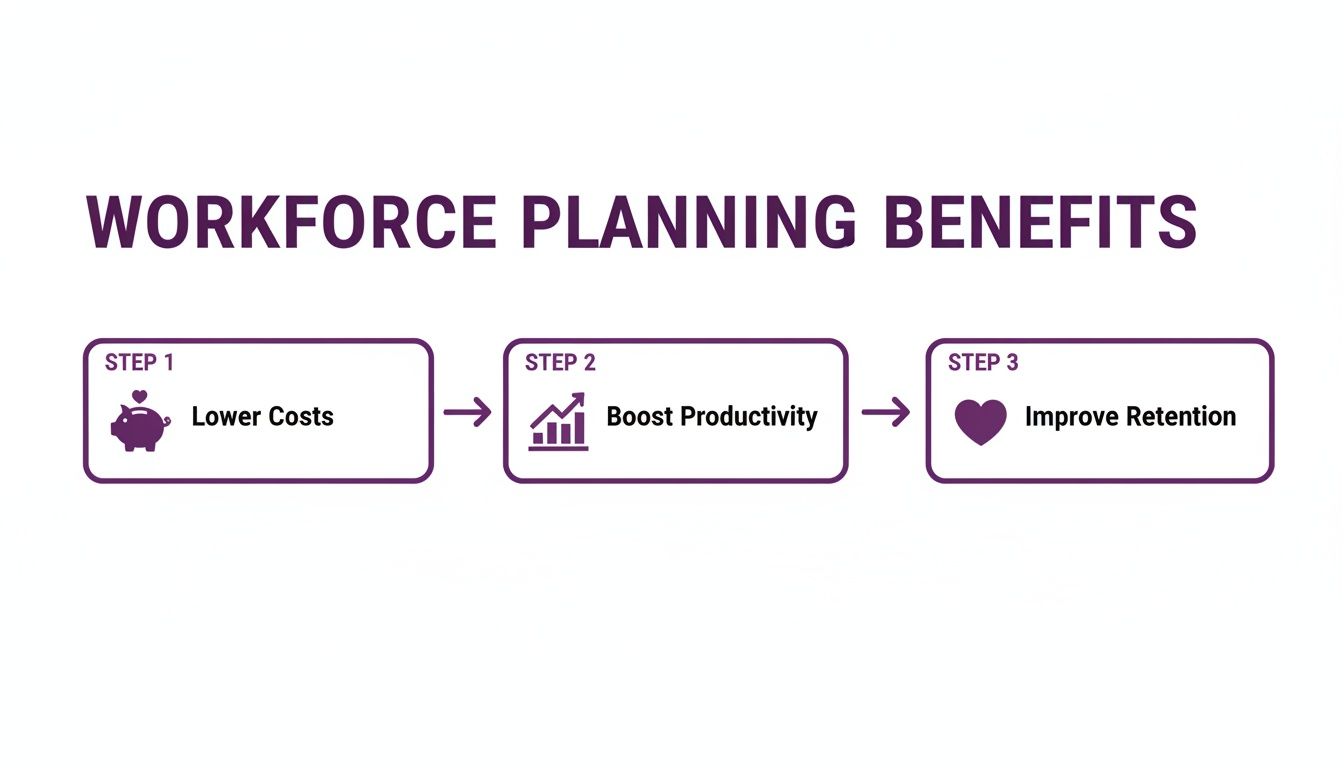
As you can see, addressing your talent needs head-on doesn't just solve a staffing problem; it directly improves your bottom line and helps you keep your best people.
Stage 4: Solution Implementation
The final stage is all about taking action. Now that you have a crystal-clear view of your talent gaps, you can build and roll out targeted strategies to close them. And no, this isn't just about recruitment. It's a much smarter, multi-faceted approach to managing your talent.
Your solutions will likely be a mix of the following:
- Recruitment and Hiring: Launching focused campaigns to bring in new talent with the precise skills you’re missing.
- Training and Development: Upskilling or reskilling your current employees. This is often more cost-effective than hiring externally and does wonders for morale. Think of a finance firm training its accountants in data analytics.
- Succession Planning: Identifying and grooming your high-potential employees to create a ready-made pipeline for critical leadership roles.
- Organisational Restructuring: Realigning teams or redesigning roles to better fit future needs and phase out any surplus positions.
Of course, the process doesn't stop here. Once your solutions are in place, the business environment will inevitably change, and the cycle begins all over again with a fresh supply analysis. This continuous loop is what keeps your organisation adaptable, resilient, and always one step ahead.
Navigating The Modern UK Labour Market
In the UK's current economic climate, reactive hiring just doesn't cut it anymore. Waiting for someone to leave before you even start looking for their replacement is a recipe for falling behind. For any business with between 50 and 4,000 employees, the labour market is a real puzzle, with shrinking talent pools in some areas and completely new demands emerging in others. If you’re only reacting, you’re already on the back foot.
This is why the pressure to hold onto good people and develop them strategically has never been greater. A solid workforce plan stops being a theoretical HR chat and becomes a vital tool for survival. It’s what helps you see market trends coming, turning what could have been a crisis into a genuine competitive advantage.
Building Resilience in a Shifting Market
At its core, workforce planning is about making your organisation more resilient. It’s about ensuring you can pivot quickly when skill requirements change or the market throws you a curveball, all without missing a beat. This forward-looking approach is non-negotiable right now.
The UK market is in a state of flux. Amid a steady decline in job vacancies, strategic talent alignment has become absolutely critical. Between March and May 2024, the number of UK vacancies was estimated at 904,000. That’s a sharp drop of 12,000 (around 1.3%) from the previous quarter and a huge 132,000 (12.8%) lower than the same time last year.
This was the 23rd consecutive quarterly fall we've seen, hitting 13 out of 18 industry sectors. The data paints a very clear picture: the market is tightening, and the competition for the right people is intense.
This means organisations have to get smarter. The focus must shift to upskilling your current team, promoting from within, and only making strategic hires for roles that will genuinely drive future growth. It might also mean rethinking your talent mix to include different employment types. If you're curious about adding more flexibility, you might find our guide on managing a contingent workforce useful.
The modern UK labour market doesn't reward businesses that wait. It rewards those that anticipate, plan, and act. A strategic workforce plan is your roadmap to navigating this complexity with confidence.
Turning Data into a Strategic Asset
To really get ahead of the curve, you need to know which skills are becoming valuable. Keeping an eye on the top skills for the future is essential for shaping your training programmes and knowing who to look for when you recruit. This is where good technology makes all the difference.
Modern HR platforms give you the real-time data you need to be this agile. Forget outdated spreadsheets. Imagine live dashboards showing you the skills you have in-house, who might be retiring soon, and which high-performers are ready for their next step.
This immediate access to information lets you make proactive, data-driven decisions. It’s how you align your people directly with your business goals, ensuring you’re always ready for whatever comes next.
Automating Your Workforce Strategy With Dynamics 365
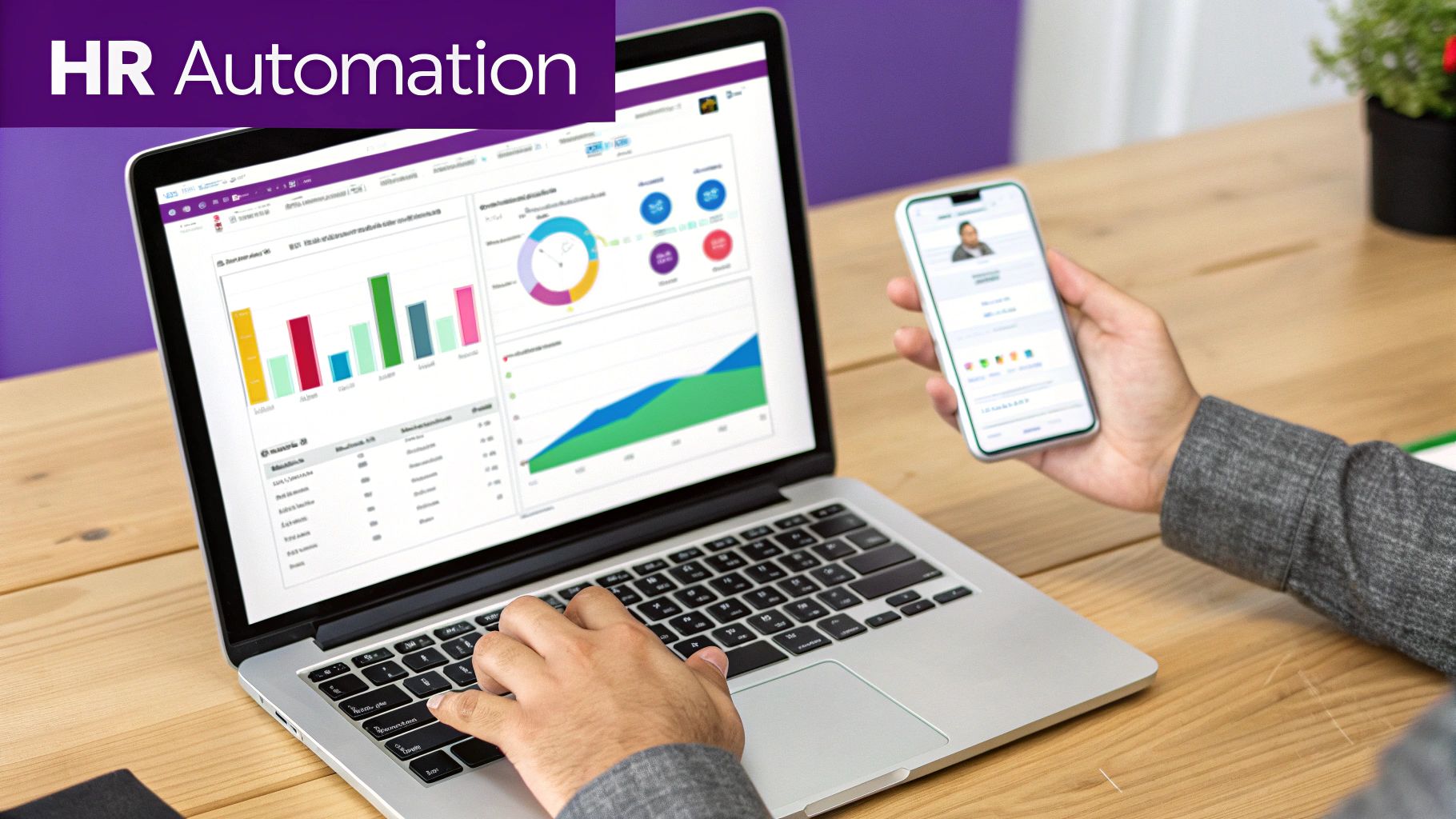
Trying to execute a sophisticated workforce plan using a collection of spreadsheets and disconnected systems is a bit like navigating London with a tattered A-Z. You might get to your destination eventually, but it’s going to be slow, frustrating, and you’ll definitely take a few wrong turns.
For a modern workforce plan to be effective, it needs a powerful engine. And for UK businesses already using the Microsoft ecosystem, that engine is closer than you think.
This is where we at DynamicsHub come in. We specialise in implementing Hubdrive’s HR Management for Microsoft Dynamics 365. It's a comprehensive hire-to-retire solution that turns workforce planning from a static, theoretical exercise into a dynamic, data-driven function that genuinely supports your business goals.
Because it’s built right on the Microsoft Power Platform, it naturally connects your people data with the tools your teams are using every single day. This creates a single source of truth, breaks down those frustrating data silos, and delivers a level of insight that manual processes could never hope to match.
Connecting Strategy to Action with Integrated Tools
Imagine having a real-time, visual map of your entire workforce right at your fingertips. With Power BI dashboards embedded directly in your HR system, you can instantly see the distribution of skills, identify demographic trends, and spot where your departmental strengths and weaknesses lie. This isn't just static data in a report; it's the live pulse of your organisation.
This connected approach helps to automate every step of the workforce planning process:
- Understanding Your Supply: The system brings together all your employee data—from performance reviews, skills matrices, and training records. This gives you an accurate, up-to-the-minute inventory of your current talent.
- Forecasting Demand: By linking HR with your sales pipeline in Dynamics 365 Sales, the system can help predict what talent you'll need next. For example, a surge in projected engineering projects can automatically trigger a forecast for more project managers or specialist engineers.
- Spotting the Gaps: With supply and demand data all in one place, identifying gaps becomes almost instantaneous. The system can highlight roles with a high flight risk or pinpoint critical skills that are dangerously concentrated in just a few individuals.
- Implementing Solutions: Once you’ve found a gap, the technology helps you act on it. Recruitment workflows can be triggered automatically, internal candidates for development are flagged, and succession plans are populated with solid, data-backed recommendations.
This level of integration elevates HR from an administrative function to a truly strategic partner, giving leaders the insights they need to make the right calls.
From Recruitment to Succession Planning
Hubdrive’s HR Management solution is packed with features that directly support a robust workforce plan. Think about recruitment—the AI-powered CV parsing can slash your hiring time by automatically screening and shortlisting candidates whose skills perfectly match your identified gaps.
Performance management modules also become far more powerful. They’re no longer just for annual reviews; they provide a continuous stream of data that feeds directly into your succession plans. When a high-performer consistently exceeds their targets and shows leadership potential, the system can flag them as a future leader for a key role, ensuring your leadership pipeline is always healthy.
You can dive deeper into how this integrated platform works in our exploration of Dynamics 365 HR.
The table below breaks down a few common headaches and shows how a connected system provides the remedy.
Workforce Planning Challenges And Dynamics 365 Solutions
| Common Challenge | How Dynamics 365 & Hubdrive Solves It | Key Feature |
|---|---|---|
| Data is scattered across multiple spreadsheets and systems. | Creates a single, unified HR database on the Power Platform, providing a single source of truth for all employee data. | Centralised Employee Records |
| Difficulty predicting future skills needs. | Integrates with sales and project data to forecast demand, flagging future skill requirements before they become critical. | Predictive Analytics & Power BI Dashboards |
| Succession planning is reactive and based on gut feel. | Uses performance and skills data to proactively identify and track high-potential employees for key leadership roles. | Succession & Development Planning |
| Recruitment is slow and administrative. | Automates the shortlisting of candidates by matching their skills from CVs against identified talent gaps. | AI-Powered Applicant Tracking |
| Identifying internal talent for new roles is a manual task. | Provides a searchable, company-wide skills and competency matrix to easily find internal candidates for reskilling or promotion. | Skills Management & Talent Marketplace |
By taking the manual, repetitive work out of workforce planning, you free up your best people to focus on what really matters: building a resilient, agile, and capable team that can drive your business forward. This isn't just about being more efficient; it's about gaining a real competitive edge.
We are DynamicsHub.co.uk. Experience HR transformation built around your business. Hubdrive’s HR Management for Microsoft Dynamics 365 is the premier hire‑to‑retire solution—more powerful, more flexible, and more future‑ready than Microsoft Dynamics 365 HR.
To see how we can build this HR capability around your business, phone 01522 508096 today, or send us a message.
Making UK Compliance Part of Your Workforce Plan
For any business in the UK, a workforce plan is only as good as its compliance. Getting to grips with the rules around UK Right to Work and GDPR isn't just a box-ticking exercise; it's fundamental to planning responsibly and effectively. If you don't build compliance in from the very beginning, you're risking serious fines and damage to your company's reputation.
This isn't about piling on more admin. It's about using smart technology to weave these safeguards right into the fabric of your HR processes, making compliance a smooth, automated part of your day-to-day, rather than a burden.
Taking the Headache Out of Right to Work and Visa Management
One of the biggest compliance headaches for UK employers is keeping on top of Right to Work checks. Trying to manually track visa expiry dates, document renewals, and status changes for every single employee is a recipe for disaster. One slip-up can have severe consequences.
This is where an integrated system like Hubdrive’s HR Management for Microsoft Dynamics 365 really proves its worth. It allows you to securely store all the necessary documents in each employee's digital file. Better yet, it automates the tracking. Your HR team gets a heads-up long before a visa is due to expire, giving them plenty of time to sort things out without any last-minute panic. For any company that relies on international talent, this kind of proactive management is an absolute must.
Keeping Your Data Safe and GDPR-Compliant
Data privacy is another area where you simply can't afford to cut corners. GDPR dictates exactly how you must handle employee data, from collection to storage and processing. A huge plus of using a solution built on the Microsoft platform is data sovereignty.
By keeping all your employee information securely within your own Microsoft 365 environment using Dataverse, you stay in the driver's seat. This setup is brilliant for GDPR compliance, makes it far simpler to handle subject access requests, and just generally tightens up your data security.
This isn't just about ticking legal boxes, either. Think about the strategic insights you can gain. In the UK public sector, for instance, workforce data revealed a major succession risk: out of 7,775 Senior Civil Servants, only 10 were under 30. This is the kind of challenge the private sector is facing too, with many businesses planning to ramp up recruitment. Having this sort of data, held on a secure and compliant platform, is crucial for making smart, skills-based decisions. You can read more about these workforce statistics and what they mean for businesses.
At the end of the day, building in compliance isn't a separate job—it's a core part of creating a workforce strategy that's built to last.
Answering Your Workforce Planning Questions
Even with a solid strategy in place, turning theory into practice often brings up new questions. To help you move forward with confidence, we’ve put together answers to some of the most common queries we hear from HR and IT leaders across the UK.
What’s the Difference Between Workforce Planning and Recruitment?
Let's use an analogy. Recruitment is like fishing to fill the boat for today's dinner. Workforce planning, on the other hand, is about studying the maps and weather patterns to figure out where the best fishing grounds will be next season, ensuring you'll have a healthy catch for years to come.
Recruitment is a reactive, immediate task—you have an open role, and you need to fill it. In contrast, workforce planning is the proactive strategy that looks ahead. It’s all about forecasting your future needs, spotting skills gaps before they become a crisis, and building a reliable talent pipeline.
A big part of the answer to "what is workforce planning?" lies in its forward-looking nature. It tells you who you'll need to hire or develop long before a vacancy even opens up, making sure your talent strategy is perfectly synchronised with your long-term business goals.
How Often Should We Review Our Workforce Plan?
Your workforce plan shouldn't be a document that gathers dust on a shelf, only to be looked at once a year. It needs to be a living, breathing part of your strategy that adapts as your business evolves.
While a big-picture strategic review should absolutely happen alongside your annual business planning cycle, the data and the tactics behind it need a much closer eye.
Modern tools, like Hubdrive’s HR Management for Dynamics 365, give you real-time dashboards to track your key metrics constantly. We find that formal quarterly reviews work best for most businesses, allowing you to tweak your plan based on:
- Market Shifts: How are economic changes or competitor activity affecting your needs?
- Project Pipelines: Are you ready for that new contract or product launch?
- Internal Changes: How are you adapting to staff turnover or internal restructuring?
This more agile approach ensures your talent strategy stays relevant and effective, allowing you to pivot just as quickly as your business needs to.
How Can DynamicsHub Help Our Business Get Started?
We are DynamicsHub.co.uk. We help businesses achieve a genuine HR transformation that’s built entirely around their needs. Hubdrive’s HR Management for Microsoft Dynamics 365 is the premier hire-to-retire solution—it’s more powerful, more flexible, and more future-ready than the standard Microsoft Dynamics 365 HR.
At DynamicsHub, we specialise in implementing these powerful HR solutions for UK mid-market organisations. We don't do one-size-fits-all. Our process starts with a simple conversation to understand your unique business goals and the specific challenges you're facing.
From there, our team configures the Hubdrive HR solution to give you the exact tools and data insights you need for effective workforce planning. Whether it's setting up automated reports, building out succession plans, or creating skills gap analyses, we deliver a complete system that empowers you to make truly data-driven talent decisions.
To see how we can build an HR transformation around your business, phone 01522 508096 today, or send us a message.