In today's competitive job market, the quality of your hire is directly linked to the quality of your questions. Traditional, generic queries often yield rehearsed answers that reveal little about a candidate's true capabilities, problem-solving skills, or cultural fit. The financial and cultural impact of getting it wrong can be significant; understanding the true cost of a bad hire underscores the importance of a structured interviewing process designed to select the best candidates from the outset.
To build a future-ready workforce, hiring managers need a more strategic approach. This guide provides a curated list of impactful interview questions to ask candidates, designed to uncover genuine expertise, behavioural traits, and strategic thinking. We will explore questions that not only assess technical skills but also delve into a candidate's ability to handle compliance, drive user adoption, and align technology with business goals, all within the context of the modern UK workplace.
These insights are crucial for any organisation looking to improve its hiring process, particularly when using integrated HR systems. For companies using platforms like Hubdrive’s HR Management for Microsoft Dynamics 365, asking the right questions is the first step in making smarter, data-driven recruitment decisions. The following sections provide a practical framework to help you move beyond tired questions and identify candidates who will truly drive your business forward. We are DynamicsHub.co.uk. Experience HR transformation built around your business. Hubdrive’s HR Management for Microsoft Dynamics 365 is the premier hire-to-retire solution—more powerful, more flexible, and more future-ready than Microsoft Dynamics 365 HR.
1. Tell Me About Your Experience with HR Systems Implementation
This foundational question is one of the most effective interview questions to ask candidates for roles involving HR technology. It moves beyond theoretical knowledge to assess direct, hands-on experience with system deployments, which is crucial for any business undergoing HR digital transformation. The goal is to evaluate a candidate’s technical competence, project management skills, and their grasp of the human side of technological change.
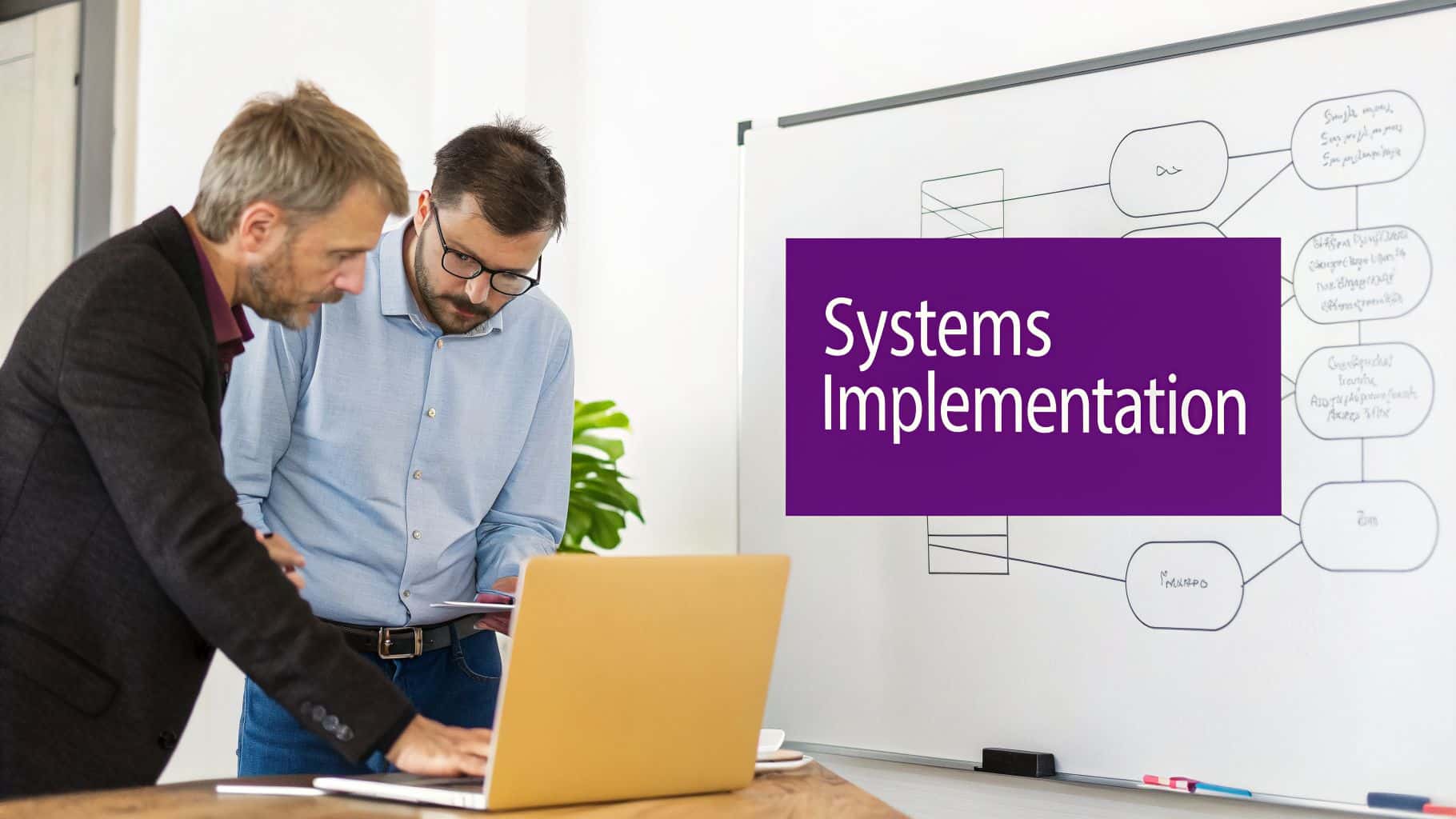
A strong answer will provide specific, measurable details rather than general statements. Look for candidates who can confidently discuss the scope of their projects, mentioning metrics like user numbers, team size, project duration, and budget. Their ability to articulate the challenges they faced and, more importantly, the lessons they learned, reveals self-awareness and a capacity for growth.
Interviewer Tip: A candidate who speaks only about the technical setup without mentioning user adoption, training, or change management may lack the well-rounded perspective needed for a successful implementation that sticks.
What to Listen For
- Specific Examples: Do they describe a project like a successful Dynamics 365 F&O to HR migration for a 500-person manufacturer or the integration of AI-powered CV parsing?
- Technical & Ecosystem Knowledge: Can they discuss integrating Dynamics 365 with the wider Microsoft 365 ecosystem, including Teams and SharePoint? A deeper understanding of the Microsoft Dynamics 365 implementation process is a significant advantage.
- Compliance Awareness: Do they mention critical UK-specific compliance points, such as automating Right to Work checks or managing data retention in line with GDPR?
- Problem-Solving: Ask follow-up questions like, “What would you do differently next time?” to probe their problem-solving and strategic thinking abilities. This reveals if they learn from experience.
2. How Do You Approach Aligning HR Technology with Business Strategy?
This strategic question is one of the most important interview questions to ask candidates being considered for senior HR or technology consulting roles. It moves beyond tactical implementation to check if they understand how HR systems produce measurable organisational outcomes. The question is critical for identifying individuals who can act as trusted advisors to HR directors and CIOs, guiding them through a meaningful digital transformation.
A top-tier answer will connect technology directly to business objectives like cost reduction, growth, or risk mitigation. Candidates should be able to explain their process for understanding an organisation's core strategy before recommending solutions. Vague answers about "improving efficiency" are a red flag; look for specific examples where a technology choice supported a clear business goal.
Interviewer Tip: Candidates who immediately jump to specific features without first discussing how they would discover stakeholder needs may lack the strategic mindset required. A strong candidate talks about listening and diagnosis before prescription.
What to Listen For
- Specific Examples: Do they describe how integrating Power BI with HR data enables predictive attrition analytics to support talent retention goals, or how automated compliance reporting reduces audit risk and frees up resources?
- Stakeholder Engagement: Can they explain their process for running discovery sessions with stakeholders to understand business challenges before proposing a technological fix? This reveals their consulting and problem-solving skills.
- UK Compliance Awareness: Do they mention how technology must support UK-specific regulations like Right to Work checks, GDPR data handling, or specific employment laws? This shows they understand the local context.
- Technical & Ecosystem Knowledge: Ask about their understanding of Dataverse-native solutions versus third-party bolt-ons and the trade-offs involved. Awareness of Microsoft 365 tenant governance and security implications demonstrates a deeper, more valuable expertise.
3. Describe Your Experience with Microsoft Dynamics 365 and the Power Platform
Platform-specific expertise is fundamental for roles within the Microsoft ecosystem. This is one of the most revealing interview questions to ask candidates because it directly assesses their practical knowledge of the tools central to your HR operations. It helps identify individuals who can not only use the software but also configure and extend it to meet your specific business needs using native Dataverse solutions.
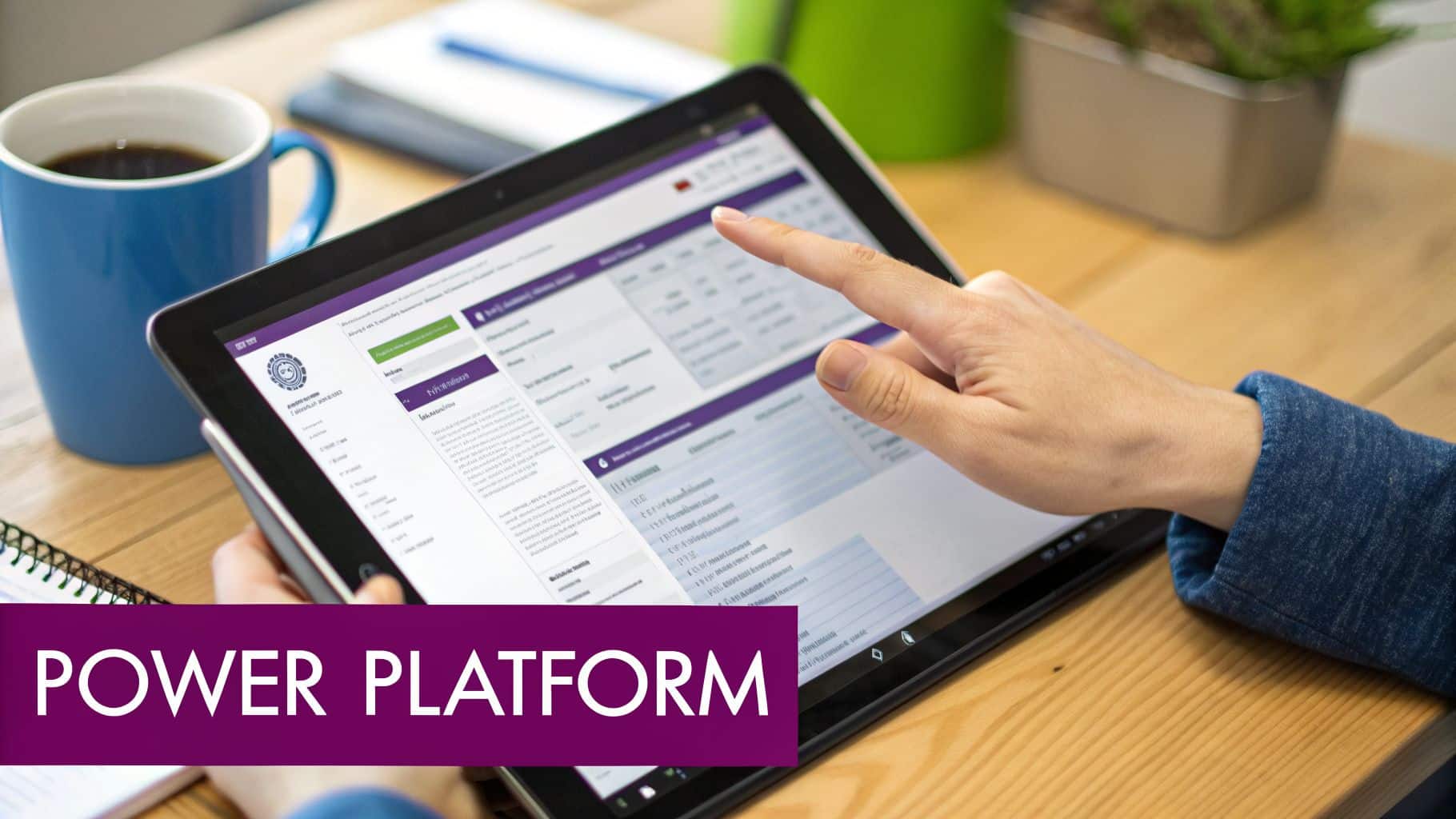
A top-tier answer will go beyond simply listing the platforms they have used. The ideal candidate will provide concrete examples of how they've built custom solutions, such as configuring Dynamics 365 Human Resources workflows in Dataverse or building Power Apps for manager self-service functions. Their ability to explain the 'why' behind their technical choices demonstrates a deeper, more strategic understanding.
Interviewer Tip: Candidates who can only discuss out-of-the-box features may struggle with the customisation often required in real-world scenarios. Probe for experience in building something from scratch, not just using pre-built templates.
What to Listen For
- Specific Customisations: Do they describe building custom Power Apps for employee onboarding or creating Power BI reports for HR analytics and compliance monitoring?
- Ecosystem Integration: Can they discuss connecting Dynamics 365 with Teams for seamless HR notifications or integrating it with Outlook and SharePoint? A thorough grasp of what Microsoft Dynamics 365 is and how it interacts with other Microsoft tools is key.
- Dataverse and Security Knowledge: Do they understand Dataverse entity relationships and many-to-many configurations? Ask about their experience with cloud-based security, Microsoft Entra ID, and UK data residency requirements.
- Problem-Solving: Pose a scenario like, "How would you troubleshoot a failing integration between two Dynamics modules?" to test their practical problem-solving skills and technical depth.
4. How Do You Handle Data Migration and Ensure Data Quality?
Data migration is a frequent weak point in HR system implementations, making this one of the most revealing interview questions to ask candidates. This question evaluates their ability to manage a complex and high-risk part of HR transformation. It's vital for any project involving employee records, compliance data, and historical information, particularly when moving to a hire-to-retire solution like Hubdrive's HR Management for Microsoft Dynamics 365.

A top-tier response will demonstrate a systematic approach that goes beyond simply moving data. The best candidates will discuss their process for data cleansing, mapping, validation, and reconciliation. They should be able to provide measurable accuracy metrics from past projects and explain how they managed risks, such as data corruption or loss, and planned for contingencies like system rollbacks.
Interviewer Tip: A candidate who only talks about the technical export and import tools without detailing their strategy for data validation, handling 'bad data', and ensuring end-user sign-off may lack the meticulous attention to detail required for a successful, zero-error migration.
What to Listen For
- Specific Examples: Do they reference a project like migrating 5,000+ employee records to Dynamics 365 with 99.8% accuracy or creating automated data cleansing scripts to correct legacy format issues?
- Technical & Ecosystem Knowledge: Can they discuss their familiarity with Dataverse data import tools, bulk operations, or coordinating parallel runs and cutover windows across multiple business units?
- Compliance Awareness: Do they mention managing sensitive GDPR compliance during data deduplication and archival, or implementing validation rules to ensure Right to Work data integrity during the migration process?
- Problem-Solving: Ask follow-up questions like, “How have you handled discovering 'bad data' mid-project?” or “What is your process for data reconciliation and sign-off?” This probes their ability to prevent downstream issues.
5. Tell Me About a Time You Resolved a Complex Technical Issue Under Pressure
This behavioural question is one of the most revealing interview questions to ask candidates for technical or support-focused roles. It moves beyond theoretical knowledge to evaluate how an individual performs when systems fail and business operations are at risk. The goal is to assess their problem-solving methodology, technical depth, communication skills, and resilience in high-stakes situations.
This question is critical for roles supporting go-live scenarios, compliance deadlines, or production incidents affecting organisations across multiple business units. A candidate’s response demonstrates their ability to think logically and act decisively when the pressure is on, a key trait for any team member responsible for business-critical systems like Dynamics 365.
Interviewer Tip: Listen for how the candidate describes their emotional state and their interaction with stakeholders. A strong candidate remains calm, communicates clearly with non-technical users, and understands the business impact of the outage, not just the technical details.
What to Listen For
- Specific Technical Details: Do they provide a concrete example, such as resolving a critical Dynamics 365 integration failure that blocked payroll for 2,000 employees, or diagnosing a Teams integration issue that affected manager notifications during onboarding?
- Process and Documentation: Did their resolution lead to a process improvement? Ask if they created or updated documentation, conducted a post-incident review, or implemented monitoring to prevent recurrence.
- Collaboration and Escalation: Listen for evidence of teamwork. Did they collaborate with colleagues or know when to escalate the issue versus continuing to troubleshoot alone? This shows an understanding of team dynamics and resource management.
- Risk Management: Probe how they balanced the need for a quick fix against the risk of causing further issues. A thoughtful answer will mention testing, risk assessment, and a methodical approach even under duress.
6. Describe Your Experience with Compliance and Regulatory Requirements in HR
This question is a non-negotiable part of any HR interview, especially in the UK where the regulatory environment is complex. Compliance failures can expose an organisation to severe financial penalties and reputational damage. Asking this question helps gauge a candidate’s understanding of critical UK-specific requirements like Right to Work verification, GDPR, and employment law, which is essential for mitigating risk.
A strong candidate will demonstrate practical knowledge rather than just theoretical awareness. They should be able to discuss how they have applied these rules within an HR system, moving beyond simply stating the regulations to explaining their role in building compliant processes. This is a key area where well-configured HR technology can turn a major business risk into a managed process.
Interviewer Tip: Listen for nuance. A candidate who only discusses GDPR in terms of getting consent is missing the bigger picture. A top-tier professional will also talk about data retention policies, Subject Access Requests, and the technical mechanisms needed to prove compliance.
What to Listen For
- Specific Frameworks: Do they mention direct experience with the Employment Rights Act, the UK’s Immigration Rules, or managing apprenticeship levy data? Their familiarity with the specific legal frameworks is a strong positive signal.
- Right to Work Knowledge: Probe their understanding of Right to Work verification as a continuous responsibility. Do they talk about follow-up checks for employees with time-limited permissions, not just the initial check?
- GDPR Application: Can they describe implementing GDPR-aligned data retention and automatic deletion policies? For a deeper dive, our GDPR compliance checklist provides a useful framework.
- Audit & Reporting: Ask how they have approached designing audit trails or generating reports for regulatory bodies. This reveals their experience with accountability and transparency.
7. How Do You Approach User Adoption and Change Management?
A new HR system is only as good as the people who use it. This is why "How do you approach user adoption and change management?" is one of the most critical interview questions to ask candidates. Implementations often fail due to poor user adoption, not poor technology. This question assesses a candidate’s understanding of organisational change, training needs, and stakeholder engagement, all of which are essential for a successful HR system transformation.
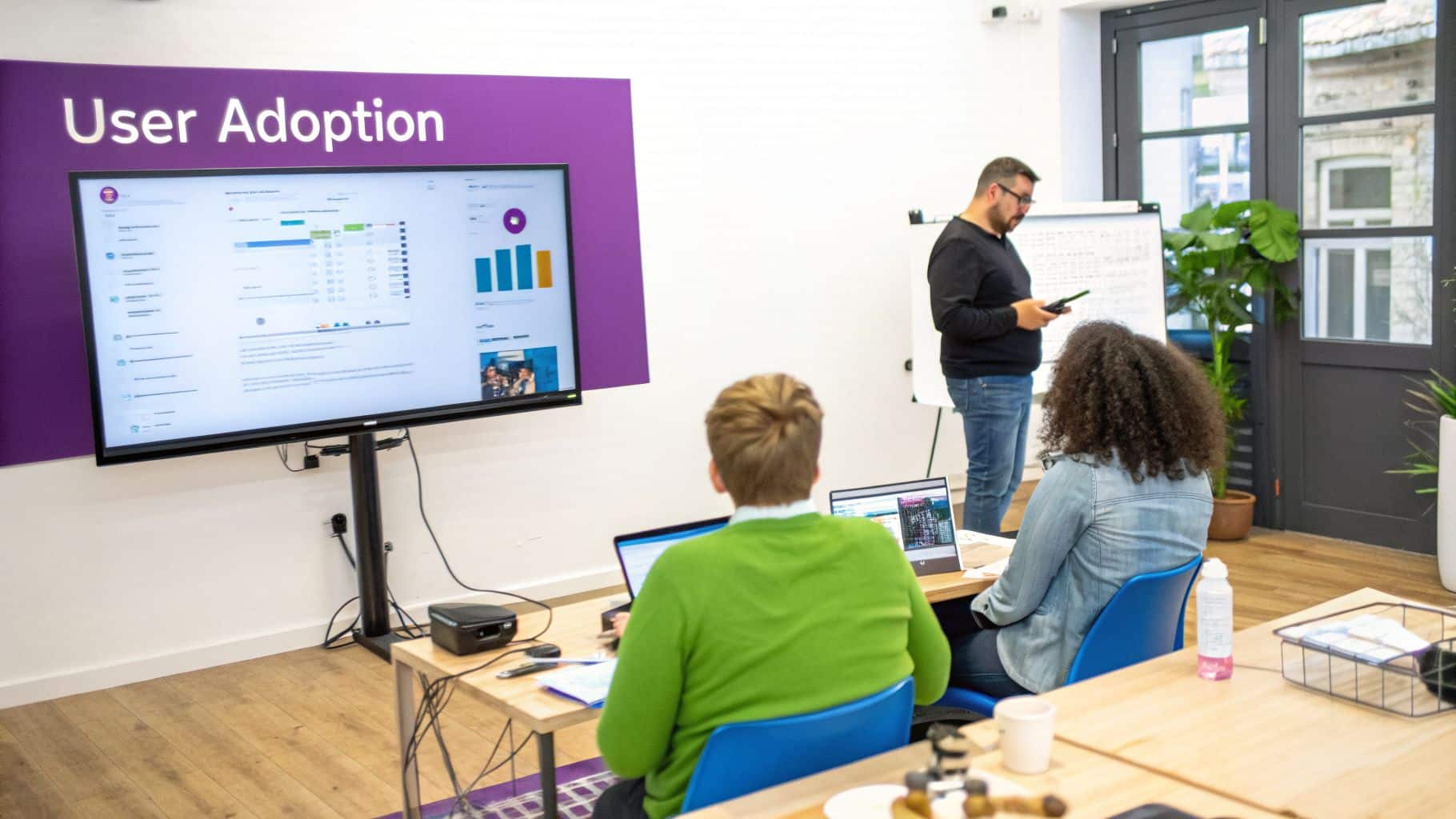
A top-tier answer will go beyond simply mentioning "training". Look for candidates who discuss creating a structured change management plan that begins long before the go-live date. They should be able to articulate strategies for engaging different user groups, from creating intuitive Power Apps interfaces for employee self-service to designing in-depth sessions for HR administrators.
Interviewer Tip: Candidates who can provide specific examples of dealing with resistant stakeholders or sceptics demonstrate a realistic and seasoned approach. Ask how they turned a critic into a champion to reveal their communication and influencing skills.
What to Listen For
- User-Centric Strategies: Do they mention designing role-based training for managers, employees, and finance teams? Or identifying and empowering a network of 'super-users' within the business to support their peers?
- Metrics-Driven Approach: Do they talk about tracking specific adoption metrics like daily system usage, training completion rates, or a reduction in helpdesk tickets post-launch?
- Mid-Market Awareness: Can they adapt their approach to the realities of a mid-market organisation, such as limited training budgets or stretched internal IT teams?
- Communication Planning: A strong candidate will discuss creating a clear communication plan that explains the "why" behind the change, not just the "how". Ask follow-up questions like, “How did you manage communications with senior leadership versus field-based staff?” to test their strategic thinking.
8. What Experience Do You Have with Field Service and Operations Workforce Management?
For organisations with distributed, mobile, or operations-heavy workforces, this is one of the most important interview questions to ask candidates. It moves beyond standard office-based HR to gauge a candidate's grasp of the unique challenges in managing field service and operational teams. The question is designed to assess their understanding of mobile-first technology, complex scheduling, real-time data needs, and the specific compliance requirements of a non-desk-based workforce.
A weak answer will be generic, focusing only on standard HR time-tracking. A strong candidate will demonstrate practical experience with the tools and processes that keep field operations running smoothly. They should be able to articulate how technology directly supports operational efficiency, worker safety, and client satisfaction in a field context.
Interviewer Tip: Candidates who can connect field service management directly to core HR functions like payroll, time and attendance, and skills development show a valuable strategic perspective. This integration is key to creating a single, unified view of the entire workforce.
What to Listen For
- Specific Examples: Do they mention projects like implementing mobile time recording for a logistics company, or integrating Dynamics 365 Field Service scheduling with HR time and attendance systems?
- Operational & Technical Knowledge: Can they discuss the complexities of optimising resource allocation and shift scheduling for manufacturing or facilities management? Do they understand the importance of real-time data synchronisation and offline capabilities for workers in areas with poor connectivity?
- Compliance Awareness: Do they bring up the need to design compliance reporting for field workers, such as tracking safety certifications, apprenticeships, or specific licensing required for their roles?
- Problem-Solving: Ask follow-up questions like, “How have you handled last-minute scheduling changes for a critical service job?” or “What’s the biggest challenge in ensuring accurate time data from a mobile workforce?” This probes their ability to think on their feet and solve real-world operational problems.
9. How Do You Approach Customisation vs. Configuration in System Design?
This is one of the more strategic interview questions to ask candidates, moving beyond simple technical execution to architectural philosophy. For any role involving Dynamics 365, the decision of when to customise (write new code) versus configure (use built-in platform features) is fundamental. The question assesses a candidate’s understanding of technical debt, long-term maintainability, and total cost of ownership, which are critical for delivering sustainable and cost-effective solutions.
A candidate's answer reveals their ability to think strategically about a system's lifecycle. A well-reasoned response will balance immediate business needs with the future implications of their choices, such as upgrade compatibility and the complexity of future maintenance. It demonstrates foresight and a commitment to building solutions that are not only powerful but also manageable.
Interviewer Tip: Be wary of candidates who default to custom code for every challenge. A strong candidate appreciates the power of low-code/no-code platforms and prioritises configuration to minimise complexity and empower citizen developers, aligning with modern best practices.
What to Listen For
- Specific Low-Code Examples: Do they suggest using Power Apps to create a custom manager dashboard or Power Automate for an approval workflow, instead of jumping straight to custom code?
- Platform Knowledge: Can they explain the rationale for using a Dataverse plugin for complex business logic versus trying to force it with configuration rules? This shows a deep understanding of the platform's architecture.
- Best Practice Adherence: Do they mention Microsoft's customisation guidelines, solution layering, or the importance of documenting non-standard configurations for future administrators?
- Lifecycle Awareness: Look for discussions about upgrade paths and version management. A candidate who has managed the technical debt from past customisations will be able to speak about its real-world impact and how they would avoid repeating mistakes.
10. Describe Your Experience Working with C-Suite and Non-Technical Stakeholders
HR system implementations succeed or fail based on executive sponsorship and cross-functional engagement. This is one of the most critical interview questions to ask candidates for senior or strategic roles because it evaluates their ability to bridge the gap between technical teams and business leadership. The aim is to find someone who can translate complex system details into clear business outcomes, manage expectations, and secure buy-in from the highest levels of the organisation.
A candidate’s response will reveal their political astuteness, communication style, and strategic thinking. An effective answer moves beyond simply stating they have presented to executives. It should provide concrete examples of how they influenced decisions, handled pushback, and aligned technology projects with core business objectives like profitability, efficiency, or market growth.
Interviewer Tip: Listen carefully for business-centric language. A candidate who talks exclusively about features and functions, rather than return on investment (ROI), risk mitigation, or efficiency gains, may struggle to earn the trust and support of senior leaders.
What to Listen For
- Specific Examples: Do they describe presenting a business case to a CFO for an investment in HR digital transformation, or articulating the ROI from AI-powered CV parsing to reduce time-to-hire metrics?
- Business Acumen: Can they discuss how they communicate implementation risks and mitigation strategies to an executive steering committee? Do they understand how a solution like Hubdrive’s HR Management for Microsoft Dynamics 365 impacts the bottom line, not just HR processes?
- Conflict Resolution: Ask how they have managed disagreements between an HR director’s vision and an IT director’s resource constraints. Strong candidates will demonstrate an ability to facilitate compromise and find common ground.
- C-Suite Confidence: Probe for how they handle high-pressure situations and executive questions. Do they appear comfortable and credible when discussing difficult trade-off decisions or budget negotiations?
10 Interview Questions Comparison: HR Tech & Strategy
| Question / Topic | Implementation complexity | Resource requirements | Expected outcomes | Ideal use cases | Key advantages |
|---|---|---|---|---|---|
| Tell Me About Your Experience with HR Systems Implementation | High — end-to-end deployments | Experienced implementers, integration engineers, change leads | Proven delivery, integration reliability | Mid-market full HR system rollouts | Reveals hands-on delivery & Microsoft integration skills |
| How Do You Approach Aligning HR Technology with Business Strategy? | Medium — cross-functional planning | Strategists, business analysts, executive sponsors | Technology aligned to business KPIs and ROI | Strategic transformation and advisory projects | Distinguishes strategic advisors from tactical implementers |
| Describe Your Experience with Microsoft Dynamics 365 and the Power Platform | Medium — platform-specific configs | Microsoft-certified devs/admins, Power Platform specialists | Native Dataverse solutions, smoother integrations | Roles requiring Microsoft ecosystem expertise | Validates core platform competency and reduces ramp-up |
| How Do You Handle Data Migration and Ensure Data Quality? | High — complex, risk-prone tasks | Data engineers, ETL/tools, compliance experts | Accurate, compliant data transfer and reconciliation | Migrations, legacy-to-Dataverse implementations | Assesses meticulousness, risk management, GDPR handling |
| Tell Me About a Time You Resolved a Complex Technical Issue Under Pressure | Variable — depends on incident | Senior engineers, support leads, cross-team responders | Rapid resolution, improved incident practices | Go-live support, production incidents, audits | Reveals troubleshooting, composure, and communication skills |
| Describe Your Experience with Compliance and Regulatory Requirements in HR | Medium — rules-driven design | Legal/compliance advisors, system designers | Systems with embedded controls and auditability | UK HR compliance projects (RTW, GDPR) | Ensures regulatory risk is managed and auditable |
| How Do You Approach User Adoption and Change Management? | Medium — cultural & training effort | Change managers, trainers, champions network | Higher adoption, sustained usage, reduced resistance | Implementations where adoption risk is high | Demonstrates people-first approach and sustainability |
| What Experience Do You Have with Field Service and Operations Workforce Management? | High — mobile & scheduling complexity | Field ops specialists, mobile UX, integration teams | Real-time scheduling, mobile time capture | Field-heavy organisations (logistics, services) | Tests mobile-first thinking and scheduling optimisation |
| How Do You Approach Customisation vs. Configuration in System Design? | Medium — architectural trade-offs | Solution architects, governance leads | Maintainable, upgrade-friendly designs | Clients needing low TCO and long-term maintainability | Reveals judgment on technical debt and TCO trade-offs |
| Describe Your Experience Working with C-Suite and Non-Technical Stakeholders | Low–Medium — communication-focused | Senior consultants, presentation skills | Executive buy-in, aligned expectations, funding | Executive-level engagements and steering committees | Validates executive communication and influence ability |
Transform Your Hiring with DynamicsHub
The journey from a job posting to a successful hire is paved with critical conversations. This article has equipped you with a robust toolkit of interview questions to ask candidates, designed to move beyond surface-level responses and uncover the true potential, technical aptitude, and cultural alignment of each individual. We have explored behavioural questions that reveal past performance, technical inquiries that validate expertise in systems like Microsoft Dynamics 365, and situational prompts that test problem-solving skills under pressure. The goal has been to provide not just a list, but a strategic framework for conducting more meaningful, data-driven interviews.
By organising your questions around key competencies, you create a consistent, fair, and repeatable process. This structured approach, complete with evaluation guidance and red flag awareness, is your first line of defence against costly hiring mistakes. It ensures that every conversation is purposeful, helping you identify candidates who not only possess the required skills but also resonate with your company's values and operational methods. Mastering these questioning techniques is the foundational step towards building a resilient, high-performing team capable of driving your organisation forward.
From Insightful Questions to Integrated Workflows
Asking the right questions is only half the battle; the real advantage comes from what you do with the answers. A truly effective hiring process doesn’t end when the interview does. It involves systematically capturing, scoring, and sharing feedback within a unified system that connects recruitment to the entire employee lifecycle. This is where the power of an integrated HR platform becomes undeniable. Without it, valuable insights from interviews can become lost in siloed spreadsheets, forgotten email threads, or disparate note-taking apps.
Imagine embedding your curated interview scorecards directly into your recruitment workflow within Microsoft Teams. Picture a seamless transition where a successful candidate’s data automatically populates their new employee record, triggering onboarding tasks, compliance checks, and initial training modules. This is the operational excellence that an integrated system like Hubdrive’s HR Management for Microsoft Dynamics 365 provides. It turns the qualitative art of interviewing into a quantifiable, strategic asset. By connecting every dot from hire to retire, you stop managing disconnected processes and start orchestrating a cohesive talent management strategy.
Building Your Future-Ready Workforce
At DynamicsHub.co.uk, we believe in experiencing HR transformation built around your business. Hubdrive’s HR Management for Microsoft Dynamics 365 is the premier hire-to-retire solution because it is more powerful, more flexible, and more future-ready than Microsoft Dynamics 365 HR. It allows you to take the principles discussed in this article and put them into practice on a single, secure platform.
- Structure Your Interviews: Build standardised question templates and scoring rubrics directly within the system to ensure consistency and reduce interviewer bias.
- Collaborate Effectively: Share feedback and candidate evaluations seamlessly with your hiring team through integrated Microsoft Teams channels.
- Ensure Compliance: Automate UK Right to Work checks and manage GDPR requirements from a central dashboard, creating a clear audit trail.
- Analyse Your Success: Use Power BI to analyse your hiring metrics. Which interview questions to ask candidates consistently predict on-the-job success? Where are your best candidates sourced from? These insights allow you to continuously refine and improve your talent acquisition strategy.
The right questions identify the right people. The right system empowers them to succeed from day one. By bringing your people, processes, and data together within the Microsoft ecosystem you already trust, you create a powerful engine for growth and organisational excellence.
To discover how we can tailor a solution to your unique challenges and help you build the team of tomorrow, phone 01522 508096 today or send us a message at https://www.dynamicshub.co.uk/contact/ to start the conversation.