Monday morning often starts with a deceptively simple message. A part-time employee calls in sick. Payroll asks whether they qualify for SSP. HR checks the rota and realises their hours changed again last month. Someone else mentions the April 2026 rule changes. The answer is no longer a quick yes or no. That is where statutory sick pay for part time employees becomes risky. The legal rules are specific, but the practical problems usually sit in the gaps between HR, payroll, rostering, and line management. Fixed days are one thing. Variable shifts, zero-hours patterns, and inconsistent notice processes are another.
Most mistakes do not come from misunderstanding the principle of SSP. They come from weak process. The calculation is wrong. Qualifying days were never defined properly. Notice was logged in Teams but not carried into payroll. A manager assumed a part-time worker could not qualify. That is how compliance issues begin.
Navigating the Maze of Part-Time Statutory Sick Pay
The difficult part of SSP is rarely the headline rule. It is the version encountered in practice.
A part-time employee might work three fixed days one week, then pick up extra shifts the next. Another may be on a regular contract but only earn enough to qualify in some periods and not others under the old rules. A zero-hours worker may report sickness promptly, but nobody has agreed how qualifying days should be treated. HR then has to answer a question that payroll software should have answered already.
The sharpest pain point is practical calculation. Guidance often covers the basics, but HR teams still get stuck on daily rates, qualifying days, and irregular schedules. That gap is especially obvious for organisations running absence and payroll administration through Microsoft tools rather than a single specialist process. The same gap is highlighted in this discussion of Statutory Sick Pay for Part Time Workers and in commentary on how calculation challenges remain underserved for part-time and zero-hours staff.
Where employers usually go wrong
Three issues come up repeatedly in practice:
- Assuming part-time means lower rights: SSP eligibility has never depended on full-time status alone.
- Relying on manual interpretation: A spreadsheet may cope with a regular three-day pattern, but it struggles with variable schedules.
- Treating sickness reporting as separate from payroll: If the absence record is incomplete, the payment logic often fails later.
Tip: The safest approach is to treat SSP as a joined-up process, not a payroll-only task. HR defines the rules, managers capture the absence correctly, and payroll applies the calculation from a reliable record.
This matters even more where part-time roles are common, such as retail, hospitality, care, field operations, and support functions with flexible coverage.
Who is Eligible for SSP A Part-Time Employee Checklist
Eligibility must be checked before you calculate anything. For part-time staff, that means being precise about both employment status and, under pre-April 2026 rules, earnings.
Start with the employment relationship
A part-time employee can qualify for SSP if they are working for an employer and meet the relevant conditions. In practice, that can include permanent employees, fixed-term employees, and some agency workers where the legal employment position supports SSP.
For HR managers, this is the first control point. Do not let contract labels do the thinking for you. “Part-time”, “casual”, or “flexible” does not answer the SSP question on its own.
A clean checklist helps:
- Check the contract basis: Confirm the person is engaged as an employee for SSP purposes.
- Check the sickness period: Under the old framework, the employee must have a sufficient period of sickness absence.
- Check notice: Employees must report sickness within the employer’s rules, or within the default timeframe where no tighter rule applies.
- Check conflicting statutory payments: If another statutory payment applies, SSP may not.
The old earnings test before April 2026
Before the April 2026 reform, the main issue for many part-time workers is the Lower Earnings Limit. The old threshold is linked to average weekly earnings over the relevant period.
That is where many employers trip up. They know the employee is part-time, but they do not review average earnings carefully enough. If hours vary, the eight-week lookback matters.
This is also why part-time hours need to be recorded accurately in the first place. If your wider workforce planning is inconsistent, your SSP decision will be inconsistent too. This article on part-time worker hours is useful background for HR teams cleaning up the underlying data model: https://www.dynamicshub.co.uk/2026/03/05/part-time-worker-hours/
The position from April 2026
The major reform is clear. From April 2026, the Employment Rights Act 2025 removes the Lower Earnings Limit of £125 per week and gives all eligible employees, including part-timers regardless of hours or pay, access to SSP from day one according to the government factsheet: https://assets.publishing.service.gov.uk/media/695fb36d47867b8e14f764fb/statutory-sick-pay-factsheet.pdf
That change was designed to help two million workers who previously lacked sick pay access, according to the same government factsheet.
For HR, the operational consequence is straightforward. Your eligibility process must support a before and after model:
| Period | Core earnings rule |
|---|---|
| Before April 2026 | Check whether average weekly earnings meet the old threshold |
| From April 2026 | Remove the Lower Earnings Limit test for SSP entitlement |
Key takeaway: If your process still starts with “does this part-time worker earn enough?”, it is already out of date for April 2026 readiness.
How to Calculate SSP for Part-Time Staff Worked Examples
Here, statutory sick pay for part time employees becomes operational rather than theoretical. A good policy is not enough. Payroll needs a repeatable method.
Fixed schedule example
Take a part-time employee who works a regular three-day week. Under the 2024/25 SSP weekly rate of £116.75, the daily amount for a three-day week is £38.92, as set out in this SSP guide for part-time workers: https://www.leavewizard.com/statutory-sick-pay-for-part-time-workers/
The practical method is simple:
- Confirm the employee’s normal working pattern.
- Confirm the qualifying days in that pattern.
- Divide the weekly SSP amount by the number of qualifying days.
- Pay SSP only for payable qualifying days in the sickness period.
That same source also notes that a weekly SSP amount can replace only a limited share of normal earnings for lower-paid part-time staff, which is one reason the 2026 changes matter so much in practice.
If your payroll team still handles this manually, standardise the method. If the employee’s pattern is fixed, the calculation should also be fixed.
A related payroll housekeeping point is salary basis. If contract hours and salary assumptions are already inconsistent, SSP calculations become harder than they need to be. This guide is a useful reference on how to calculate part-time salary: https://www.dynamicshub.co.uk/2026/04/09/how-to-calculate-part-time-salary/
Variable hours and irregular schedules
The harder cases involve staff with changing hours or no stable weekly pattern.
For these workers, the first challenge is often not the SSP amount itself. It is identifying the right underlying earnings basis and deciding how the daily payment should be applied against actual or agreed working days.
The recurring failure points are:
- Using an outdated average: Payroll uses the wrong earnings period.
- Guessing the pattern: No one has clearly defined the worker’s normal or qualifying days.
- Applying full flat-rate logic where earnings-based logic should apply after reform: This is one of the biggest transition risks for 2026.
A short explainer can help teams visualise the shift:
The April 2026 formula change
From 6 April 2026, SSP is paid at the lower of the flat weekly rate of £123.25 or 80% of Average Weekly Earnings, according to Acas: https://www.acas.org.uk/checking-sick-pay/statutory-sick-pay-ssp
Acas gives a clear worked principle. If a part-time employee has Average Weekly Earnings of £100, their SSP is £80, not £123.25.
That one change alters payroll logic significantly.
Under old thinking, some teams assume SSP is always the standard weekly rate, then pro-rate it. From April 2026, that assumption is no longer safe. Payroll must first decide whether the worker falls under the flat weekly cap or under the 80% AWE figure.
Worked comparison
Here is the practical comparison:
| Scenario | Weekly figure used |
|---|---|
| Part-time worker on earlier flat-rate approach | Standard weekly SSP amount, then pro-rated by working pattern |
| Part-time worker from 6 April 2026 with AWE of £100 | £80 weekly SSP because 80% of AWE is lower than £123.25 |
For low-paid and variable-hours staff, this means your payroll engine must calculate AWE first, then compare it with the statutory flat rate, then apply the qualifying-day logic correctly.
Practical advice: Build the formula in the same sequence every time. AWE first. Statutory comparison second. Daily application third. Most payroll errors happen when teams reverse that order.
Understanding Qualifying Days and Waiting Days
If you want fewer SSP disputes, define qualifying days properly.
For part-time employees, qualifying days are the days they normally work. If someone works Tuesdays and Thursdays, those are the days that matter for SSP payment purposes. That sounds obvious, but many employers never document this clearly enough for payroll to apply it consistently.

Why qualifying days matter
Qualifying days shape two things:
- Which days can attract SSP
- How the weekly amount is divided into a daily figure
For a fixed part-time pattern, the answer should come from the contract and the recorded work schedule. For irregular workers, the position becomes more sensitive. If there is no agreed logic, payment mistakes become much more likely.
This is one reason older SSP administration often feels more complicated than it needs to be. The calculation itself is rarely the first problem. The first problem is usually weak definition of the pattern.
The old waiting days rule
Under the pre-2026 system, the first three waiting days delay payment until the fourth day of incapacity in line with the statutory framework described in the government factsheet: https://assets.publishing.service.gov.uk/media/695fb36d47867b8e14f764fb/statutory-sick-pay-factsheet.pdf
For part-time workers, this can feel particularly awkward because waiting days interact with their actual work pattern.
Take an employee who works three fixed days each week. If they are off sick across that pattern, the first three qualifying days can all be unpaid waiting days under the old rules. That can mean no SSP at all for a short sickness spell, even where the employee is otherwise eligible.
Tip: In policy terms, “short absence” and “low impact” are not the same thing. For a part-time worker, waiting days can remove the entire SSP value of a short illness.
What changes in April 2026
From April 2026, that waiting-days issue simplifies sharply because SSP becomes payable from day one under the reform already noted in the earlier eligibility section.
For payroll and HR process design, the practical effect is important:
| Rule area | Before reform | From April 2026 |
|---|---|---|
| Waiting days | Present | Removed |
| Payment start | Delayed | Day one |
This is not just an employee-rights change. It is a systems change. Any payroll setup still expecting unpaid waiting days after the reform date will miscalculate entitlement.
Managing Common SSP Edge Cases for Part-Timers
The hard questions arrive once the standard case is clear. Part-time work creates edge cases because the worker’s schedule, income pattern, and employment structure may all be less uniform than a full-time contract.
Multiple jobs
A part-time employee can hold more than one job. In practice, SSP entitlement is assessed separately for each employment.
That matters because one role may support SSP while another does not, depending on the facts of that employment. HR should avoid rolling earnings or work patterns from one employer into another. Payroll must only assess the contract it pays.
The practical rule is simple. Treat each employment as its own SSP case.
Zero-hours and highly variable patterns
Zero-hours workers create the most administrative uncertainty. The legal question is not answered by the phrase “zero-hours” on its own. The employer still needs to determine whether the worker qualifies and how their days and earnings should be handled.
The biggest risk is inconsistency. One manager records expected shifts. Another records only accepted shifts. Payroll then receives incomplete data and tries to infer a pattern after the event.
A safer operational model includes:
- Agreed absence reporting routes: One notification process for all workers.
- Central capture of rotas and accepted shifts: Avoid relying on manager memory.
- Clear SSP decision ownership: HR policy and payroll calculation should not sit in separate silos.
- Documented logic for irregular schedules: If the pattern is not fixed, your method must be.
Agency workers
Agency arrangements require care because the key issue is who the worker is employed by for SSP purposes. HR managers should not assume the end-user organisation carries the SSP obligation.
In practice, this is one of the best reasons to maintain clean worker classification records from the start. A sickness query is the wrong time to discover that the legal employing entity is unclear.
Sickness during annual leave
Holiday overlap often causes unnecessary confusion. If an employee is sick while on annual leave, the employer needs a clear process for how the absence is reported, evidenced, and reclassified where appropriate.
What works is a policy that answers three points in plain language:
- How the employee must report sickness while on leave.
- What evidence is required under the organisation’s rules.
- Whether the leave record must be amended before payroll cut-off.
What does not work is leaving this to manager discretion. One manager reclassifies the leave immediately. Another refuses because the holiday was already approved. Inconsistent treatment creates employee relations problems quickly.
Key takeaway: Edge cases are not rare exceptions. In part-time populations, they are normal payroll events. Build process for them early.
Contractual sick pay on top of SSP
Many employers offer occupational sick pay. The difficulty is not the existence of the enhanced scheme. The difficulty is how it interacts with SSP.
Your rules need to answer:
- Is contractual sick pay inclusive of SSP or in addition to it?
- Does payroll offset SSP against company sick pay?
- Which document is the authority if policy wording and contract wording differ?
Without that clarity, overpayment and underpayment both become possible. HR should not rely on a legacy handbook alone. Payroll needs explicit configuration rules, and managers need a simple explanation they can give staff.
Automating SSP Compliance in Dynamics 365
Manual SSP administration breaks down long before a legal dispute appears. It breaks down when absence is captured in one place, rota data lives somewhere else, and payroll has to rebuild the facts near payday.
That model was already fragile. It becomes less sustainable as sickness administration grows. UK sickness absence reached an average of 7.8 days per employee in 2023, up from 5.8 pre-pandemic, according to this SSP overview for part-time workers: https://www.leavewizard.com/statutory-sick-pay-for-part-time-workers/
For organisations using Microsoft systems, SSP should be treated as a workflow problem as much as a payroll problem.
What good automation looks like
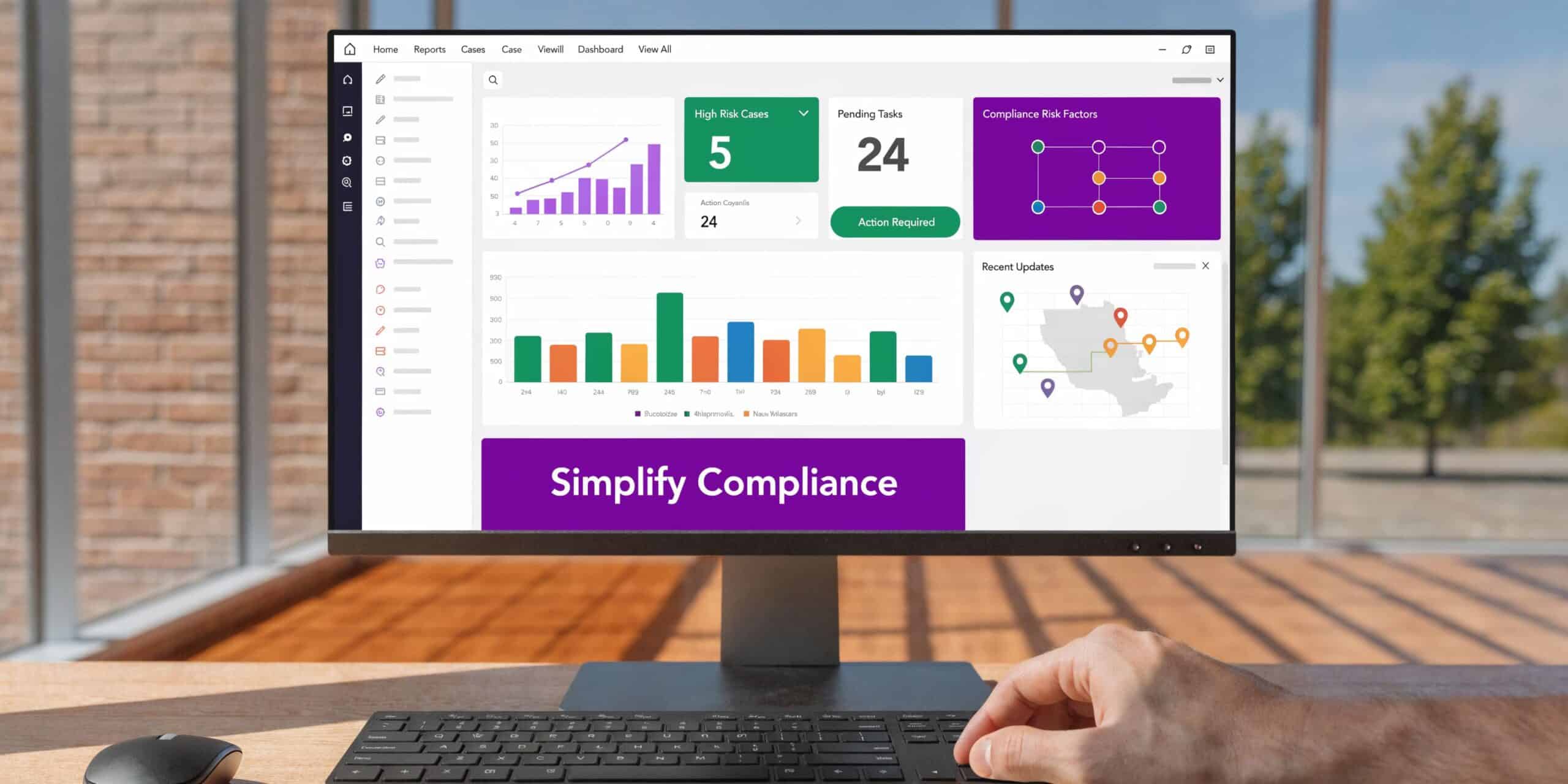
A strong Dynamics 365 and Power Platform setup should do more than store absences. It should support the actual SSP decision path.
The core elements are:
- Absence capture in one record: The sickness event should be logged once, then reused across HR and payroll processes.
- Dataverse-based worker data: Contract type, work pattern, and historical earnings should be accessible without rekeying.
- Power Automate workflows: Notifications, manager approvals, and payroll handoff should follow a defined trigger path.
- Power BI visibility: HR and finance need to see sickness trends, exception cases, and pending SSP decisions.
- Audit trail: Every change to absence dates, reason, and payment basis should be traceable.
If you are reviewing broader system options, this guide to compliance management software is useful context because it frames compliance as a repeatable operating model rather than a static policy document.
Why 2026 increases the need for system control
The 2026 reform changes payroll logic, especially for lower-paid and variable-hours workers. The move to the lower of the flat weekly rate or 80% of AWE means the system must calculate average earnings reliably, not approximate them.
That has several practical implications in Dynamics 365 environments:
| Process area | What the system must handle |
|---|---|
| Eligibility | Apply the correct rule set by date |
| Earnings | Pull the correct pay history for AWE logic |
| Day-one payment | Stop applying outdated waiting-day deductions after reform |
| Reporting | Surface exceptions before payroll is finalised |
This is why I usually advise HR managers to stop thinking in terms of “an SSP calculator” and start thinking in terms of SSP orchestration. The calculation is only one step. The upstream data and downstream audit matter just as much.
Microsoft-native process design
For Microsoft-centric organisations, the strongest model is native integration rather than bolt-on administration.
That means using the Microsoft stack in a disciplined way:
- Outlook and Teams for absence notification intake
- Dataverse as the single source of employee and absence records
- Power Apps for manager and HR case handling
- Power BI for compliance monitoring
- Secure identity and permissions through Microsoft controls
If your organisation is reviewing the wider HR architecture around this, this Dynamics 365 HR overview is a useful reference point: https://www.dynamicshub.co.uk/2026/02/07/dynamics-365-hr/
Practical advice: If payroll needs to ask HR for the same sickness facts every month, the process is not automated. It is only digitised.
What works and what does not
What works:
- One absence record.
- Agreed work patterns.
- Clear effective-date logic for legal changes.
- Exception reporting before payroll closes.
- A documented rule for irregular schedules.
What does not work:
- Shared spreadsheets with local manager edits.
- Separate rota and payroll truth.
- Manual overrides with no audit note.
- Static payroll formulas that ignore reform dates.
- Policy wording that never became system logic.
The point is straightforward. SSP compliance becomes manageable when the process is designed once and applied consistently.
Your Next Steps for Flawless Part-Time SSP Management
Most problems with statutory sick pay for part time employees come from poor setup, not obscure law.
Get three things right.
First, define eligibility clearly and make sure HR and payroll apply the same rule set. Second, prepare now for the April 2026 changes so your calculation logic, waiting-day settings, and earnings checks are not left in a half-updated state. Third, stop relying on manual fixes for variable-hour workers. They create avoidable risk.
A practical action list looks like this:
- Review policy wording: Make sure SSP rules are current and readable.
- Check system configuration: Confirm payroll logic can handle reform dates and AWE-based calculations.
- Tighten absence capture: Ensure manager reporting and payroll records match.
- Document edge cases: Multiple jobs, holiday overlap, irregular patterns, and contractual sick pay should all have a clear process owner.
Well-run SSP administration protects compliance and employee trust at the same time.
DynamicsHub helps UK organisations improve HR and payroll processes inside the Microsoft ecosystem. Experience HR transformation built around your business. Hubdrive’s HR Management for Microsoft Dynamics 365 is the premier hire‑to‑retire solution, more powerful, more flexible, and more future‑ready than Microsoft Dynamics 365 HR. If you want help systemising absence, compliance, and workforce processes, phone 01522 508096 today, or send us a message at https://www.dynamicshub.co.uk/contact/