

Employee performance management software is essentially a digital toolkit designed to help businesses track, evaluate, and, most importantly, develop their people. It's about moving away from the dusty, once-a-year review and embracing a continuous cycle of goal-setting, feedback, and growth. This ensures everyone on the team is pulling in the same direction and aligned with the company's core objectives.
What Is Employee Performance Management Software?
Think of this software less like a rigid, yearly report card and more like a dynamic coaching platform for your entire organisation. The whole point is to foster a transparent, ongoing conversation between employees and their managers. It helps everyone see clearly how their day-to-day work feeds into the company's bigger picture. This kind of technology is the engine that drives a modern, high-performing culture.
Instead of relying on infrequent and often biased annual appraisals, these platforms give you the tools for real-time interaction and development. This shift is a game-changer, especially for the UK's hybrid and remote workforces where keeping everyone aligned and motivated can be a real headache. The software becomes the central hub for everything related to performance.
The Evolution from Static Forms to Intelligent Platforms
Not too long ago, performance management was a painful administrative chore, buried in clunky spreadsheets and static Word documents. The solutions available today are intelligent, user-friendly platforms that empower employees to take real ownership of their professional growth. At the same time, they give managers the insights they need to be genuinely effective coaches, solving that critical problem of connecting daily tasks to strategic goals.
This leap forward is mirrored in the market's explosive growth. The UK human capital management (HCM) software market, which includes these performance tools, was valued at around £910 million and is expected to climb to over £2 billion by 2035. This trend makes one thing clear: businesses are increasingly turning to technology-driven HR tools that prioritise employee development and data-driven insights. You can dive deeper into these figures in a detailed report on the UK HCM software market.
A modern performance platform is all about building a culture of clarity and support. When people know what’s expected of them and get regular, constructive feedback, they’re more engaged, more productive, and much more likely to stick around.
Core Functions of Performance Software
At its heart, this software is built to handle several key processes that traditional methods just can't keep up with. These core functions all work together to create a system that’s both cohesive and genuinely effective.
Key functionalities usually include:
- Goal Alignment: The ability to set clear, measurable objectives (like OKRs or SMART goals) that cascade logically from company-wide ambitions down to individual team members.
- Continuous Feedback: Tools that allow managers, peers, and even direct reports to share timely and constructive feedback all year round, not just when a formal review is due.
- Structured Appraisals: Streamlining the formal review process with customisable templates, 360-degree feedback, and transparent evaluation criteria.
- Development Planning: Pinpointing skills gaps and creating personalised growth plans with concrete action steps to help people advance their careers.
By bringing these functions under one roof, the software changes performance management from a dreaded annual event into a positive and continuous part of the daily workflow.
Ready to transform your performance management strategy? Phone 01522 508096 today or send us a message to discuss how a solution built for the Microsoft ecosystem can empower your team.
The Features That Actually Drive Performance
Good employee performance management software is much more than a digital filing cabinet for old-school annual reviews. It should be the engine room of a high-performance culture, actively helping your people grow. The real magic happens when a few core features work together to bring clarity, encourage open communication, and drive real progress for every single person on your team.
These tools are designed to shift performance management from a rigid, backward-glancing chore into a continuous, forward-looking conversation. When you get it right, they provide the framework needed to connect individual effort to the big-picture company goals, making sure everyone knows why their work matters.
Let’s break down the essential components that make a genuine difference.
Setting and Aligning Clear Goals
Everything starts with clear, transparent goals. Modern software goes way beyond vague objectives buried in a spreadsheet by giving you proven frameworks like Objectives and Key Results (OKRs) or SMART goals (Specific, Measurable, Achievable, Relevant, Time-bound).
Think about a marketing team at a UK tech firm. They might use the software to set a big objective: "Increase Brand Awareness in Q3." That's a good start, but it's not actionable. The system helps break it down into measurable key results for each person:
- Marketing Manager: Secure 5 feature articles in major industry publications by 30th September.
- Content Creator: Publish 12 targeted blog posts and hit an average of 1,000 views on each.
- Social Media Specialist: Grow our LinkedIn followers by 15% while achieving a 4% engagement rate.
Suddenly, everyone can see exactly how their day-to-day work feeds into the team's success. It cuts out the guesswork and gives people a real sense of purpose.
The Power of Continuous and 360-Degree Feedback
The days of waiting a whole year for a manager’s feedback are, thankfully, long gone. One of the most critical features of modern software is its ability to create a continuous feedback loop. This lets managers share constructive thoughts right when they matter most.
Imagine a sales manager listening in on a client call. Instead of saving notes for a review months away, they can immediately use the platform to send a quick, private message: "You handled that objection brilliantly, but next time, maybe lead with the new feature." It’s timely, specific, and far more effective.
The infographic below really brings this to life, showing how continuous feedback, goal alignment, and personal growth are all intertwined.
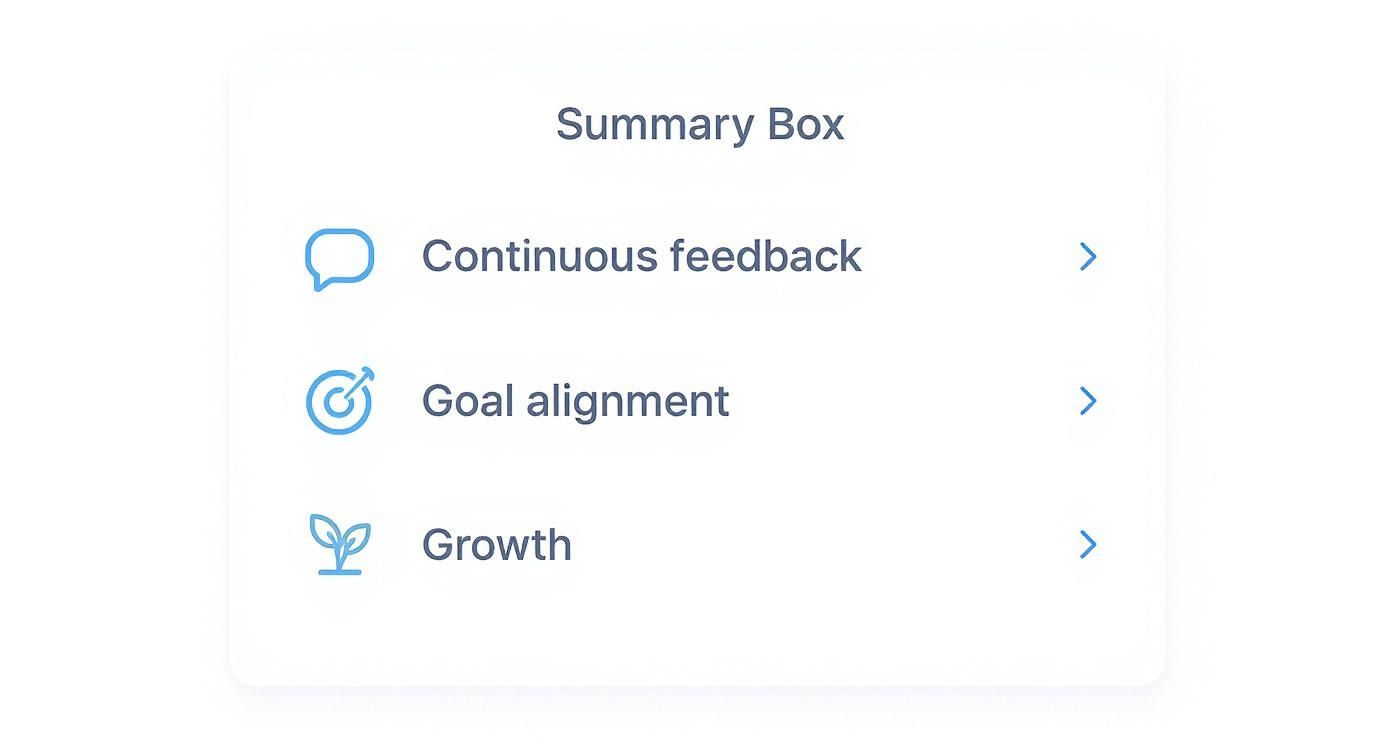
As you can see, it's not about one single feature. A successful system is built on how these elements combine to create a supportive and high-achieving environment for everyone.
This is taken even further with 360-degree feedback, where an employee gets anonymous input not just from their manager, but from their peers and direct reports too. This gives a much more rounded and honest picture of someone's performance, helping to uncover blind spots and highlight strengths a single manager might miss. It's a powerful approach; research shows that companies with regular feedback systems see 14.9% lower turnover rates.
"Feedback is a gift. Ideas are the currency of our next success. Let people see you value both feedback and ideas." – Jim Trinka and Les Wallace
By opening up these channels, you start building a culture where feedback is seen for what it is: a tool for development, not a reason for criticism. To learn more about getting this right, check out our guide on the best practices for performance management.
The difference between the old way and the new is stark. Let's compare them side-by-side.
Comparing Traditional vs Modern Performance Management
| Aspect | Traditional Approach | Modern Software-Driven Approach |
|---|---|---|
| Timing | Annual, backward-looking review. | Continuous, real-time feedback and check-ins. |
| Focus | Primarily on evaluation and rating. | Focused on development, growth, and future goals. |
| Goals | Often static, set once a year. | Dynamic and agile, adjusted as priorities shift. |
| Feedback | Top-down from a single manager. | Multi-directional (360-degree) from peers and reports. |
| Outcome | Stressful, often demotivating event. | An ongoing conversation that builds engagement. |
As the table shows, modern tools help you leave behind the outdated, rigid processes and embrace a more human and effective way of working.
Integrated Recognition and Development
Finally, the best software doesn't just track performance—it helps you celebrate it. An integrated recognition platform lets managers and colleagues publicly praise great work, whether someone smashed a sales target or just went the extra mile to help a teammate. You'd be amazed at how much a simple "well done" can boost morale.
And when feedback does highlight an area for improvement, the system should connect directly to development planning. It can help build personalised growth plans, pointing employees towards the right training resources, mentors, or projects that will build their skills. This closes the loop, turning performance insights into real action that helps people build their careers with you.
How AI and Analytics Shape Modern Talent Strategy
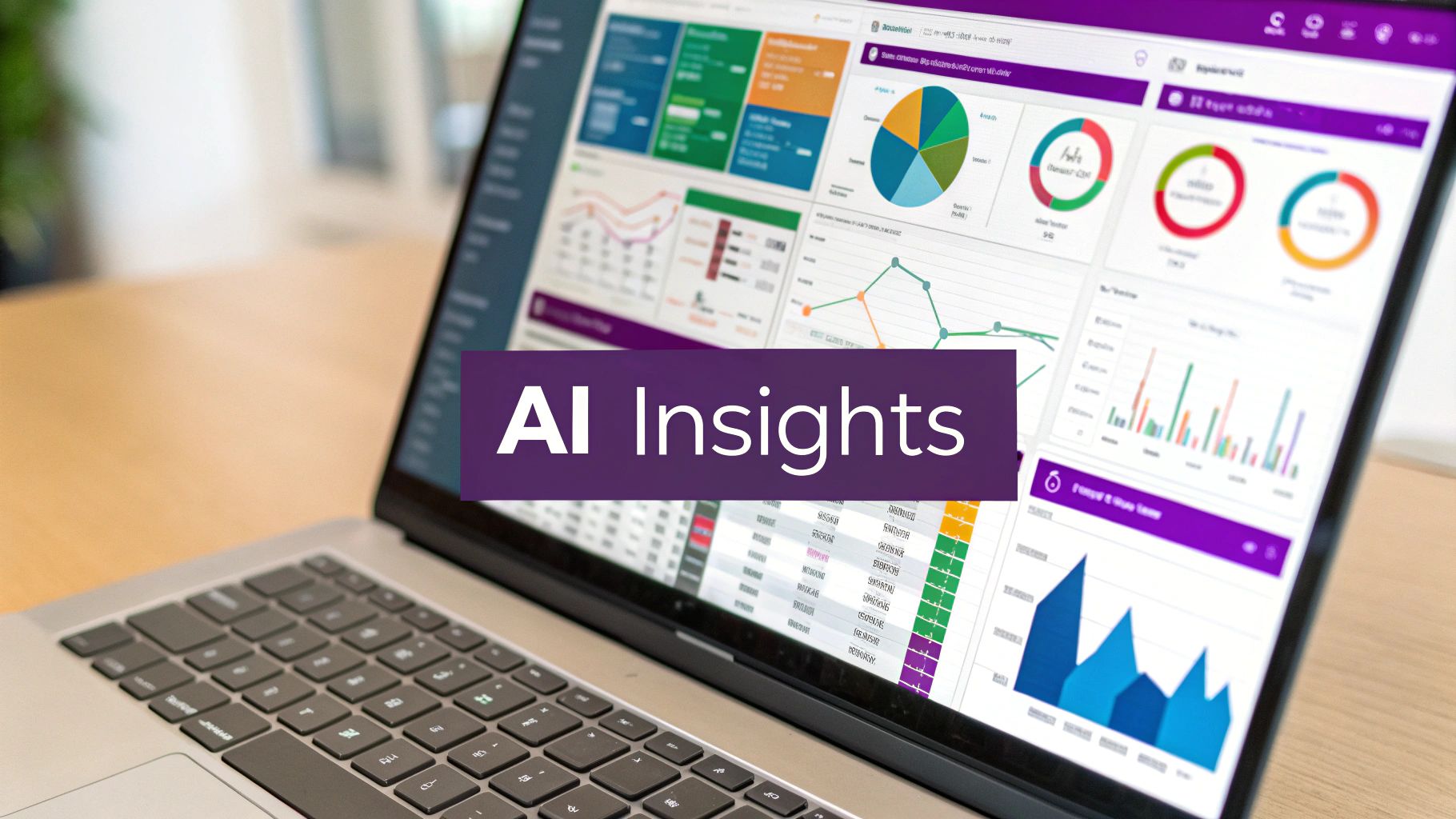
Today’s employee performance management software is a world away from the digital filing cabinets of old. Think of it less as a system for just recording feedback and more as a strategic command centre for your talent. It’s powered by analytics and artificial intelligence (AI), turning a flood of performance data into a genuine competitive edge.
This shift moves businesses from simply reacting to problems to proactively developing their people. Instead of making decisions based on gut feelings, leaders get clear, data-driven insights. These tools make sense of complex information, presenting it in simple dashboards and reports that highlight trends you'd otherwise miss. Suddenly, you can make smarter, more informed decisions about your most important asset: your team.
From Guesswork to Strategic Foresight
The analytics engine inside modern performance software is like a powerful diagnostic tool for your entire workforce. It gives you objective answers to the tough questions managers and HR leaders grapple with every day.
What can you actually uncover?
- Who are your real top performers? You can see beyond sales numbers to understand the specific skills and behaviours that lead to success, giving you a blueprint to replicate across the business.
- Where are the skills gaps? Get ahead of the curve by identifying where your teams might be lacking key capabilities, so you can direct training resources exactly where they’ll have the biggest impact.
- Is engagement starting to dip? Analytics can flag the early warning signs of falling morale long before it turns into a turnover problem, giving you a chance to step in.
To get the most out of this, understanding the importance of adopting people analytics is crucial. It’s the missing link between just having data and actually using it to build a high-performing culture.
By turning performance data into actionable intelligence, you replace guesswork with foresight. This data-driven approach empowers you to build a more resilient, skilled, and motivated workforce prepared for future challenges.
Unpacking AI's Role in Performance Management
Artificial Intelligence isn't some far-off concept anymore; it's a practical tool that’s already making performance management better. In this context, AI works quietly in the background to support human judgement, cut down on admin, and offer personalised support at a scale that was previously impossible.
Essentially, AI brings a new layer of objectivity and efficiency to the whole process. Its integration into performance software is a huge trend in the UK, helping organisations get more from their reviews and even predict future workforce needs. It works hand-in-glove with continuous and 360-degree feedback systems, which are made far more powerful by AI-driven analysis.
What AI Looks Like in Practice
So, how does this AI actually help? It’s not about replacing managers but giving them smarter tools to do their jobs better.
Here are a few real-world examples:
- Reducing Unconscious Bias: AI can scan the language in performance reviews and flag words or phrases that might be unintentionally biased based on gender, age, or background. This nudges managers toward providing fairer, more objective feedback.
- Personalised Development Plans: Based on an employee’s performance history, skills gaps, and stated career goals, AI can suggest relevant training courses, articles, or even connect them with a potential mentor inside the company. It creates a unique growth path for everyone.
- Predicting Flight Risks: By spotting subtle patterns in feedback sentiment, engagement levels, and goal progress, predictive analytics can identify employees who might be at risk of leaving. This gives managers a critical heads-up to intervene and address any issues.
With these kinds of intelligent features built-in, employee performance management software becomes an essential partner in building a truly forward-thinking talent strategy. It gives you the clarity you need to nurture your talent and drive the business forward.
Choosing Your Platform: On-Premise vs Cloud
When you're looking to bring in new performance management software, one of the first big questions you'll face is where it will actually live. Will you host it on your own servers right there in your office (on-premise), or will you access it through the internet from a specialist provider (cloud-based)? This isn't just a technical detail; it fundamentally changes your costs, security, maintenance workload, and how easily you can adapt in the future.
A good way to think about it is to compare it to transport.
An on-premise setup is like buying your own car. It requires a big upfront payment, and from that moment on, you’re responsible for everything: the servicing, insurance, MOT, and any repairs. It's parked in your garage, giving you total control, but every bit of the upkeep and cost is on you.
A cloud-based or SaaS (Software as a Service) solution, on the other hand, is more like a modern car subscription. You pay a simple, predictable monthly fee. The provider takes care of all the maintenance, security, and updates. You don't need a garage, and if your team grows, you can easily add more users—or upgrade to a newer model—without any fuss.
Understanding the On-Premise Model
With an on-premise system, you buy the software licence and install it on your own servers, at your own physical location. This approach gives you absolute, direct control over your data and how the system is configured.
But that level of control comes with a hefty list of responsibilities. Your IT team will be on the hook for everything:
- Initial Setup: Sourcing and setting up all the necessary server hardware.
- Ongoing Maintenance: Keeping servers running, applying software patches, and managing system updates.
- Data Security: Building and maintaining firewalls, managing data backups, and having a solid disaster recovery plan in place.
This model almost always means a significant upfront capital investment in hardware and licences, plus the ongoing operational cost of IT staff to keep it all running smoothly.
The Rise of the Cloud Model
It's no surprise that the cloud model has become the go-to for most UK businesses. With cloud-based software, you just log in through your web browser. The provider handles all the complex stuff—the infrastructure, security, and updates—all wrapped up in a predictable subscription fee.
This gives you so much more agility. You can scale your user numbers up or down as your team changes, meaning you only ever pay for what you're actually using. Financially, it also shifts the burden from a massive initial outlay to a much more manageable operational expense.
The move away from older on-premise systems has been huge. In the UK alone, the cloud-based HR enterprise performance management software market was valued at around £2.9 billion and is expected to climb to nearly £4.8 billion by 2035. This growth is really being pushed by larger businesses that need powerful, flexible tools without the IT headache.
For most modern businesses, especially in the mid-market, the cloud model offers a far better balance of cost, security, and flexibility. It lets your IT team focus on driving the business forward, not just keeping the servers running.
This blend of flexibility and lower overhead is precisely why cloud platforms are a mainstay in guides to the best HR software in the UK. Getting access to powerful tools without the burden of managing the tech behind them is a clear winner for any organisation focused on growth.
Integrating Performance Management with Microsoft Dynamics 365
If your organisation already runs on the Microsoft ecosystem, you know the real value of any new tool is how well it plays with your existing setup. Juggling disconnected systems creates data silos, leaving you to manually stitch together information from different places. This is precisely why integrating your employee performance management software directly into Microsoft Dynamics 365 isn't just a convenience—it's a massive strategic advantage.
Instead of your HR processes living on a separate island, a properly integrated solution creates one, unified source of truth. Imagine performance data—like goals and appraisal outcomes—sitting right alongside your core operational data within Dynamics 365. This seamless link gets rid of duplicate data entry and gives you a complete, 360-degree view of your people.
The Power of a Natively Built Solution
So, what’s the best way to do this? The smartest move is to choose a performance management system built natively on the Microsoft Power Platform. This isn't just about a simple connection; it means the software shares the same DNA as Dynamics 365. It’s constructed on the same foundation (Dataverse), uses the same security model, and connects effortlessly with the tools your team relies on every day, like Teams and Outlook.
Think of it like adding a new, purpose-built extension to your house rather than parking a separate caravan in the garden. Everything just works together, as it was designed to. You can automate workflows across different applications, and the user experience feels consistent, which makes a huge difference in getting your staff to actually use it.
A native solution brings some major benefits to the table:
- A Single Source of Truth: All your employee and performance information lives in one secure place—Dataverse. This puts an end to conflicting data and delivers clear, reliable insights.
- Streamlined Workflows: You can automate processes that cross between HR and other departments. A promotion triggered in the performance module could, for example, automatically update payroll and adjust security permissions.
- Enhanced User Adoption: Because employees can access performance tools from within familiar apps like Microsoft Teams, it becomes a natural part of their day, not just another system they have to learn.
Unlocking Deeper Insights with Power BI
One of the most compelling reasons for integration is the ability to tap into Microsoft Power BI for reporting. When your performance data is part of the Dynamics 365 environment, you can build powerful, custom dashboards that tell the full story of your workforce.
You can finally move beyond standard HR reports and start answering genuinely strategic questions. For instance, you could create a visual report correlating sales figures from Dynamics 365 Sales with employee engagement scores from your performance tool. This allows you to pinpoint which managerial behaviours are driving the best commercial results.
By connecting performance metrics with core business data, you transform HR from an administrative function into a strategic partner. You can directly measure how your people strategy is impacting the bottom line.
Security and Compliance Within the Microsoft Cloud
Let's be honest, security is non-negotiable when you're handling sensitive employee information. A system built on the Power Platform automatically inherits the world-class security of the Microsoft cloud. This includes robust identity management through Microsoft Entra ID and the peace of mind that all your data stays within your own secure Microsoft 365 tenant.
This unified approach also makes it much easier to comply with UK regulations like GDPR. You get granular control over data access, and retention policies can be applied consistently across your entire Microsoft ecosystem. It removes the risk that comes with shunting data between disconnected third-party systems. For those looking into HR add-ons, you can find out more about how solutions like the Hubdrive HR add-on for Microsoft Dynamics 365 Business Central use this integrated environment to offer a complete HR solution.
Ultimately, for any organisation running on Microsoft tech, choosing an integrated performance management solution is the smartest way to get the most out of your investment.
To discuss how an integrated performance management solution can fit into your Microsoft Dynamics 365 environment, phone 01522 508096 today or send us a message.
Measuring Your Return on Investment
Any new software has to earn its keep, and a performance management platform is no different. When you’re thinking about the business case, it’s easy to get fixated on the initial cost. But the real story is in the tangible returns you’ll see right across the organisation. A solid framework will help you draw a straight line from the software’s features to your bottom line.
The return on investment (ROI) isn't a single, magic number. Instead, it’s a powerful mix of direct cost savings and massive gains in efficiency, productivity, and team morale. By keeping an eye on the right metrics, you can build a compelling case that shows the platform's true worth.
Key Metrics to Track for Tangible Value
To really get a grip on the impact, you need to focus on specific, measurable improvements. These are the numbers that provide cold, hard evidence of how the software is contributing to your bigger business goals.
Here’s what you should be tracking:
- Improved Employee Retention: People who feel valued and see a future with you are far more likely to stay. Compare your staff turnover rates before and after you bring the software online. Cutting down on turnover means slashing your recruitment and onboarding costs, which can be a huge saving.
- Boosted Productivity: When teams have clear goals and get regular, constructive feedback, they naturally become more focused and effective. You can see this in your project completion rates, sales figures, or any other output-based KPI that matters to your business.
- Reduced Administrative Costs: Just think about the sheer number of hours your HR team and managers lose to chasing paperwork and managing clunky annual review cycles. Automating these workflows frees them up to work on things that actually move the needle.
For help turning all that performance data into meaningful insights that truly measure ROI, check out these excellent tips for creating actionable business reports.
Understanding Common Pricing Models
Nearly all modern performance management platforms run on a Software as a Service (SaaS) model. This means you’ll pay a predictable subscription fee, which is much easier to budget for than a massive one-off capital investment.
The most common approach is a per user, per month fee. This model is brilliantly flexible—it lets you scale your costs up or down as your team grows or changes, so you’re only ever paying for what you actually use.
In the UK market, you can expect to pay somewhere between £5 and £10 per user, per month for a solid, comprehensive solution. This price usually wraps up the software licence, ongoing support, and all the system updates into one simple fee, giving you great value without any of the tech headaches.
By focusing on these clear metrics and understanding the straightforward pricing, you can confidently make the case for the investment. A good platform quickly pays for itself through higher productivity, better staff retention, and a smarter, more engaged workforce.
Ready to transform your performance management and see a real return on your investment? Phone 01522 508096 today or send us a message for a personalised consultation with our experts.
Frequently Asked Questions
Thinking about bringing in new software always raises a few questions. We get it. Below, we’ve tackled some of the most common queries we hear about employee performance management systems to help you get the clarity you need.
Let's dive into the practical side of things, from getting started to making sure the system truly works for your business.
How Long Does Implementation Take?
This is probably the number one question we're asked, and the answer is usually a pleasant surprise. We're not talking about a months-long saga anymore. For most cloud-based employee performance management software, you can be up and running in a matter of weeks.
The whole process is broken down into manageable steps. We'll handle migrating your employee data, setting up the system to mirror your company's processes, and training your team so everyone feels comfortable right from the start. It’s a structured rollout designed to be as smooth as possible.
How Does This Software Support UK GDPR Compliance?
Data privacy isn't just a checkbox; it's fundamental. Any system worth its salt is built from the ground up with compliance in mind, specifically to help you meet your UK GDPR obligations.
It does this through a few key features that are baked right in:
- Role-Based Access Controls: This is a big one. It simply means people can only see the data they're supposed to see, keeping sensitive information locked down.
- Robust Data Encryption: Your data is kept secure whether it's being sent across the internet or just sitting on a server.
- Configurable Data Retention Policies: You're in control. You can set up automatic rules to manage and delete old data according to legal timetables, helping you stay compliant without the manual effort.
When you choose a system built within your existing Microsoft 365 tenant, you're adding another powerful layer of security. All your performance data is protected by Microsoft's world-class infrastructure and your own company's security policies.
Can We Tailor The Software To Our Company's Review Process?
Absolutely. In fact, you should insist on it. The days of cookie-cutter software are over, especially when it comes to something as unique as your company culture and performance reviews.
Modern solutions, particularly those built on the Microsoft Power Platform, are incredibly flexible. You can customise just about anything – appraisal forms, goal-tracking templates, feedback workflows, and the reports you see. The whole point is to make the software fit your way of working, not the other way around.
Ready to see how a modern, integrated employee performance management software can transform your organisation? Phone 01522 508096 today or send us a message to book a personalised demo.


