

For any UK business with a team out on the road, field service management software is the digital backbone that keeps everything running smoothly. Think of it as the central nervous system for your mobile operations. It connects your back office to your field technicians, coordinating everything from the moment a customer calls to the final invoice being paid.
What Is Field Service Management Software?

Running a field team with a jumble of spreadsheets, frantic phone calls, and paper job sheets is a bit like trying to conduct an orchestra where every musician is playing from a different score. It’s chaotic, inefficient, and the final result is rarely what you hoped for.
Field service management (FSM) software is the conductor that brings it all together. It's a single, unified platform built to get your technicians, jobs, customer details, and equipment working in perfect harmony.
For UK organisations, adopting this kind of system isn't just a nice-to-have anymore; it's essential for staying competitive. The shift from manual, often messy, processes to a clean, digital operation is fundamental to boosting efficiency, controlling costs, and delivering the kind of service that keeps customers coming back.
This software handles the entire service journey. It provides one version of the truth, ending the classic disconnects and miscommunications that happen between the team in the office and the experts out in the field.
The Growing Demand in the UK Market
The move towards dedicated FSM solutions is picking up serious pace across the UK. Market forecasts paint a clear picture of this trend, with the UK field service management market expected to hit an estimated value of £830 million by 2034.
This growth is being fuelled by better mobile tech, AI, and the power of data to make smarter operational decisions. From construction and manufacturing to healthcare and IT services, businesses are realising that using field service management software in the UK is key to getting the most from their mobile teams and improving customer loyalty. You can dig deeper into these trends in the full report.
By bringing everything into one place, FSM software gives UK managers a live, 360-degree view of their entire field service operation. This newfound visibility allows for smarter, data-led decisions that directly boost productivity and profitability.
At the end of the day, the goal is simple: get the right technician, with the right skills and the right parts, to the right job at the right time. Every single time. Achieving that level of precision with manual methods is a constant struggle, but it becomes the standard with a proper FSM platform in place.
From Manual Chaos to Automated Control
The table below highlights the practical shift from traditional, often frustrating, manual processes to the organised solutions offered by modern FSM software. It’s a clear picture of what 'before' and 'after' looks like for your operations.
| Manual Process | Automated FSM Solution | Primary Business Benefit |
|---|---|---|
| Whiteboard or Spreadsheet Scheduling: Prone to errors, double-bookings, and difficult to update in real time. | AI-Powered Dispatching: Automatically assigns the best technician based on skill, location, and availability. | Increased Productivity: Technicians complete more jobs per day with optimised routes and schedules. |
| Paper-Based Job Sheets & Forms: Easily lost or damaged, requiring manual data entry back at the office. | Mobile App Work Orders: Technicians receive, update, and complete jobs on-site via a tablet or phone. | Faster Invoicing: Digital sign-offs and instant updates mean invoices can be sent the same day. |
| Reactive Parts Management: Guesswork leads to technicians arriving without the necessary parts. | Real-Time Inventory Tracking: Full visibility of stock levels in the warehouse and in each van. | Improved First-Time Fix Rates: Ensuring the right parts are available for the job boosts customer satisfaction. |
| Disconnected Customer Communication: Multiple phone calls to provide updates on technician arrival times. | Automated Customer Alerts: Customers receive automatic SMS or email updates on their appointment status. | Enhanced Customer Experience: Proactive communication and transparency builds trust and loyalty. |
By automating these core functions, businesses don't just become more efficient—they gain the control and insight needed to grow sustainably and outperform the competition.
Core Features Your UK Business Needs
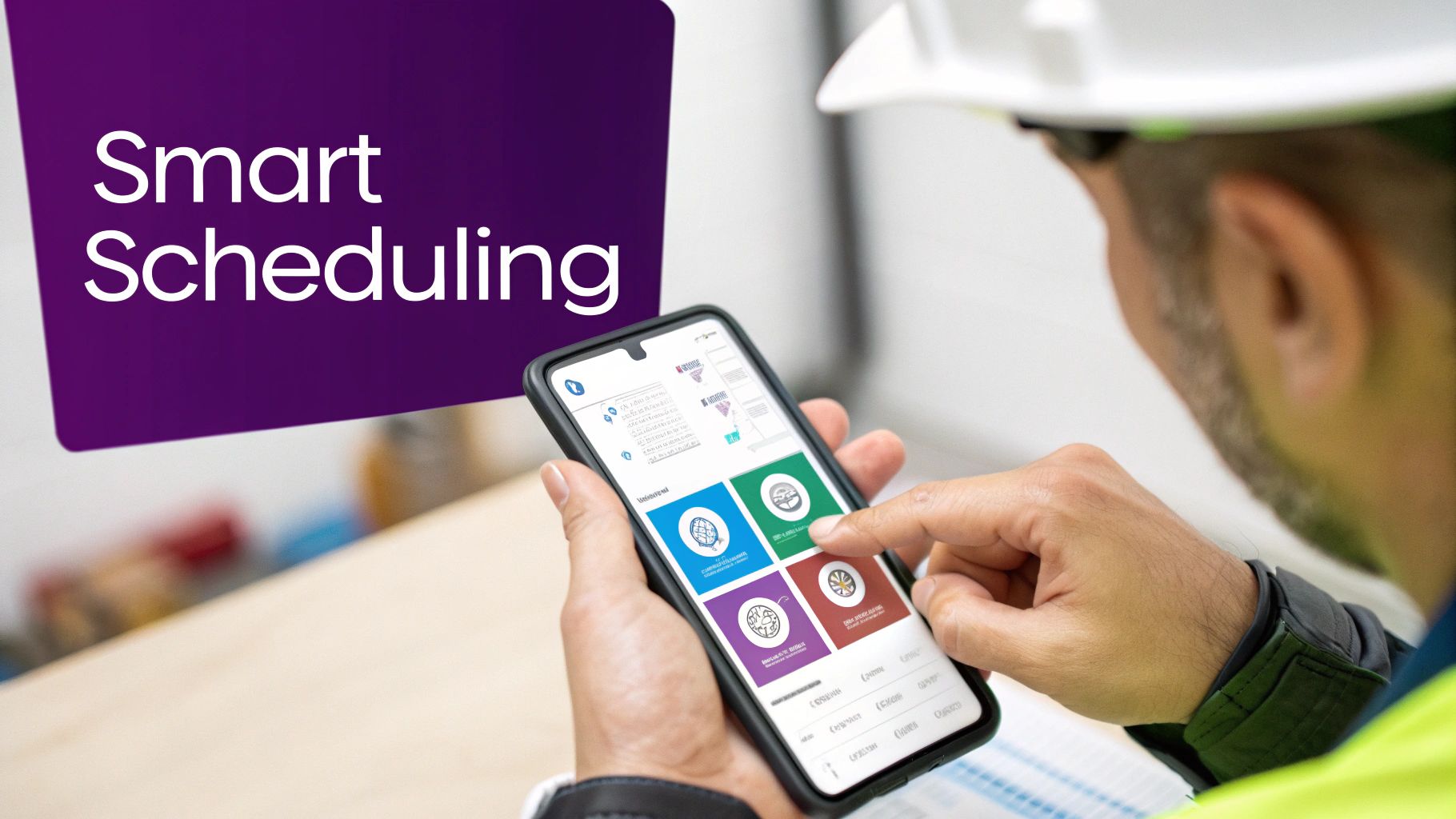
When you start looking at field service management software in the UK, the sheer number of features can be overwhelming. To cut through the noise, it's best to concentrate on the core functions that will actually make a difference to your organisation's bottom line. It all starts with how you manage your people and their time.
Modern platforms are a world away from simple digital calendars. Think of them as the command centre for your entire field operation, helping you get the absolute most out of every engineer, every single day.
Intelligent Scheduling and Dispatching
Imagine your best dispatcher, but with superpowers. That's intelligent scheduling. It's not just about filling empty slots in a diary; it's about using smart algorithms to weigh up dozens of factors at once to create the most efficient schedule possible. This has a direct impact on your fuel bill and, more importantly, the number of jobs your team can complete each day.
Here's what this looks like in practice:
- Automated Routing: The system finds the quickest, most fuel-efficient routes between jobs, taking live traffic into account. No more guesswork.
- Skills-Based Assignment: It automatically matches the job's requirements to the engineer with the right qualifications and certifications.
- Customer Availability: It works around your customers' preferred appointment windows, creating a better experience from the very first interaction.
By optimising routes and assignments, businesses can see a significant reduction in wasted travel time and operational expenses. It’s about working smarter, not just harder, to boost overall team productivity.
Empowering Engineers with a Mobile App
A solid mobile app isn't a "nice-to-have"; it's essential. This is the main tool your engineers will use all day, every day. It’s their lifeline to the back office and the single source of truth for every job they attend. A good app cuts out the endless phone calls, the guesswork, and the frustrating delays.
The mobile app should give your team everything they need at their fingertips—job details, customer history, parts information, and even technical manuals. A well-designed app also serves as an excellent tool for broader staff management; you can learn more about this by exploring the best workforce management software available.
Work Order and Inventory Management
Effective work order management is the engine of your service operation. This feature follows a job from the initial customer call all the way through to the final sign-off and invoice. For managers, it provides a complete, real-time picture of what’s happening in the field, ensuring nothing falls through the cracks.
This goes hand-in-hand with inventory control. There's nothing worse for your first-time fix rate than an engineer showing up on-site without the right part. The software should track stock levels in the warehouse and in each van, making sure the right parts are in the right place at the right time. The rapid adoption of field service management software in the UK is really being driven by this kind of real-time insight, made possible by cloud and mobile technology.
Solving UK-Specific Compliance Challenges

Running a field service team in the UK means you're not just managing jobs; you're navigating a dense maze of local regulations. Generic software, often built for a global audience, simply can't keep up. It misses the nuances, leaving your business exposed. This is where dedicated field service management software for UK businesses becomes essential—it’s not just a tool, it's a compliance partner built into your daily operations.
Think of it as moving from paper checklists to intelligent, digital safeguards. Imagine a technician arriving on-site. Before they can even start, their mobile app requires them to complete a mandatory Health and Safety Executive (HSE) risk assessment. It’s customisable, it’s instant, and it creates a time-stamped audit trail for every single job. That's real protection for your people and your business.
In many UK trades, compliance is all about having the right qualifications. A proper FSM system takes on the heavy lifting of tracking these critical certifications, making sure your team is always safe, legal, and ready to go.
Managing Certifications and Data Security
For industries where qualifications are everything—like the Gas Safe Register for heating engineers—the right software acts as a vital safety net. It can automatically check an engineer's current status before assigning a gas-related job. This simple step makes it impossible to accidentally dispatch an uncertified technician.
Key features you should look for include:
- Automated Certificate Tracking: The system flags expiring qualifications well ahead of time, giving managers and technicians a nudge to get them renewed.
- Restricted Job Assignment: It intelligently blocks tasks from being assigned to anyone who doesn't hold the correct, up-to-date certification for that job.
- Digital Document Storage: All your compliance paperwork, from completed forms to customer sign-offs, is kept in one secure, central hub, ready for any audit.
Of course, it’s not just about operational safety. Handling customer data in the field means you have to be on top of GDPR. A secure FSM platform ensures that sensitive information is properly encrypted and can only be accessed by the right people on their work devices. If you need a deeper dive, you can explore our guide on achieving compliance with GDPR-compliant HR software.
The best FSM software doesn't just record compliance; it actively enforces it. By building regulatory checks into the workflow, it transforms compliance from a manual burden into an automated, reliable part of your service delivery.
Then there are the uniquely British operational hurdles. Think about London’s Ultra Low Emission Zone (ULEZ). Smart routing features can automatically assign a compliant vehicle to any job inside the zone, steering you clear of those hefty £180 per day fines for vans. This isn't just about avoiding penalties; it’s about intelligent planning that saves money and keeps your operation running without a hitch in the UK’s distinct regulatory environment.
Integrating FSM with Your Microsoft Ecosystem
For UK businesses already running on Microsoft 365 and Dynamics 365, bolting on a completely separate system to manage field operations just doesn't make sense. It’s a bit like building a new extension on your house but forgetting to add the connecting doorways. You end up with frustrating data silos, staff constantly flicking between different apps, and everything grinding to a halt.
A much smarter approach is to choose a solution that feels like a natural part of your existing setup.
The power of a truly integrated system is hard to overstate. Picture this: a field technician arrives at a customer's site, tablet in hand. Before they’ve even rung the doorbell, they can see the entire customer history. Every past service call, every support ticket, and every conversation is right there, pulled directly from Dynamics 365 Customer Service. That kind of instant insight is an absolute game-changer for getting the job done right the first time.
Creating a Single Source of Truth
When your field service management software for UK operations is built on the same foundation as your sales, service, and finance systems, information flows freely. A completed work order can automatically generate an invoice in your finance system. A quick note from a technician on-site is instantly visible to the account manager back in the office.
This unified approach brings some very real benefits:
- No More Double-Keying: Information goes in once and is immediately available everywhere it's needed. This saves a huge amount of time and cuts down on costly human errors.
- Real Teamwork: It breaks down the invisible walls between your field engineers, salespeople, and support teams, helping them work as one to look after the customer.
- Get More from Your Investment: You squeeze more value out of the Microsoft platform you already know and trust, rather than paying to manage yet another separate system.
The Power of Native Integration
Having a connected environment is also vital for staying ahead of the curve. The rise of the Internet of Things (IoT) is a huge factor in UK service industries. In fact, IoT connections are predicted to jump from 15.1 billion to 23.3 billion by 2025, a shift that requires FSM tools designed for deep data integration. You can read more on this in the full FSM market report.
By choosing a solution like Dynamics 365 Field Service, you're not just buying software; you're connecting your entire business. This creates a single source of truth that drives efficiency from the initial customer enquiry to the final payment and beyond.
This integration also weaves into how you manage your people. For example, by linking technician skills and certifications from your main HR system, you can be sure the right person with the right qualifications is always sent to the right job. We explore these kinds of connections further in our guide to Dynamics 365 for HR.
How to Choose and Implement the Right Software
Bringing new software into your business can feel like a massive undertaking, but breaking it down into logical steps makes the whole process far more manageable. For UK businesses, the goal is to move methodically from evaluation to a full-scale rollout, making sure the platform you choose is a perfect fit for how you work today and where you want to be tomorrow.
It all starts with a thorough evaluation. It’s tempting to get dazzled by long feature lists, but the real focus should be on how the software will solve your specific problems and help your team excel. This means digging into everything from the mobile app's ease of use for your engineers on-site to whether you can get knowledgeable, UK-based support when you really need it. Choosing a vendor is a big commitment, so properly assessing the relationship is key. A solid framework for third-party risk management can be invaluable here, helping you vet potential partners properly.
A Phased Implementation Plan
Trying to switch everyone over to a new system in one go—a "big bang" approach—is a recipe for chaos. A phased deployment is almost always the smarter, safer route. It minimises disruption, builds confidence, and gives your team time to adapt.
Here’s a simple, three-step plan that works:
- Discovery and Mapping: Before you do anything else, get a crystal-clear picture of your current processes. How does a job get from a customer's first call to a final invoice? Map it all out to pinpoint the bottlenecks and inefficiencies you need the new software to fix.
- Pilot Programme: Next, choose a small, trusted group of technicians to test the system in the real world. This pilot phase is your chance to gather honest feedback, spot any teething problems, and make adjustments before the main event.
- Company-Wide Rollout: With the lessons learned from your pilot, you’re ready for the full rollout. This stage must include proper training for everyone involved—from the back-office schedulers to every engineer in the field.
A well-integrated system creates a seamless flow of information across your business, connecting the dots from sales and service right through to finance.
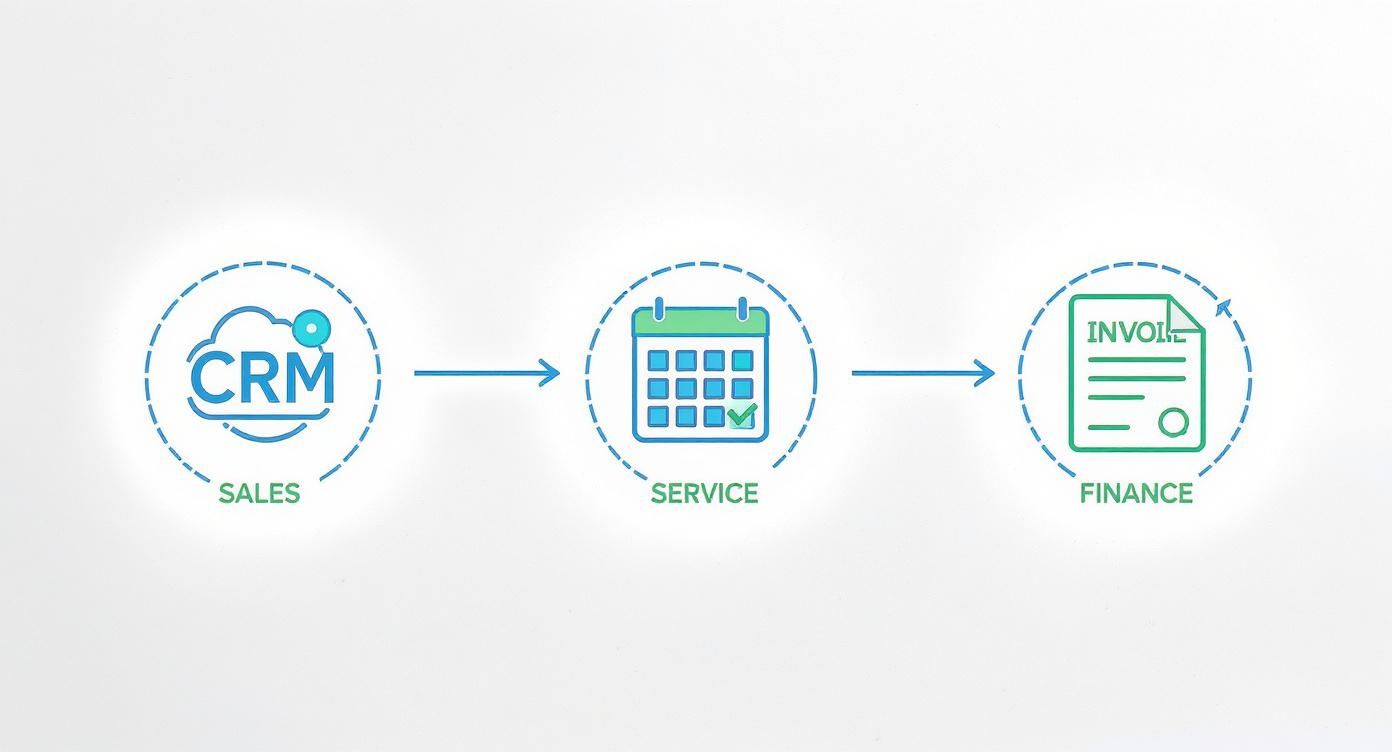
As you can see, this eliminates the data silos and manual hand-offs that slow down your entire service-to-cash cycle.
Demystifying the Budgeting Process
Getting a handle on the costs is critical. When budgeting for field service management software in the UK, you need to look beyond the sticker price. Most platforms use a per-user, per-month licensing model, with costs typically falling between £30 to over £100.
Don’t forget the other costs, though. Factor in any one-off fees for implementation and data migration, plus potential ongoing expenses for premium support packages or extra training. A complete budget gives you the confidence to make a decision that’s right for your business financially.
Your FSM Software Evaluation Checklist
Use this checklist to systematically compare potential FSM software vendors and ensure they align with your business needs.
| Evaluation Criteria | Importance (High/Medium/Low) | Key Questions to Ask Vendors |
|---|---|---|
| Core Functionality | High | Does the software have all our must-have features (scheduling, dispatch, invoicing)? |
| Mobile App Usability | High | Is the mobile app intuitive for technicians? Does it work well offline? |
| Integration Capabilities | High | Can it integrate seamlessly with our existing systems (e.g., Dynamics 365, finance software)? |
| UK-Specific Compliance | High | Does it support UK regulations like GDPR and specific health and safety forms? |
| Vendor Support & Training | Medium | What are the support hours? Is there UK-based support available? What training is included? |
| Scalability | Medium | Can the platform grow with our business over the next 5-10 years? |
| Reporting & Analytics | Medium | What kind of standard reports are available? Can we create custom reports? |
| Total Cost of Ownership | Low | What are all the costs involved beyond the monthly subscription? (Implementation, support, etc.) |
By taking the time to ask these questions, you can move beyond the sales pitch and find a partner that truly understands your operational needs.
Time to Optimise Your Field Operations
The path to a more efficient, compliant, and profitable field service operation is clearer than ever. By choosing the right field service management software for UK businesses, you can finally swap operational headaches for smooth, intelligent workflows. It’s about more than just meeting regulations with confidence; it's about building genuine, lasting customer loyalty.
This isn’t simply about bolting on a new piece of tech. It’s a fundamental change in how you approach and deliver service excellence. The huge gains in technician productivity and customer satisfaction aren't just wishful thinking—they are absolutely achievable.
When you put the right information and tools directly into your technicians' hands, you empower them. They solve problems faster, nail the first-time fix, and become true ambassadors for your brand on every single job.
To keep improving and stay ahead of the curve, it’s worth exploring the latest 7 Field Service Management Best Practices. Many of these focus on using smart technology to get the basics right, every time. This kind of forward-thinking keeps your business agile and ready for whatever comes next.
Ready to take that next step towards operational mastery? Our team of experts is on hand to offer practical advice, tailored specifically to your business and your existing Microsoft setup.
Still Have Questions? Let's Clear Things Up
Diving into the world of field service management software in the UK often brings up a few common questions. It’s completely normal to want to get the details straight before you make a big decision for your business. We've gathered some of the queries we hear most often from UK organisations just like yours.
Let’s get into the practical side of choosing and rolling out a new system.
How Much Does Field Service Management Software Cost in the UK?
There’s no single price tag for FSM software; the cost really depends on what you need. Think about factors like how many people will be using it (both in the field and in the office), which specific features are must-haves for you, and whether you want a cloud-based or an on-premise setup.
Most providers these days offer a subscription model, charging a per-user, per-month fee.
- Entry-level plans: You can often get started for around £30 per user, per month.
- Advanced plans: For businesses needing more sophisticated tools and supporting larger teams, costs can easily go above £100 per user, per month.
A word of advice: don't just focus on that monthly figure. It's smart to also budget for the one-off costs. These can include the initial setup, moving your existing data over, any custom tweaks you need, and the training to get your team comfortable with the new system.
Is This Software Suitable for a Small UK Business?
Absolutely. It’s a common myth that this kind of powerful software is only for the big players. In reality, many of the best modern FSM solutions are cloud-based and built to scale, making them a brilliant fit for small and medium-sized businesses (SMBs).
What this does is give smaller teams access to the same tools that help their larger competitors run so efficiently, but without the massive upfront cost of building out an IT department. It really levels the playing field, letting you punch above your weight and deliver fantastic service.
How Long Does Implementation Take?
This is another "it depends" answer. The timeline for getting new FSM software up and running hinges on the complexity of your business and how much you need to tailor the system. A simple, off-the-shelf setup for a small team could genuinely be live in just a couple of weeks.
For a larger, more complex organisation with unique workflows, multiple integrations, and a lot of data to migrate, the process might take a few months. We always recommend a phased rollout—start with a small pilot group of technicians to work out any kinks. It's a proven way to ensure a smoother transition and get everyone on board.
Can FSM Software Integrate with Existing Accounting Software?
Yes, and this is one of its biggest strengths. Good FSM platforms are designed to talk to other systems. Solutions built on the Microsoft platform, like Dynamics 365, are especially good at this and often have ready-made connectors for the UK’s favourite accounting packages like Xero, Sage, and QuickBooks.
Even if a pre-built connector isn’t available, you can almost always connect systems using an Application Programming Interface (API). This creates a seamless link between what’s happening in the field and your finance team, automating things like invoicing and payroll and saving a huge amount of admin time.
Ready to see how a fully integrated solution could work for your field operations? Phone 01522 508096 today or send us a message to find out how we can build a system that fits your business perfectly.


