At its core, an Employee Assistance Programme (EAP) is a confidential benefit that offers your people a lifeline for both personal and professional challenges. It’s a dedicated, 24/7 support system designed to help them navigate everything from minor stresses to major life events that could impact their health, performance, mental health, and overall wellbeing.
Understanding The Modern Employee Assistance Programme

Think of an EAP as both a safety net and a preventative tool. It gives your team an independent and completely confidential outlet to get help before small issues spiral into bigger problems. Whether it’s burnout, financial worries, or a legal question, a good EAP provides expert guidance right when they need it most.
For years, EAPs were seen as a last resort—a phone number you’d find on a dusty poster, reserved for employees already in crisis. The old model was almost entirely reactive, focused on providing a few counselling sessions. But the modern workplace has moved on, and so have EAPs. They’ve evolved from basic telephone support into comprehensive, digital-first wellbeing platforms.
The Shift From Reactive To Proactive Support
Let’s be honest: expectations around mental health support at work have completely changed. People now want accessible, everyday tools that help them manage life’s ups and downs, not just a clinical service for when things go badly wrong. As a business leader, recognising this shift is vital. Sticking with an outdated model often leads to low engagement and a wasted investment.
This is a huge issue across the UK. A staggering 82% of organisations offer an EAP, covering around 24.45 million employees. Yet, the average usage rate is a dismal 12%. A key reason for this is that 84% of access still happens over the phone—a method that just doesn’t resonate with today’s digitally savvy workforce. This disconnect means businesses are failing to realise a potential £7.97 to £12.21 return on every £1 invested. You can read more about the research behind EAP returns and engagement challenges to grasp the full scale of this missed opportunity.
A modern Employee Assistance Programme flips this entire script on its head by putting prevention first. It’s about offering a whole spectrum of support that truly meets the diverse needs of your people.
A modern EAP is not just a helpline; it’s a holistic wellbeing partner. It meets employees where they are—on their phones, laptops, and tablets—offering a seamless and confidential user experience that encourages early intervention and builds personal resilience.
What Does A Modern EAP Cover?
A proper, modern EAP is far more than just a counselling service. It’s a suite of tools designed to support employees across every pillar of their wellbeing. This broader approach is what helps you tackle the big business challenges head-on: absenteeism, presenteeism (when people are at work but not productive), and high staff turnover.
A comprehensive EAP should offer support in several key areas. The table below outlines the core services you should expect from a provider today.
| Support Area | Description of Services |
|---|---|
| Mental & Emotional | Confidential counselling and therapy for stress, anxiety, burnout, grief, and relationship issues. This is the foundation. |
| Financial Guidance | Impartial advice on budgeting, debt management, mortgages, and financial planning to alleviate money-related stress. |
| Legal Information | Access to legal experts for guidance on civil, consumer, and property disputes, which can be a huge source of distraction. |
| Work-Life Support | Practical assistance with challenges like finding childcare, arranging eldercare, or managing major life events like moving house. |
| Physical Health | Support for nutrition, sleep, fitness, and lifestyle changes to promote overall physical wellbeing. |
| Managerial Consultation | A dedicated advice line for managers to get guidance on handling sensitive team issues and supporting struggling employees. |
By covering this wide range of needs, an EAP transforms from a simple employee benefit into a powerful strategic asset. It sends a clear message that you genuinely care for your people's wellbeing, helping you create a supportive culture that attracts and keeps the best talent.
The Business Case for Investing in Employee Wellbeing
Thinking of an Employee Assistance Programme (EAP) as just another line item on the expense sheet is an outdated view. In reality, a well-implemented EAP isn't a cost at all; it’s a strategic investment that delivers a powerful and measurable return. It's moved far beyond a 'nice-to-have' perk to become a vital tool for boosting productivity, building a resilient workforce, and ultimately, protecting your bottom line.
The financial case for getting proactive about wellbeing is incredibly strong. The UK Employee Assistance Programme Services industry is growing fast, with forecasts expecting revenue to hit £354.4 million by 2026. This isn't just a fleeting trend. It’s a direct response from savvy business leaders who have connected the dots between their people's welfare and their organisation's performance. For a deeper dive, you can explore the market research behind the EAP industry surge.
This growth is backed by some seriously compelling data. The Employee Assistance Professionals Association (EAPA) found that UK companies saw an average return on investment of £10.85 for every £1 spent on an EAP during 2022-23. That figure is up significantly from the £8 return reported just the year before, proving that the value of these programmes isn't just holding steady—it's increasing.
Unpacking the Hidden Costs of Inaction
The true worth of an EAP really comes into focus when you start looking at the staggering costs of not supporting employee wellbeing. These are the expenses that often fly under the radar, quietly draining resources and holding back your growth.
One of the biggest culprits is presenteeism. This is what happens when people show up to work but are too mentally or emotionally distracted by stress, anxiety, or personal troubles to be productive. Their output drops, but the ripple effect can also drag down team morale and performance. An EAP gives staff a confidential, professional outlet to tackle these issues head-on, often before they even start to affect their work.
Then there’s the direct financial hit from staff turnover. When employees are struggling without proper support, they're far more likely to vote with their feet and leave. Understanding the full spectrum of employee assistance program benefits is key to building your business case, as they directly contribute to a supportive culture people want to be a part of. The cost of replacing someone—recruitment fees, training, and lost productivity—can run into the thousands, making retention a clear financial win. For more on this, you might find our guide on how to reduce employee turnover useful.
From Cost Centre to Strategic Lever
By arming yourself with hard data on the financial impact of poor mental health, you can completely reframe the conversation around EAPs within your business. It’s no longer about spending money; it’s a proactive strategy for neutralising very real business risks.
Work-related stress, depression, or anxiety is a major concern for UK businesses, accounting for 17.1 million lost working days each year. The direct cost of these absences is estimated at a staggering £5.2 billion. An EAP is one of the most effective tools for reducing these figures.
Here’s a simple breakdown of how an EAP investment pays for itself:
- Reduced Absenteeism: Giving staff early and easy access to support for mental and physical health issues helps bring down the number of sick days.
- Increased Productivity: By tackling the root causes of presenteeism, you ensure that when your people are at work, they are focused, engaged, and at their best.
- Improved Retention: A culture that genuinely prioritises wellbeing is a powerful magnet for talent, saving you a small fortune on recruitment and onboarding costs.
Presenting these figures allows HR leaders to champion the EAP not as a cost centre, but as a strategic lever for building a healthier, more productive, and more profitable organisation.
Key Support Services Within a Modern EAP
When most people think of an Employee Assistance Programme (EAP), they usually picture a confidential phone line for counselling. While that’s certainly a core part of it, a truly effective programme goes much, much further.
It’s a complete support system built to help your team handle the curveballs modern life throws at them. To find the right EAP provider, you need to look past the basics and understand what a comprehensive, high-impact service really looks like. It’s about recognising that someone’s wellbeing isn’t just about their mental health; it’s tied to their finances, their family life, and their legal peace of mind.
Confidential Counselling and Mental Health Support
This is the foundation of any good EAP. At its heart, the programme must give your people fast, professional, and totally confidential access to support for a whole range of mental health challenges. This isn't just for a crisis; it’s for the everyday pressures that can slowly build up.
The essential services to look for here are:
- Short-Term Counselling: Access to a fixed number of structured sessions (typically between 6-8) with a qualified therapist for issues like stress, anxiety, or feeling low.
- 24/7 Crisis Support: An immediate helpline for anyone in acute distress. It’s a vital safety net, ensuring there is always someone to talk to, day or night.
- Specialist Referrals: Professional guidance when longer-term or more specialised help is needed. A good EAP acts as a crucial first step, often helping staff access things like a private mental health assessment to get the right diagnosis and care plan in place quickly.
Without this strong mental health foundation, an EAP simply can't do its job.
Financial and Legal Guidance
Worries about debt or a looming legal issue can be incredibly distracting. They can eat away at an employee’s focus and have a direct impact on their work. A modern EAP tackles these practical problems head-on, offering expert guidance that can prevent a small worry from spiralling into a major crisis.
An estimated 94% of UK employees admit to worrying about money, with many spending hours of their workday distracted by financial stress. Offering financial guidance through an EAP is a direct and powerful way to combat this hidden drain on productivity.
Look for a provider that offers:
- Debt Management Advice: Impartial support from financial experts on how to manage debt, build a budget, and get back in control of their finances.
- Legal Information: Access to qualified legal professionals for initial advice on personal issues like tenancy disputes, family law, or consumer rights. This first conversation alone can save employees hundreds of pounds.
- Financial Planning: Broader support on topics like mortgages, savings, and pensions, helping people plan for their future with more confidence.
Giving your people this kind of practical help allows them to solve distracting life problems, so they can bring their best, most focused selves to work.
Practical Work-Life Support
Life is complicated. Beyond the big mental and financial hurdles, a great EAP also helps employees with the day-to-day logistics that can feel overwhelming. Think of these as 'life-admin' services, designed to reduce the mental load, especially for team members juggling big responsibilities at home.
A truly supportive programme will offer practical help with:
- Childcare and Eldercare: Hands-on assistance with finding and checking local childcare providers or navigating the complex world of arranging care for elderly parents.
- Daily Life Assistance: Information and referrals for all sorts of everyday needs, from finding a reputable tradesperson to getting help with the logistics of moving house.
These services send a powerful message. They show you understand that your team’s life outside of work directly affects their performance and that you’re there to support them as a whole person, not just an employee. This is what sets a truly modern EAP apart.
How to Launch Your EAP and Drive Engagement
Getting a modern Employee Assistance Programme (EAP) on board is a great first step, but let's be honest—the real work begins after the contract is signed. The biggest challenge is making sure your EAP becomes a visible, trusted, and genuinely used resource for your people.
Historically, EAPs have been plagued by low utilisation rates. This isn't because employees don't need support; it's because the benefit was poorly launched and quickly forgotten. A ‘launch and leave’ strategy is a recipe for failure. To get it right, you need a proactive, ongoing plan that weaves the EAP into the very fabric of your company culture. The goal is simple: make reaching out for support feel as normal as booking a day off.
Designing a Multi-Channel Communication Plan
Your launch campaign and ongoing promotions need to be impossible to ignore. If you just send out a single all-staff email, you can guarantee a huge chunk of your workforce will never even know the EAP exists. A truly successful strategy meets people where they already are, using the channels they engage with every day.
Think about hitting this from every angle:
- Digital Channels: Go beyond one email. Plan for regular intranet news articles, posts on Microsoft Teams or SharePoint, and maybe even a dedicated digital hub. These platforms are perfect for sharing videos, infographics, and direct links to the EAP portal.
- Physical Reminders: Don't underestimate the power of physical cues. Posters in the kitchen, leaflets tucked in with payslips, and QR codes on notice boards are simple, low-cost ways to keep the EAP front of mind.
- Induction and Onboarding: Make the EAP a non-negotiable part of your onboarding process for every new starter. This ensures that from day one, everyone knows what support is available and exactly how to access it.
- Leadership Endorsement: This is crucial. When senior leaders openly discuss the importance of wellbeing and mention the EAP in town halls or company updates, it sends a powerful message. This top-down validation is essential for dismantling stigma.
The key to driving real engagement is normalisation. When employees see messages about the EAP in the same places they look for project updates or team news, it stops feeling like a crisis tool and starts feeling like a standard, valuable part of their benefits package.
To help you get this right from the start, we've put together a checklist. Think of this as your roadmap for a successful rollout and sustained engagement.
EAP Implementation and Engagement Checklist
This simple checklist covers the essential steps for HR leaders to ensure a strong EAP launch and keep the momentum going long-term.
| Phase | Key Action | Success Metric |
|---|---|---|
| 1. Pre-Launch | Define clear objectives for the EAP. | Documented goals (e.g., reduce absenteeism by X%, improve wellbeing scores). |
| Train line managers on the EAP’s services. | 90%+ manager attendance at training sessions. | |
| Prepare a multi-channel communication toolkit. | Comms assets (posters, emails, articles) are ready before launch day. | |
| 2. Launch | Execute a company-wide announcement. | 100% of employees receive the launch communication. |
| Ensure senior leadership visibility. | A senior leader champions the EAP at a town hall or in a video message. | |
| 3. Post-Launch | Schedule themed monthly/quarterly promotions. | A full-year content calendar is created and followed. |
| Integrate EAP info into the onboarding process. | EAP introduction is a standard item in the new hire checklist. | |
| 4. Ongoing | Regularly review anonymised utilisation data. | Quarterly reports from the EAP provider are analysed for trends. |
| Gather employee feedback on the EAP. | An annual survey includes questions about EAP awareness and value. |
Following these steps will help you build a programme that is not just available, but actively valued and used by your team.
Training Line Managers as Wellbeing Champions
Your line managers are your most important allies in making the EAP a success. They're on the front line, interacting with their teams every single day, and they’re often the first to spot when someone is struggling. But let's be clear: they aren't counsellors, and they should never be expected to act like them.
Their role is to signpost support confidently and compassionately. This is a specific skill that requires targeted training. Your manager training should cover:
- How to recognise the early signs of stress, burnout, and other wellbeing issues.
- How to start a sensitive conversation about wellbeing without being intrusive or overstepping.
- A clear understanding of the EAP's services and how to explain them to someone in need.
- Absolute clarity on the confidentiality of the EAP, so they can reassure their team members with complete confidence.
When managers feel equipped with this knowledge, they become a vital, trusted bridge between an employee and the professional support they need. This builds psychological safety and makes it far more likely that people will ask for help sooner.
The process flow below illustrates the core pillars of support that managers can confidently guide their teams toward.
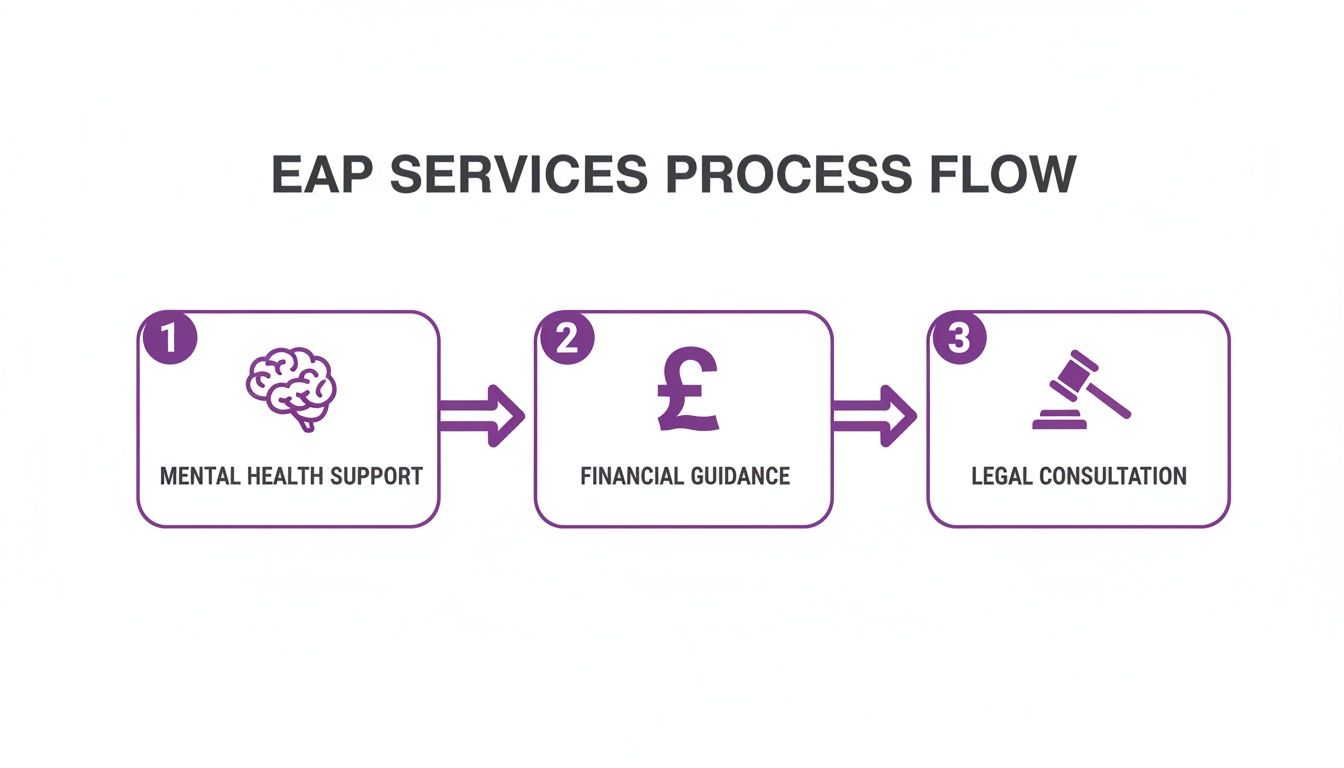
This visualises how an EAP provides clear pathways to specialist help for mental, financial, and legal challenges.
Embedding the EAP into Daily Workflows
Ultimately, the goal is to stop thinking of your EAP as a separate, bolt-on benefit and start treating it as an integrated part of how your business runs. For any organisation already invested in the Microsoft ecosystem, this presents a massive opportunity.
Connecting your EAP to your central HR system can unlock powerful, data-driven insights. For example, a solution like Hubdrive’s HR Management for Microsoft Dynamics 365 can create a seamless experience. Imagine being able to see anonymised, aggregated EAP data on themes like stress or financial anxiety visualised in Power BI dashboards. When you cross-reference that with your absence or turnover data, you gain predictive insights that allow you to address potential hotspots before they become crises.
You can also use your existing Microsoft tools for promotion. Why not set up a dedicated SharePoint page with all your EAP resources? Or create a "Wellbeing" channel in Teams where you can share articles, tips, and reminders. This embeds support right into the digital spaces your employees use every day, making it a constant, visible presence. This continuous, integrated promotion is the real secret to overcoming low engagement and finally seeing a genuine return on your investment in employee wellbeing.
Integrating Your EAP with Microsoft Dynamics 365
An Employee Assistance Programme running in isolation is a huge missed opportunity. For businesses already working within the Microsoft ecosystem, connecting your EAP to a central HR system doesn't just add a feature; it creates a single, intelligent environment for employee wellbeing. It’s the difference between having a reactive support line and building a proactive, strategic people management tool.
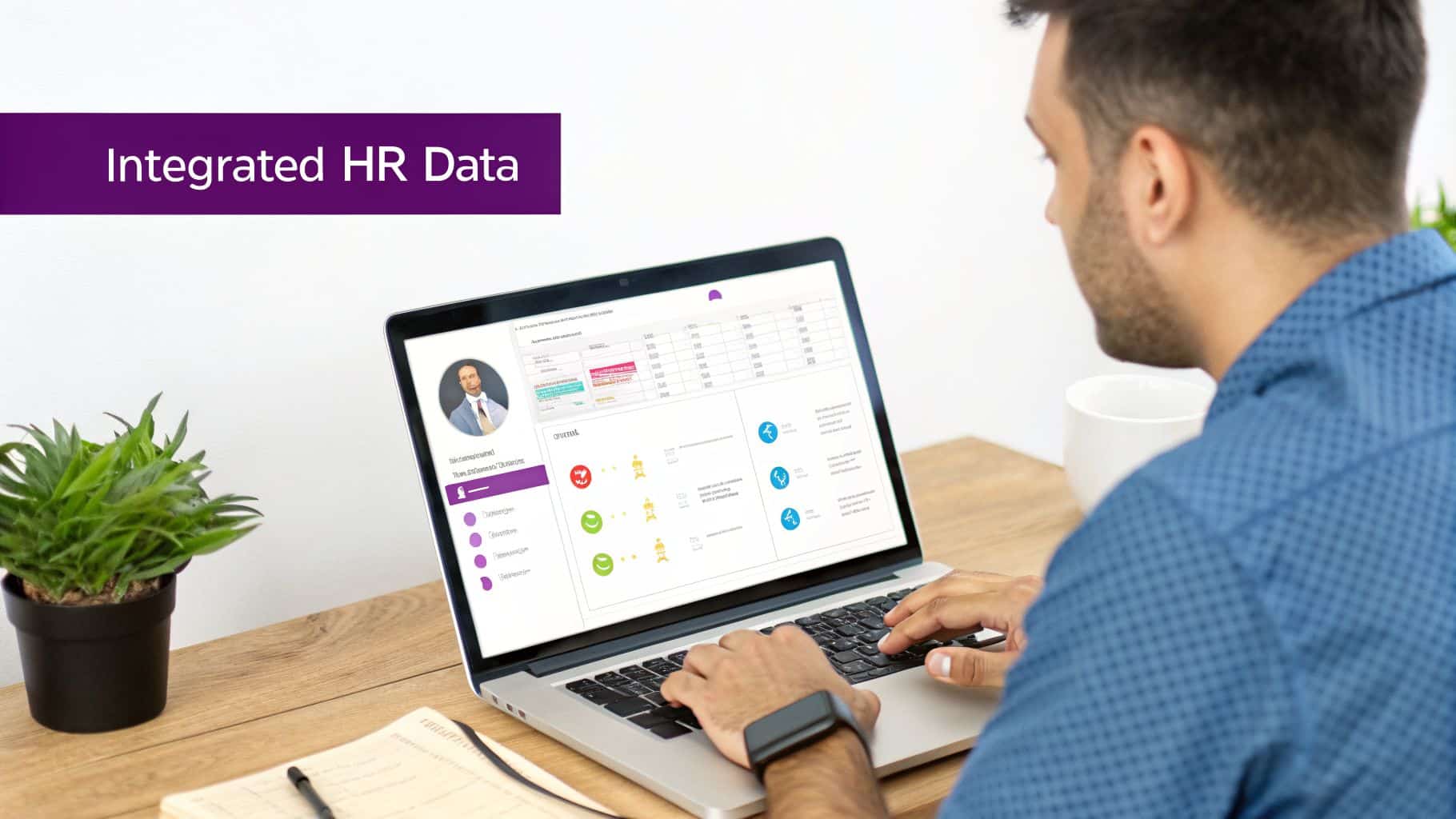
The real goal here is to establish a single source of truth for all your people data. When your EAP and HR systems can actually talk to each other, you begin to see patterns and opportunities that were completely invisible before. This connected approach helps you become more data-informed, anticipate needs, and ultimately provide far more effective support to your workforce.
Creating a Unified People Data Hub
For UK organisations running on Microsoft, a dedicated solution like Hubdrive’s HR Management for Microsoft Dynamics 365 provides the perfect backbone. Because it’s built on the same platform as your other business tools, information flows naturally, helping you make smarter decisions. At DynamicsHub.co.uk, we implement and support Hubdrive's solutions, building these connected experiences for businesses like yours.
Let's look at a practical example. Say your central HR system flags a noticeable rise in sickness-related absences within a specific department. An integrated system could then automatically send a confidential, targeted reminder to that team about the EAP services available for stress management or burnout. This happens without anyone in HR knowing who is off sick, protecting privacy while still offering timely support.
This changes the EAP from a passive helpline into a proactive, data-driven wellbeing engine. You stop waiting for an employee to make a crisis call and start spotting trends to offer help before problems escalate.
This level of integration lets you build a much smarter and more responsive wellbeing strategy. Instead of guessing where the pressure points are, you let the data guide your interventions.
Gaining Predictive Insights with Power BI
The true power of this integration comes to life when you can see the data clearly. By feeding anonymised, aggregated data from your EAP provider into your HR system, you can then overlay it with other key business metrics using Power BI. This gives leadership a genuine, 360-degree view of the organisation's health.
Think about what becomes possible:
- Stress and Performance: You could map anonymised EAP data showing high stress levels in one team against that same team’s performance metrics. This might quickly reveal a link between workload and wellbeing, allowing you to step in with management support or a change in resource allocation.
- Financial Strain and Turnover: If EAP trends point to growing financial worries across the business, you can cross-reference this with turnover rates. You might discover a root cause of attrition, prompting a need for financial wellbeing workshops or a review of your compensation strategy.
- Burnout and Absence: A spike in employees accessing support for burnout can be plotted against absence data. This gives you a powerful early warning sign of team-wide fatigue, prompting a review of working patterns or team capacity before it becomes critical.
This data-driven approach shifts you from reacting to problems to anticipating them. It gives leaders the information they need to make strategic decisions that protect both their people and the bottom line. To see how a central HR system makes this possible, have a look at our detailed guide on the capabilities of Dynamics 365 HR.
Ensuring Security and GDPR Compliance
For any HR or IT leader, connecting these two systems rightly brings up immediate questions about data privacy and security. This is exactly where building on the Microsoft platform gives you a major advantage.
When we help organisations integrate their HR solutions, we use Microsoft Dataverse to connect everything securely inside your own Microsoft 365 tenant. All individual EAP usage remains 100% confidential. Employers only ever see high-level, completely anonymised trend data.
This means you get all the strategic benefits of the insights without ever compromising an individual's privacy. The entire system's security is governed by Microsoft Entra ID, ensuring that all this sensitive information is handled with the same rigour as the rest of your core HR data, keeping you fully aligned with GDPR requirements.
Understanding EAP Governance and Data Privacy
When you introduce an Employee Assistance Programme, you're not just launching a new benefit; you're making a serious commitment to your people, one that carries significant ethical and legal weight. For any EAP to succeed, it must be built on a foundation of trust, which is only possible with rock-solid governance and a transparent approach to data privacy. It all boils down to one guiding principle: absolute confidentiality.
Your employees need to know, without a shadow of a doubt, that seeking help is a completely private matter. As an employer, you will never be told who is using the EAP or the specifics of what they're discussing. The EAP provider acts as a secure firewall, a confidential third party whose entire purpose is to protect that individual privacy.
The Power of Anonymised Data
So, if individual usage is kept under lock and key, how does an EAP provide strategic value to the business? The answer lies in high-level, aggregated reports. This data is always completely anonymised, making it impossible to identify any single person. Think of it as a weather report for your organisation's wellbeing; it shows you general patterns and pressures, not what's happening inside one specific home.
These reports can reveal crucial trends that might otherwise go unnoticed, such as:
- A rise in employees seeking support for financial stress across the business.
- An increase in managers using the consultation service for handling team conflicts.
- A higher-than-average number of requests for bereavement counselling in a particular quarter.
This insight is gold. It allows HR and leadership to move from being reactive to proactive, spotting underlying issues and introducing broader, more supportive measures—like financial wellbeing workshops or better training for line managers—without ever compromising personal privacy.
Your Duty of Care and GDPR Compliance
Offering a well-managed EAP is one of the clearest ways an organisation can demonstrate it is fulfilling its duty of care. It’s tangible proof that you are providing reasonable support to protect the health, safety, and wellbeing of your staff. This should always be backed up by a clear internal policy that explains the EAP's scope, the confidentiality promise, and how data is handled.
Naturally, for any UK business, compliance with the General Data Protection Regulation (GDPR) is front and centre. Given the incredibly sensitive personal data involved in an EAP, the stakes are even higher. You must be certain that both your chosen provider and your own internal processes meet the highest standards. To achieve this, it's vital to follow the principles of data protection by design in your HR strategy.
For the organisations we work with, we tackle this by using the built-in security of the Microsoft platform. By managing all HR and EAP insights within your own Microsoft 365 tenant, we ensure data residency and access are governed by Microsoft Entra ID. This means your sensitive wellbeing data is protected by the same enterprise-grade security you trust for all your other critical business information.
Your Next Steps in HR Transformation
As we've explored, the days of seeing an Employee Assistance Programme as a simple, reactive perk are long gone. A modern, integrated EAP is a powerful strategic tool. It’s an investment that pays real dividends, not just in financial returns, but in the health of your company culture and the productivity of your people.
At DynamicsHub.co.uk, we help you experience HR transformation built around your business. Hubdrive’s HR Management for Microsoft Dynamics 365 is the premier hire‑to‑retire solution—more powerful, more flexible, and more future‑ready than Microsoft Dynamics 365 HR. As your specialist UK partner, we implement and support this solution to bring your entire HR and wellbeing strategy to life inside the familiar Microsoft environment.
Our real expertise lies in connecting the rich insights from your EAP with your core HR data. This is where the magic happens. Fragmented information becomes a clear, unified picture of your organisation’s health, empowering HR to move beyond administration and become a true strategic force for business performance.
Ready to see how this could look in your organisation? Phone 01522 508096 today or send us a message to start the conversation.