

Think of an employee probation period as a structured trial run. It’s a set amount of time at the beginning of a new job where both the new starter and the company can see if it’s the right fit before making a long-term commitment. It’s a chance to move beyond the interview and see how things work in the real world.
Unpacking the Purpose of a Probationary Period

Hiring someone is a huge step for any business, and starting a new role is just as big a deal for the employee. Even the most rigorous interview process can only tell you so much. A probation period acts as a practical extension of that process, giving both sides a chance to make a truly informed decision.
This isn't just a one-way street for the employer to scrutinise the new hire. It's also a vital window for the employee. They get to figure out if the day-to-day reality of the role, the team dynamics, and the company culture are everything they hoped for.
A Contractual Safeguard, Not a Statutory Rule
It’s crucial to know that in the UK, there's no statutory legal requirement for a probation period. Its real power comes from being a specific clause written into the employment contract. This gives you the flexibility to define the terms, but it also means you have to be clear and fair for it to hold up legally.
So, what does this contractual clause actually do?
- Performance Evaluation: It provides a framework to assess whether the employee can do the job to the standard you need.
- Cultural Alignment: It's your chance to see if the new person genuinely gels with your company's values and the way your team works.
- Risk Mitigation: It offers a clear, simpler process for parting ways if things aren’t working out, usually with a much shorter notice period.
The idea is a bit like the contract-to-hire model, where a 'test drive' comes before any permanent commitment. By formalising this trial phase from the get-go, everyone knows exactly where they stand.
Determining the Right Duration
How long should a probation period be? There's no single answer. In the UK, it’s rare to see one last longer than six months. A three-month period is a common standard for many roles. However, for positions that involve more complex skills or longer learning curves, extending this to six months is perfectly reasonable.
A well-structured probation period is more than a safety net; it's a foundational tool for building a successful, long-term employment relationship by ensuring mutual compatibility from the outset.
Ultimately, having a clear probation policy is a strategic asset. It’s best practice to outline this in your company handbook so it's accessible to everyone.
Designing a Legally Sound Probation Policy

Getting your probation policy right is your first and best line of defence against any future disagreements. It’s worth remembering that probation periods aren't actually a legal requirement in the UK, so all their power comes directly from the employment contract. If your policy is vague or poorly worded, it creates confusion and opens the door to legal challenges, completely defeating the point.
To work properly, your policy needs to be a crystal-clear, contractually binding agreement. Think of it as setting out the 'rules of the game' from day one, so both the new hire and their manager know exactly what’s expected and what happens when the probation ends. This clarity is everything when it comes to managing expectations and making fair, defensible decisions.
Core Contractual Elements to Include
To be legally sound, every probation clause needs a few non-negotiable elements. These are the pillars holding up your entire process. Miss one, and you could find yourself on shaky ground later on.
Your policy must explicitly state:
- The Duration: Be specific about how long the probation period is (e.g., three months, six months) right from their start date.
- The Notice Period: Clearly define the shorter notice period that applies during probation for both sides—this is typically one week.
- The Review Process: Outline that performance will be reviewed throughout the period and at the end to decide if they’ve passed.
- The Right to Extend: Crucially, include a clause that gives you the contractual right to extend the probation if performance is borderline or you simply need more time to assess them.
Without these points laid out in black and white in the employment contract, your ability to manage the probation—or end the employment under its terms—is seriously weakened.
Choosing the Right Probation Duration
Figuring out the ideal length for a probation period is a bit of a balancing act. You need enough time for a proper assessment, but not so long that it kills the new starter’s motivation. In the UK, the most common choices are three and six months, and each has its own pros and cons.
Three-Month Probation:
- Pros: This is a popular option. It feels less intimidating for new hires and pushes for quick integration. It also forces managers to be on the ball with feedback right from the start.
- Cons: For more complex or senior roles, three months might just not be enough time to see if someone can really handle long-term projects or think strategically.
Six-Month Probation:
- Pros: A longer timeframe gives you a much better window to judge performance, especially in roles that involve building relationships or dealing with seasonal cycles. It gives training and development a real chance to bed in.
- Cons: On the flip side, six months can feel like a long time to be 'on trial', which might delay a new employee's sense of belonging and job security.
The ideal duration really hinges on the role's complexity. For a position that needs extensive training or has a longer performance cycle, a six-month period often makes more sense. For jobs where someone can show their skills quickly, three months is usually plenty.
Documenting Expectations and Extension Rules
A good policy does more than just state the duration; it needs to define what success looks like. Just saying "satisfactory performance" is too vague and won't help you. The policy should make it clear that specific goals, performance standards, and expected behaviours will be set right at the beginning.
This gives you a solid framework for every performance chat. It’s here that modern HR systems, like the solutions Hubdrive provides for Microsoft Dynamics 365, really prove their worth by helping you document goals and track progress without anything falling through the cracks.
And if you do need to extend a probation period, you absolutely must have the contractual right and a good reason to do so. Simply "needing more time" won't cut it—you have to explain why. This means documenting the areas needing improvement and setting out new objectives for the extended period. A structured, well-documented approach isn’t just good practice; it’s essential for fairness and staying on the right side of the law.
Managing Performance During Probation
A probation period isn't a time to sit back and wait. Think of it as an active, hands-on process that’s all about setting your new hire up for success while, at the same time, protecting the business. It’s where you turn a promising candidate into a high-performing team member, and that calls for a structured, thoughtful approach.
Simply crossing your fingers and hoping for the best isn’t a strategy. A truly effective probation is built on a foundation of clear communication, consistent feedback, and diligent documentation. By being proactive, you ensure that when the time comes to make a decision, you have everything you need to be fair, confident, and justified.
Setting Clear and Measurable Goals
Right from the very first day, you need to eliminate ambiguity. New starters are keen to impress, but they can't hit a target they can't see. Vague instructions like "get settled in" or "learn the ropes" are frustratingly unhelpful. What they need are crystal-clear, measurable objectives that connect their role to the team's wider goals.
Here’s how to do that:
- Define Key Responsibilities: Don't just hand them a job description. Break it down into the specific, day-to-day tasks and duties they'll own.
- Set SMART Goals: Make sure every objective is Specific, Measurable, Achievable, Relevant, and Time-bound. For instance, instead of "improve customer support," a much better goal is, "achieve a first-response time of under 30 minutes for 95% of customer queries by the end of month two."
- Clarify Cultural Expectations: Performance isn't just about what someone does; it's also about how they do it. Be explicit about the behaviours you value, whether that's communication style, collaborative teamwork, or taking initiative.
When goals are this well-defined, they become the bedrock for every performance conversation you have. It empowers the new employee and gives you, as a manager, a solid framework for assessment.
The Power of Regular Feedback and Reviews
Annual appraisals are far too slow for someone on probation. New team members are navigating a steep learning curve and need frequent, constructive feedback to know if they're on the right track. A lack of regular communication is one of the quickest ways for a probation period to go off the rails.
A structured schedule of reviews is essential. This usually means a formal mid-probation review and a final one, but the informal check-ins should be happening much more often—weekly is ideal. These quick catch-ups build trust and stop small misunderstandings from snowballing into serious problems.
A mid-probation review is a critical checkpoint. It’s your chance to formally discuss progress against their goals, talk through any concerns (from either side), and reset expectations for the rest of the period.
This rhythm of regular feedback is a cornerstone of any healthy performance management process, ensuring performance is constantly being developed, not just judged at the end.
The Critical Role of Documentation
From an HR and legal standpoint, if a conversation wasn't written down, it might as well have never happened. Keeping meticulous records is your safety net. It creates a clear, evidence-based story of the employee's journey through their probation. This paper trail becomes absolutely vital if you need to justify extending their probation or, in the worst-case scenario, letting them go.
Your records should include:
- Dated Meeting Notes: Jot down the key points from every check-in and formal review.
- Performance Data: Keep track of how they're progressing against those initial SMART goals.
- Specific Examples: Don’t just write "poor communication." Document the specifics: "On three occasions this week, they failed to update the project team on task status via the shared channel."
- Agreed Actions: Make a note of any support you’ve offered, training you’ve provided, or specific improvements the employee has committed to.
This level of detail creates an objective record that supports fair, defensible decisions. Tools designed for this, like the performance modules in Hubdrive’s HR solution for Microsoft Dynamics 365, are incredibly helpful here. They centralise all the feedback, track goals, and create an auditable history so nothing gets missed. Without this documentation, you leave your organisation wide open to claims of unfair treatment. By documenting everything, you ensure every decision is transparent, fair, and backed by evidence.
How HR Technology Takes the Pain Out of Probation
Let's be honest, trying to manage probation periods manually is a recipe for chaos. It often turns into a frantic juggle of spreadsheets, calendar alerts, and half-forgotten email threads. Important check-ins get missed, feedback is patchy at best, and the paperwork ends up scattered across different inboxes and folders. Modern HR technology is designed to fix this, turning a messy, reactive task into a smooth, proactive strategy.
Imagine a world where everything just happens. A new hire joins, and a probation workflow kicks in automatically, setting up review meetings in the manager's calendar and assigning their initial goals. This isn't science fiction; it's what happens when you build your probation process directly into your core HR system.
By doing this, you create a single, reliable source for everything related to that new employee's first few months. Every objective, every piece of feedback, and every performance note is logged in one place. It creates a clear, auditable trail that ensures fairness and consistency. More importantly, it frees up your managers to focus on genuinely supporting their new team member, not drowning in admin.
Putting the Probation Lifecycle on Autopilot
The real magic of HR tech is its ability to put the entire probation journey on autopilot. With a solution like Human Resource HR Management for Microsoft Dynamics 365, offered by Hubdrive, you can build a seamless process that works with the tools your team already relies on, like Microsoft Teams and Outlook.
That integration is the game-changer. It means a reminder for a mid-probation review can pop up as a natural part of a manager’s day, and they can pull up performance dashboards without ever leaving their familiar Microsoft environment. It connects all the dots into one efficient workflow.
Here’s a quick look at what that automation can do at each stage:
- Onboarding: Automatically assign probation-specific goals and essential training modules to new starters.
- Scheduled Reviews: Sync directly with calendars to make sure regular check-in meetings are booked and never forgotten.
- Centralised Feedback: Use built-in performance tools to log notes and observations in real-time, making it easy to spot progress or patterns.
- Automated Alerts: Set up notifications for HR and managers as the probation end date gets closer, prompting a timely and well-informed decision.
For a clearer picture, this flowchart maps out the key steps in a well-structured probation process, from setting clear goals to keeping the feedback loop going.
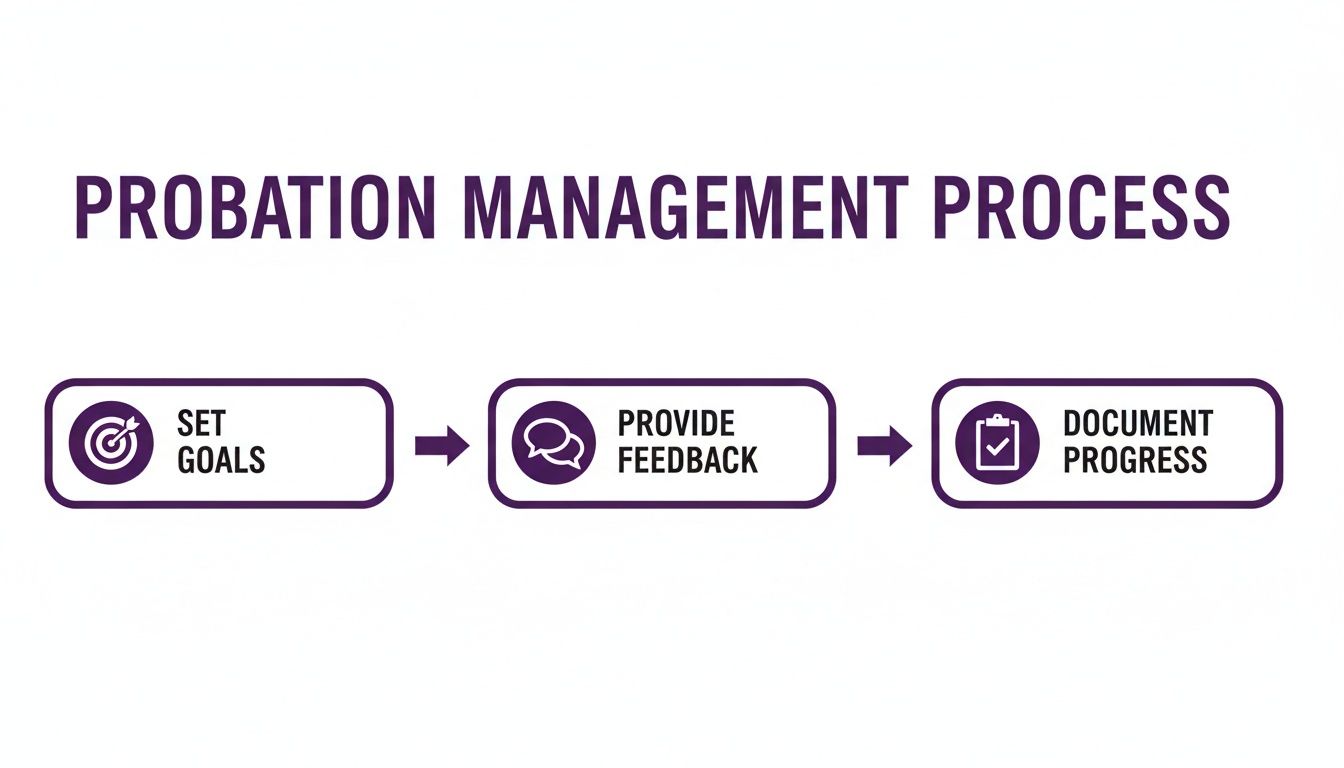
As you can see, it's a structured cycle. Each step logically flows into the next, helping you build a complete and objective picture of performance.
Probation Management Manual vs Automated with DynamicsHub
Moving from manual tracking to an automated system is a huge leap forward. This table breaks down the practical differences you'll see day-to-day.
| Probation Task | Manual Process (Spreadsheets & Email) | Automated Process (DynamicsHub & Microsoft 365) |
|---|---|---|
| Goal Setting | Manually created and emailed. Often forgotten or lost in inboxes. | Goals assigned automatically via onboarding workflow; visible to employee and manager. |
| Review Scheduling | Relies on managers remembering to book meetings. Easily missed. | Meetings scheduled automatically in calendars with built-in reminders for all parties. |
| Feedback Collection | Notes kept in separate documents or emails. Inconsistent and hard to track. | Centralised performance log for real-time feedback entry. Creates a single source of truth. |
| End-of-Probation Alert | A manual calendar reminder for HR, which can be easily overlooked. | Automated alerts sent to managers and HR well before the probation end date. |
| Decision & Documentation | Requires manual drafting of letters and chasing signatures. | Workflows trigger confirmation, extension, or termination letters with digital signature options. |
| Reporting & Insights | Impossible to get an overview without manually compiling data. | Real-time dashboards show probation pass rates by department, manager, or role. |
The contrast is stark. An automated approach not only saves countless hours of administrative work but also introduces a level of consistency and insight that’s simply out of reach with manual methods.
Uncovering Insights with Real-Time Data
How can you be sure your probation process is actually working? Without data, you’re just guessing. Technology flips this on its head, turning probation management into a source of powerful business intelligence. With reporting tools like Microsoft Power BI, you can create live dashboards that track probation success rates right across the business.
These dashboards can reveal trends you’d otherwise miss. For example, you might notice one department has a consistently low pass rate. Is it an issue with management style? A gap in training? Or a problem with how the roles are being recruited in the first place? This data helps you stop firefighting and start fixing the root cause of problems before they affect your overall retention.
By using real-time analytics, you can properly measure how well your probation strategy is working, spot areas for improvement, and ultimately make smarter hiring decisions that reduce long-term staff turnover.
This data-driven approach has a real impact on the bottom line. Public sector data from HMPPS, for example, shows the huge operational strain caused by high turnover in the early stages of employment. In contrast, businesses using integrated platforms have seen more stable workforces and have cut recruitment costs by up to 30% by making better-informed decisions during that critical probation window.
Creating a More Connected Experience
A great probation period is built on solid, consistent communication. Integrating your HR system with tools like Microsoft Teams creates a natural space for informal check-ins and allows new starters to ask questions and feel part of the team from day one. It helps break down those initial barriers and fosters a much more supportive environment.
What's more, tying in documentation can massively simplify admin tasks. For HR teams moving away from paper, a guide to using e-signatures for employment contracts is a great example of how a connected system saves time and improves things for the employee right from the start.
Ultimately, by using HR technology to automate, analyse, and connect, you can transform the employee probation period from a tick-box exercise into a powerful tool for building a successful, engaged, and long-lasting team.
What to Do When a Probation Period Ends
The end of a probation period is a fork in the road. It’s that crucial point where you need to make a clear, fair, and decisive call. Whether you're welcoming a new star to the team, giving someone a bit more time to find their feet, or deciding it’s just not the right fit, how you handle it matters.
This isn't just about process; it's about people. A well-managed probation ending protects your business and treats the individual with respect, no matter the outcome. All that hard work you've put into documenting performance and having regular check-ins now comes into play, giving you a solid, evidence-based foundation for the next step.
Confirming a Successful Probation
When a new hire absolutely nails it, don’t just let their probation quietly expire. Make a moment of it! Formally confirming their role is a fantastic opportunity to celebrate their contribution, make them feel valued, and cement their place in the team.
Here’s how to do it right:
- Hold a Final Review: Schedule a final meeting to go over their achievements. Frame it as a positive conversation, congratulate them on their great work, and officially confirm they've passed.
- Send a Confirmation Letter: Always follow up with something in writing—an email or a formal letter is perfect. This isn't just a nice touch; it’s a legal record that confirms their permanent status and that the full terms of their contract, including the standard notice period, now apply.
- Update Your Records: Make sure their status is updated in your HR system. If you’re using a platform like Human Resource HR Management for Microsoft Dynamics 365, a manager’s decision can automatically trigger this update, ensuring everything from payroll to system access is adjusted without a hitch.
How to Handle a Probation Extension
What if someone has real potential but isn't quite there yet? An extension can be a great solution, but you have to handle it with care. First and foremost, you can only extend a probation if you have the contractual right to do so—it needs to have been included in their original employment contract.
If you’re thinking about an extension, make sure you:
- Have a Good Reason: You can't extend it on a whim. There must be a clear, performance-based reason. Perhaps they need more time to get to grips with a complex system or you want to see more consistent results in a specific area.
- Get it in Writing: The employee needs to agree to the extension. This should be documented in a letter that clearly states the new end date, what they need to improve on, and what extra support or training you’ll provide.
- Reset the Goals: Simply adding more time isn't enough. You need to set new, crystal-clear objectives for the extension period. This way, the employee knows exactly what the target is and has a fair chance of hitting it.
An extension should feel like a lifeline, not a punishment. It’s your way of saying, "We believe you can get there, and we're giving you more time to prove it." Without clear, revised goals, the whole process becomes vague, unfair, and legally risky.
The Right Way to End Employment
Letting someone go during their probation is tough, but sometimes it’s the necessary call for the business and, ultimately, for the employee too. In the UK, employees with less than two years of service have limited protection against unfair dismissal. However, they are fully protected against discrimination, so your decision must be based squarely on performance or conduct, nothing else.
To ensure the process is fair and keeps legal risks to a minimum:
- Arrange a Formal Meeting: Invite the employee to a private meeting to discuss their performance. It’s crucial to give them the opportunity to hear your feedback and respond.
- Be Clear and Compassionate: Explain the decision directly but kindly. Refer back to the specific goals they haven't been able to meet and the feedback you’ve given them during their review meetings.
- Follow the Contractual Notice: Your contract should specify a shorter notice period for probation—often just one week. You must honour this. You can either have them work their notice or, if the contract allows, pay them in lieu of notice (PILON).
- Confirm Everything in Writing: After the meeting, send a formal termination letter. This should confirm the decision, their final day of employment, and details about their final pay.
Your Partner in Getting HR Right
Getting the employee probation period right is one of the cornerstones of building a strong, stable team. We’ve covered the theory—the what, why, and how—but putting it all into practice consistently is where the real challenge lies. The right tools can make all the difference, moving you from good intentions to great execution.
That's where we come in.
At DynamicsHub.co.uk, we provide Transformative HR solutions customised to the unique way you work. We implement Human Resource HR Management for Microsoft Dynamics 365 by Hubdrive, the leading hire-to-retire solution for the Microsoft Platform. It’s a powerful system designed to turn probation from an administrative headache into a genuine strategic advantage.
Think of it as the engine that drives your probation process. By centralising goals, automating review reminders, and making documentation simple, the platform frees you from manual chasing and reduces compliance risks. It gives your managers the structure they need to handle every probation period fairly and effectively, helping them make confident, well-informed decisions about their new hires.
Ready to see how we can help transform your HR processes? Phone 01522 508096 today, or send us a message to find out more.
Got Questions About Probation Periods?
Even seasoned HR managers and team leaders have questions when it comes to the finer points of probation periods. Getting it right is crucial, not just for staying compliant with UK law, but for setting your new hires up for success. Let's tackle some of the most common queries that come up.
Can We Extend a Probation Period?
Yes, absolutely—as long as you’ve planned for it. The key is having the contractual right to do so written into the employee's original employment contract. Without that clause, you're on shaky ground.
If you do need to extend, it can't be an open-ended affair. The extension needs to be for a reasonable, defined period, and you must have a solid reason, like needing more time to assess specific performance goals. Don't just let the date slide by; handle it professionally.
- Sit down with the employee and clearly explain why you’re extending their probation.
- Follow up that conversation with a formal letter confirming the new end date and exactly what improvements you need to see.
- Make sure you're offering the right support—be it extra training or more frequent check-ins—to give them every chance to succeed.
What's the Normal Notice Period During Probation?
During probation, notice periods are typically much shorter. It's standard practice for it to be just one week's notice from either side, which gives both you and the new starter a degree of flexibility.
Of course, this needs to be spelled out clearly in the employment contract to be legally sound. Once they've successfully passed their probation, the notice period will automatically switch to the standard term in their contract, which is often one month or more.
Do Probationary Employees Have Fewer Rights?
This is a common misconception. From day one, an employee on probation has the same statutory rights as everyone else on your team. That includes the right to the National Minimum Wage, protection from unlawful discrimination, and all the usual entitlements around working hours and paid holidays.
The main difference lies in the protection against unfair dismissal. Generally, an employee in the UK needs two years of continuous service before they can bring an unfair dismissal claim. This means that if you have to let someone go for performance reasons during their probation, the risk of a successful claim is very low.
A crucial point: While unfair dismissal protection is limited, protection from discriminatory dismissal is not. All employees, from their very first day, are protected from being dismissed because of a protected characteristic (like age, gender, race, or disability). Your process must always be fair, consistent, and non-discriminatory.
At DynamicsHub, we provide Transformative HR solutions customised to the unique way you work. Human Resource HR Management for Microsoft Dynamics 365 by Hubdrive is the leading hire-to-retire solution for the Microsoft Platform, which we implement and support for organisations in the UK. We can help you manage every stage of the employee lifecycle with confidence.
Phone 01522 508096 today or send us a message to find out how we can help you.


